
37 Years of Power and a Tunnel: How 'El Pablo' Shaped La Soledat — and What's Missing Now
37 Years of Power and a Tunnel: How 'El Pablo' Shaped La Soledat — and What's Missing Now
The renewed arrest of alleged drug boss Pablo C. M. raises questions: How could a clan deceive streets, homes and authorities for decades? A reality check from La Soledat.
37 Years of Power and a Tunnel: How 'El Pablo' Shaped La Soledat — and What's Missing Now
A reality check after the 'Tsunami-Galba' raid
Key question: How was it possible that a man could control an almost open turf in Palma for nearly four decades — and which gaps must the state now close?
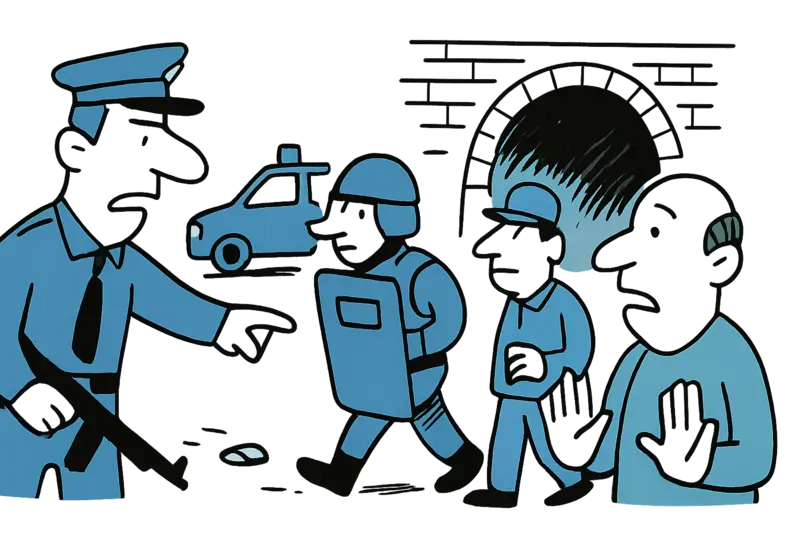
Tuesday morning in La Soledat sounded different from usual. There was no typical chatter at the kiosk; instead the creak of combat boots, distant sirens and the dull roar of police vehicles sealing off the Carrer Teix. National Police and Customs deployed more than 200 officers. They searched more than ten apartments, struck in La Soledat and Marratxí, and arrested at least twelve people — including the alleged ringleader, Pablo C. M., and close relatives.
The facts, as they currently appear: The man, known on Mallorca for decades as 'El Pablo', began in the late 1980s in the drug scene — back then heroin still dominated. Later the trade shifted to cocaine and marijuana. Together with family members he built a network that not only trafficked drugs but also bought real estate and established concealment mechanisms. In 2015 dozens of suspects were under investigation and some 45 properties were then associated with corporate constructions. During a later inspection investigators discovered a fortress-like private street: connected apartments, a long swimming pool, an elevator and a roughly 30-meter-long tunnel beneath the Carrer Teix.
Stories like these have become part of everyday life in La Soledat: a resident who fetches rolls early knows the always-watchful eyes on certain corners; children carrying lunch sometimes avoid the young men who occupy street corners. The neighborhood breathes normality — and a latent isolation at the same time. This is the daily reality that another major blow has now been directed against.
Critical analysis: The long duration of this structure is no coincidence. It was apparently a combination of social neglect, thin everyday police presence, complex ownership constructions and gaps in financial controls that allowed a system to emerge that behaved like a private protected area. Bureaucratic errors also played a part: an escape in the late 1990s — triggered by an undelivered fax in a conviction case — shows how technical deficits can have concrete crime-preventive consequences.
What is often missing in the public debate is the neighborhood's perspective. Security operations are loudly announced, flooded with light and then driven away — but the follow-up effects for the people who live here daily are rarely consistently accompanied. Also hardly debated is the issue of real estate money laundering at the local level: as long as property transfers run through shell companies and are not checked automatically, a hub for illegal profits remains.
Concrete solution approaches, not just police show effects:
- Transparency in property purchases: A publicly accessible register of beneficial owners would expose figureheads and make investigators' work easier.
- Combine financial and property audits: Financial supervision, the land registry and the tax authority must be allowed to link data in real time, including alarm systems for unusual transactions.
- Digital preservation of enforcement records: Automatic notifications for prison leaves, return letters or changes in conviction status would reduce the risk of "lost" cases.
- Neighborhood programs: Prevention work, safe contact points and discreet presence of social services can create a climate in which residents cooperate rather than fear.
- Long-term prosecutions instead of episodic actions: Large raids are necessary but only help if financial investigations and seizures follow in parallel, so that structures are dismantled.
A concrete example from the recent past shows how far measures must go: the bunker facility discovered in 2024 — with a tunnel and its own guards — was not merely a curious structure but proof that criminal groups can create physical spaces that make access difficult for authorities. Such investments in infrastructure are also economic indicators that must be identified more quickly and taxed or questioned.
What the police are doing right is the coordinated operation: National Police and Customs together, flanked by special units, increase impact. But without structural changes the pattern remains: arrest, prosecution, and again a major blow some years later. The reality in La Soledat shows that security is more than presence on day X.
Conclusion: The renewed arrest of 'El Pablo' is not an end but a test. A test for courts, investigators and the administration to act sustainably. If Spain only treats the symptoms here, another fortress will appear in a few years — on the same street, with different names on the doorbells. The island needs more than headlines now: transparency in ownership, digital record keeping, combined financial audits and a serious neighborhood program. Without that La Soledat will remain a place where power nests in houses — and neighbors step aside with their rolls when the police vans arrive.
Local portrait detail: Whoever sits on the Plaça de la Porta and walks down the Carrer Teix feels the contrast: palms in the wind, the clink of an espresso cup and alongside it the reminder of the tunnel — a contradiction that was tolerated for far too long.
Frequently asked questions
How did 'El Pablo' manage to control a large area of Palma's La Soledat for decades, and what gaps allowed this to happen?
What reforms are proposed to stop real estate money laundering in Mallorca neighborhoods like La Soledat?
Why are long-term prosecutions important for dismantling criminal networks in neighborhoods like La Soledat?
What did investigators find at the Carrer Teix tunnel site in La Soledat?
How does security activity affect residents of La Soledat daily?
What neighborhood programs could help prevent crime in Mallorca districts like La Soledat?
What’s the best time to visit Mallorca for beach and outdoor activities?
What should I pack for a trip to Mallorca?
Similar News
Palma blocks parking spaces for tourists – what's behind it and who pays the price?
The city of Palma has declared 1,027 ORA parking spaces in the center as residents-only spaces by official notice. A cal...
Fatal accident near Son Llàtzer: When a medical episode at the wheel turns the road into a danger
In a collision near the roundabout at Son Llàtzer hospital, an approximately 80-year-old car driver died. The suspicion ...
Higher VAT for holiday rentals: What it really means for Mallorca from December
The Spanish government will reintroduce a 10% VAT on certain holiday rentals from 1 December 2026. Which landlords are a...

Can I travel to Palma without an ID? When a holiday falls apart just before departure
At Erfurt-Weimar airport two German travelers tried to travel to Mallorca without valid IDs. What travelers should know ...

Between Lamborghinis and Remembrance: A Reality Check on the Unity Celebration in Mallorca
Consul Angelika Saake celebrated the Day of German Unity at the Motorworld. An elegant reception — but the choice of ven...
More to explore
Discover more interesting content

Can Cap de Bou

Townhouse Lleo 72
