
Rolling 40-ton Truck in Son Blanc: What Went Wrong During the Unloading?
Rolling 40-ton Truck in Son Blanc: What Went Wrong During the Unloading?
A 40-ton truck slipped while unloading at the port of Son Blanc (Ciutadella) and became wedged between the ramp and the ship's side. No one was injured — but many questions remain.
Rolling 40-ton Truck in Son Blanc: What Went Wrong During the Unloading?
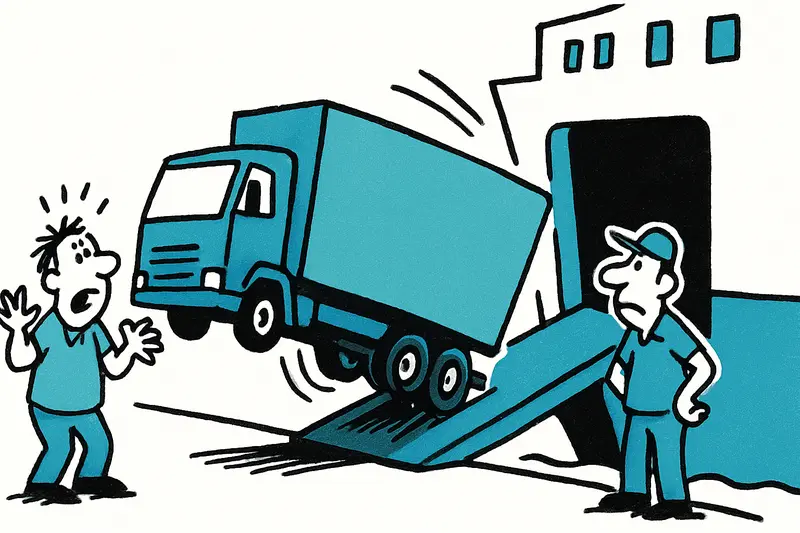
On Wednesday morning at around 9:30 a.m., an unusual incident occurred at the port of Son Blanc in Ciutadella: a 40-ton truck carrying general cargo began to move during unloading, slid down the stern ramp and became wedged between the ramp and the ship's hull. The driver was not in the vehicle; nobody was injured. The tractor unit is now heavily damaged, two wheels of the trailer were affected, and the ferry also suffered minor damage. The transport company thanked the ship's crew and the local crane operator who assisted with the recovery.
Main question
How can something like this happen on a busy ferry berth without anyone being harmed — and which safety gaps does this reveal?
Critical analysis
The available information suggests a combination of technical failure, a slope in the rear ramp area and human error when releasing the brakes. If vehicles on board or during unloading are not secured by reliable physical measures, an unintended release of the brake is enough for heavy loads to start rolling. It is noteworthy that the vehicle began to slide not during the crossing but during unloading — a moment when staff often coordinate multiple actions in parallel: opening doors, securing bulwarks, freeing traffic lanes. That is precisely the point where a small mistake can have large consequences.
What's missing in the public debate
The discussion often focuses on spectacular images rather than the technical and organizational details. There is a lack of clear debate about mandatory securing protocols during loading and unloading, regular inspections of couplings and braking systems of heavy transports, and stricter requirements for ramp angles and ramp surfaces on ferries. The question of what role digital control systems (e.g. a park brake with locking during mooring maneuvers) can play is also rarely addressed.
Everyday scene from Ciutadella
Anyone who walks along the quay at Son Blanc in the morning knows the mix of sounds: gulls crying, fishermen checking nets, the little harbor bar smelling of fresh coffee, and truck drivers standing together with thermoses. It was in this quiet, routine bustle that the mishap occurred — not a loud crash during rush hour, but an abrupt halt when the vehicle became stuck between the ramp and the ship's side. Residents looked out of their windows; some workers put their hands on their hips, shook their heads and helped where they could. Earlier local incidents have been covered in reporting such as Car Plunges into Ciutadella Harbor Basin: Who Could Have Prevented It?.
Concrete solutions
1. Standardized securing procedures: physical restraints (wheel chocks, blocks) must always be applied before releasing brakes, until a clear release process is completed.
2. Mechanical locks on ramps: ramp areas with a slope should have movable stops or catch bars that can prevent rolling away.
3. Brake-status interlock: vehicle parking brakes could be linked to ramp release via a simple interlock system — ramp only cleared when the parking brake is engaged and locked.
4. Regular inspections and documentation: cleaning and maintenance schedules for ramp surfaces (slip resistance) as well as technical checks of vehicle brakes are mandatory. Ferries should have a duty to keep protocols before every maneuver involving maneuvering or loading.
5. Training and checklists: drivers and port staff need mandatory safety checks similar to aviation — audible read-back control items before maneuvering.
6. Emergency planning and equipment: ports should set targets for maximum response times, define crane partners and usual release procedures; mobile barriers or temporary anchor points can provide additional safety.
Conclusion
The incident in Son Blanc was fortunate: no one was injured. But that should not obscure the fact that similar situations can easily escalate into more serious accidents. Instead of soothing platitudes, we need concrete, implementable rules and more attention to everyday procedures in our ports — from the ramp to the last wheel chock. The quick cooperation between Baleària, Mascaró Morera and the local crane operator shows the strength of local structures. Coverage of other heavy-vehicle incidents on Mallorca underlines the wider relevance of these measures, for example Ma-20 Blocked: A Truck Breakdown and the Vulnerability of Palma's Roads and Truck Breakdown Paralyzes Vía de Cintura – Palma in Morning Traffic Chaos. Even better would be if this experience leads to binding improvements, not just words of thanks.
Frequently asked questions
What is the weather usually like in Mallorca in spring?
Is Mallorca warm enough to swim in the sea?
When is the best time to visit Mallorca for good weather?
What should I pack for a trip to Mallorca?
Is Palma de Mallorca good to visit for a city break?
What is Sóller like for a day trip in Mallorca?
Is Valldemossa worth visiting in Mallorca?
What is Alcúdia like for families in Mallorca?
Similar News

The Painter Who Invented Himself: How a Young Viennese Drew Mallorca
A hundred years ago a 19-year-old draftsman arrived in El Terreno. His diary and sheets, long known under the pseudonym ...
Released with Conditions: The Plus Ultra Suspicion and a Mallorcan Finca as Residence
A Dutch entrepreneur, sought in connection with the Plus Ultra case, was extradited to Spain after his arrest in Germany...

Haute Nuit in Puerto Portals: Fashion, Art and Indulgence by the Water
On October 2 the Lobster Club in Puerto Portals will be transformed into a stage for curated fashion, art and culinary e...
Magaluf: Watchtower Alarm – Lifeguards Pull Unconscious Beachgoer from the Water
After a drama in the late afternoon, two lifeguards at Magaluf beach rescued an unconscious 44-year-old man. He was stab...
Turquoise in the City: How dangerous is the color play of the Sa Riera?
The Sa Riera in Palma suddenly turned turquoise — a pretty motif, but behind the effect lies a discharge of saline waste...
More to explore
Discover more interesting content

Can Cap de Bou

Townhouse Lleo 72
