
80 Kilograms of Snails and Six Months' Imprisonment: What the Muro Case Reveals About Rural Crime
80 Kilograms of Snails and Six Months' Imprisonment: What the Muro Case Reveals About Rural Crime
Two men were sentenced to six months' imprisonment each for the theft of 80 kilograms of snails in Muro. The case raises questions about prevention, judicial delays and the protection of small agricultural businesses.
80 Kilograms of Snails and Six Months' Imprisonment: What the Muro Case Reveals About Rural Crime
Key question: Why is the current response from authorities and the courts insufficient to protect small farms in Mallorca?
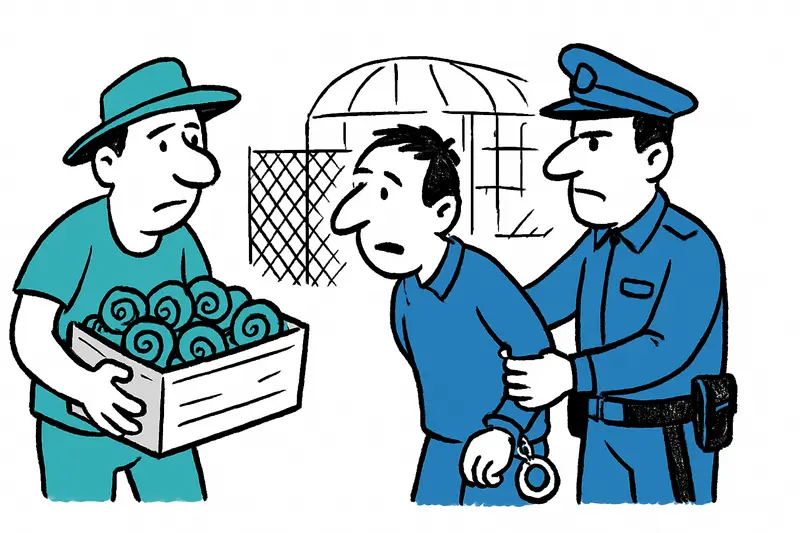
In February 2021 two men climbed over the metal wall of a finca on Camí Can Quartana in Muro, opened the chain-link of a greenhouse and took around 80 kilograms of snails. Upon arrest the Guardia Civil seized 60 kilograms of the animals and a precision scale. A verdict has now been handed down: six months' imprisonment each and a payment of €525 to the owner. The judge considered that the proceedings had been prolonged by delays during the investigation as a mitigating factor, similar to the trial postponed in a 14-villa burglary case.
It almost sounds casual when you read the numbers. From the farm's perspective, however, it is a tear in their means of subsistence. Snail farming is not a hobby with pockets full of spare cash; for some farms it is a calculated source of income—for feed, electricity, maintenance and labour. When someone cuts open a greenhouse at night, it is not only an animal loss, but the loss of work and a jeopardized future project.
Critical analysis: The sentence punishes the perpetrators criminally, but the rest remains vague politics. Six months in prison is a penalty; the small compensatory payment, however, speaks volumes about the economic valuation of such crimes. Even more pressing is the question why judicial delay could be considered a mitigating circumstance when it has caused the victim additional damage and insecurity. At a time when rural operations are increasingly targeted by thefts, as seen with a serial thief in Marratxí, this step reads like a signal with a bitter aftertaste.
What is missing in the public debate is an honest assessment of prevention on the ground. People talk about pillars like agricultural subsidies or police presence, but rarely about simple measures that have immediate effect—sturdy fences, motion detectors, better lighting, and marking and registration of animals. Also far too seldom discussed are the administrative hurdles victims must overcome to press charges and how long procedures can discourage small producers.
A daily scene from Muro: on a July morning at the small weekly market older neighbours sip their café con leche while young women farmers lift crates of tomatoes. The heat hums as always; the air smells of olive oil and wet grass. Among these people are those who live off a small finca—and they do not see a break-in as a one-off scrape but as a constant threat. Conversations about vigilance and nocturnal strangers are part of everyday life here.
Concrete solutions: 1) Rapid response teams for rural crimes: short response times increase the chance of catching thieves in the act. 2) Subsidy programmes for simple security technology: motion detectors, robust gates and solar lighting could be subsidised. 3) Better documentation and systematic marking: anyone who sells animals or agricultural products needs a simple register to prove ownership. 4) Acceleration of legal processes for property crimes: delays should not automatically count as mitigating if they harm the victim. 5) Insurance and cooperative models for small producers: cooperatives could offer collective insurance and shared security concepts.
All of this requires work and money—and politically unpopular decisions in town halls and, in part, in Madrid. But without concrete measures these remain isolated stories that attract attention but do not create protection. That the Guardia Civil was able to return animals and a scale is welcome; that part of the haul is missing is not.
A second look at the sentence: the punishment assigns responsibility, but it does not close the economic gap or reduce the risk of future attacks. What is needed is a system that takes small producers seriously: faster procedures, adequate compensation and preventive assistance. Otherwise, in a few years we will sit again at a market stall in Muro and hear the same story.
Conclusion (pointed): The conviction is a legal full stop—but not a shield. If Mallorca wants to preserve its niche agricultural producers, the next step must happen not only in the courtroom but in the fields, in cooperatives and in municipal budgets. Otherwise the island will remain ripe for new cases with disappointed producers and emptier greenhouses.
Frequently asked questions
When is the best time to visit Mallorca for outdoor activities and pleasant weather?
What should I pack for a trip to Mallorca?
Are Mallorca’s beaches suitable for families?
How easy is it to get around Mallorca without a car?
What should I know about Mallorca’s weather and sea conditions for outdoor activities?
What are must-see places in Mallorca for a quick visit?
What practical safety tips should I follow in Mallorca?
When is it best to swim in Mallorca?
Similar News

High heel slips, car accelerates: accident on Camí de Son Hugo
A woman lost a high-heeled shoe on the forecourt of the sports facility at Camí de Son Hugo. The car accelerated, mounte...

Phone Scam: How Two Hotel Employees at Playa de Palma Lost Thousands of Euros
One morning in September, two reception employees at Playa de Palma were pressured by alleged alarm-company staff — in t...

When the Wallet Becomes a Danger: Attack in Peguera and Lessons for Mallorca
In Peguera, two women are said to have stolen the wallet from a 75-year-old German couple. When the victim intervened, t...
Plata stays Plata: Young people take over, Llonguets remain
A small bar on Carrer de l'Argenteria will continue: Tolo Serra hands the place over to young Mallorcans at the end of t...

Unnoticed in the Luggage Compartment: How a Boy Traveled More Than 100 Kilometers in a Team Bus
A minor traveled in the undercarriage of a team bus for more than 100 kilometers until his cries for help were heard. A ...
More to explore
Discover more interesting content

Can Cap de Bou

Townhouse Lleo 72
