
Nighttime Fall at Baluard del Príncep: What We Know — and What’s Missing
Nighttime Fall at Baluard del Príncep: What We Know — and What’s Missing
A 23-year-old fell at night around ten meters from Palma's city wall (Baluard del Príncep) and was taken to Son Espases with polytrauma. Why do such accidents repeatedly happen in the old town — and who protects the city and its people?
Nighttime Fall at Baluard del Príncep: What We Know — and What’s Missing
Main question: Was it an unfortunate solo misstep, a technical failure of the wall, or a safety problem for the entire old town?
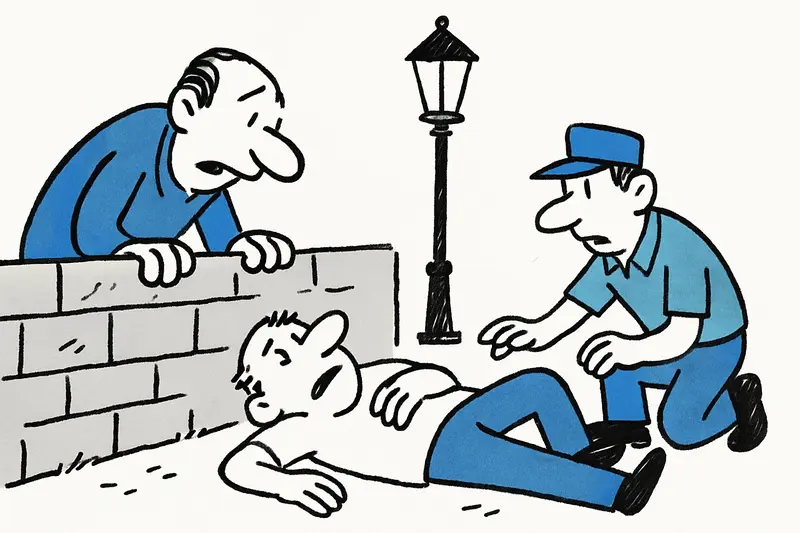
In the night to Sunday, a 23-year-old man fell from a section of the city wall at Baluard del Príncep by about ten meters and had to be admitted to the University Hospital Son Espases with severe injuries. The National Police and local police were on site, officers administered first aid, the emergency service (061) stabilized the injured person and activated a polytrauma code. According to the police, the background circumstances remain unclear.
These sober facts are not enough to calm the unease in our old town. The incident fits into a small but worrying pattern: recent similar cases, such as Balcony fall in Palma: When sleepwalking can become a deadly danger, Fall in Palma: An elderly man, a balcony and many unanswered questions and Fall in Can Pastilla: More Than an Accident?, and in December parts of the wall were already declared in need of repair after masonry had come away. Such reports raise a simple question: Is the historic fortification merely a monument — or also a potential danger zone for night owls, walkers and residents?
From the investigators' point of view, several scenarios are currently possible. Technical case: loose stones or decayed sections could have given way. Human factor: a fall due to inattention, alcohol influence or a risky action at the edge of the wall. Third-party involvement: officers are also checking for that. What’s missing: a publicly accessible, continuously updated assessment of the condition of such sections, so that citizens and visitors are not left in the dark.
In Palma people know the spots. When I walk along Avinguda de Jaume III in the morning, I already smell the first coffee from Bar Netto; in the evenings young people like to sit on Passeig del Born, and some climb walls to take photos. At Baluard del Príncep, where cobblestones and lamps cast a peculiar light, passersby often see lively groups and solitary strollers. This normality is a good reason to keep such places safe.
What is too rarely addressed in public discourse? First, responsibility for preservation: historic building fabric needs planned funds and regular, expert inspections — not only after spectacular incidents. Second, night-time accessibility: centuries-old walls are not designed as places to gather, yet people sit there. The third gap is prevention: little signage, sparse lighting and a lack of warnings about danger zones.
Concrete proposals that can be implemented immediately: 1) A short-term survey by structural engineers of all accessible wall sections, prioritizing urgent repairs. 2) Temporary closures for sections with visible instability, combined with clear signage. 3) Improved lighting at sensitive spots without destroying the historic atmosphere — warm lamps, not floodlights. 4) More night patrols and a visible presence of local police so that risky behavior becomes less attractive. 5) A public information sheet (online and on signs) about behavior at historic walls: keep distance, no climbing, know emergency numbers.
In the longer term Palma needs a concept that links monument conservation, public safety and city life. Regular inspection intervals, a maintenance budget plan and transparent communication about danger spots are necessary. A small monitoring system with cameras at particularly vulnerable places could also be conceivable — technically simple, legally sensitive, but effective if data protection issues are clearly regulated.
Everyday scene: On Monday morning the city cleaning crew collects cigarette butts and empty cans next to the Mercat de l'Olivar; across the street residents push their shopping trolleys over the paving. Such images show: Palma's old town is alive, it is not a museum with a quiet zone. Everyone out in the evening — tourist or local — must be able to trust that the places where they sit and laugh do not become danger zones.
Conclusion: The case at Baluard del Príncep is more than the accident of a single evening. It is a wake-up call. Authorities have the task of eliminating immediate dangers and planning long-term safety. The city should now not only investigate, but act visibly: temporary closures, prioritization of repairs, more presence and clear communication to the public. That way you protect not only the cultural heritage, but also the people who give Palma its special nighttime atmosphere.
Frequently asked questions
Is it safe to walk on Palma’s historic city walls at night?
What should visitors in Mallorca do if they see a dangerous section of wall or old stonework?
Why do accidents happen at Palma’s old walls and fortifications?
Are historic walls in Mallorca regularly checked for safety?
What is Baluard del Príncep in Palma?
Should Palma add more lighting and warning signs around the old town walls?
What should I know before going out in Palma’s old town at night?
Who is responsible for keeping Palma’s historic walls safe?
Similar News
High heel slips, car accelerates: accident on Camí de Son Hugo
A woman lost a high-heeled shoe on the forecourt of the sports facility at Camí de Son Hugo. The car accelerated, mounte...
Phone Scam: How Two Hotel Employees at Playa de Palma Lost Thousands of Euros
One morning in September, two reception employees at Playa de Palma were pressured by alleged alarm-company staff — in t...
When the Wallet Becomes a Danger: Attack in Peguera and Lessons for Mallorca
In Peguera, two women are said to have stolen the wallet from a 75-year-old German couple. When the victim intervened, t...
Plata stays Plata: Young people take over, Llonguets remain
A small bar on Carrer de l'Argenteria will continue: Tolo Serra hands the place over to young Mallorcans at the end of t...
Unnoticed in the Luggage Compartment: How a Boy Traveled More Than 100 Kilometers in a Team Bus
A minor traveled in the undercarriage of a team bus for more than 100 kilometers until his cries for help were heard. A ...
More to explore
Discover more interesting content

Can Cap de Bou

Townhouse Lleo 72
