
Fall in Palma: An elderly man, a balcony and many unanswered questions
Fall in Palma: An elderly man, a balcony and many unanswered questions
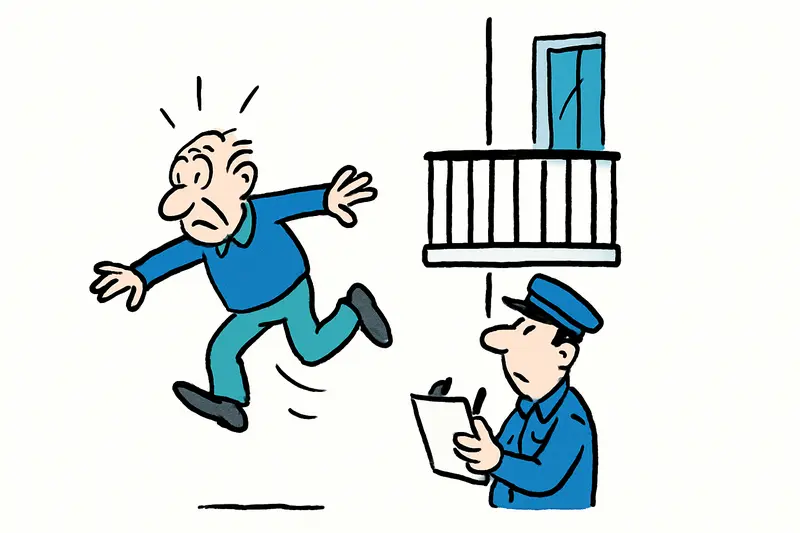
An about 80-year-old man fell Sunday afternoon from a balcony on Carrer Borguny. The National Police are investigating; the circumstances remain unclear.
Fall in Palma: An elderly man, a balcony and many unanswered questions
Why the mere "accident" is not a sufficient answer?
On Sunday at around 2 p.m., residents on Carrer Borguny heard a short, loud impact. Shortly after, a woman stood on the pavement and the body of an older man lay next to a tree below a five-story residential building. Ambulances arrived, and paramedics could only pronounce death. The National Police have taken over the investigation and questioned, among others, the wife; at present, external involvement is ruled out.
The bare facts are clear: a roughly eighty-year-old resident fell from a fifth-floor balcony and died. What is missing is the narrative layer in between — the why, the beforehand and the responsibilities that are rarely properly dealt with in such cases.
Key question: Was it simply bad luck for an old person, or are there structural gaps that make such accidents more likely?
An initial, sober look reveals several problem areas. Many residential buildings in Mallorca date from decades when standards for balcony railings, slip resistance and maintenance varied. Older people often live alone or depend on help; small health incidents — circulatory problems, brief dizziness — can have fatal consequences when there is no regular social contact.
It is tempting to chalk the incident up as a one-off tragic accident; critically viewed, however, previous reports such as Balcony fall in Palma: When sleepwalking can become a deadly danger suggest patterns that deserve attention.
In everyday life on Mallorca you see how voices and noises blend on the streets: the honking of a waste collection truck on Calle Industria, children playing in the afternoon, the clatter of a shopping cart. It is precisely amid this everyday noise that vulnerable people can be found, people who are no longer so steady on their feet. A neighbor who first heard the impact presents the typical picture: people who are attentive but lack official means to check railings or provide medical aid before something happens; similar dramatic accidents have occurred in other parts of the island, for example Fall at Ballermann: Why a Morning on Playa de Palma Can Turn into an Accident.
What is missing from public debate are concrete prevention steps. Here are some proposals that could be pursued without long political cycles:
1) Local safety checks: Municipalities could mandate annual inspections of balcony and railing heights for residential blocks over three stories and require simple defects to be remedied within set deadlines; municipal authorities such as the Ayuntamiento de Palma already publish guidance on building responsibilities.
2) Senior risk assessments: Encourage general practitioners and health centers to more actively address domestic hazards with older patients — tripping hazards, slippery tiles, balcony damage.
3) Neighborhood networks: Promote phone chains or short check-in visits by volunteers or neighborhood agents, especially in districts with many older people living alone.
4) Rapid-help technology: Subsidized emergency buttons or easy-to-use mobile devices for seniors; better information for relatives on how and when to alert local services — including information on IMSERSO teleassistance programs and similar services.
5) Building inspections and education: Information campaigns for property owners about safe railings, maintenance intervals and legal obligations.
These measures would not guarantee protection against all accidents. But they shift the perspective away from the fatalistic "these things just happen" and toward concrete steps that can save lives.
Conclusion: The tragic death on Carrer Borguny is a moment of mourning — and should also be a reason to name local safety deficits. A tree next to the pavement, a woman in shock, the emergency vehicles driving away — these are images that remain. If everyday life simply continues afterward without neighbors, property managers and authorities drawing lessons, then we have not taken the responsibility revealed here seriously; earlier incidents such as Sudden drama on Paseo Mallorca: a death in the rain – and the questions that remain show how many questions often remain open.
The investigations by the National Police continue. As long as forensic medicine and the police do not release details, some questions remain open. But regardless of their findings, the central insight remains: on an island, in streets full of voices, we must look out for each other better — especially for the most vulnerable.
Frequently asked questions
What happened in Palma on Carrer Borguny?
Are balcony accidents a concern for older people in Mallorca?
What can neighbours in Mallorca do if an elderly resident seems to be at risk?
How safe are older residential buildings in Mallorca?
What should families in Mallorca do to reduce fall risks for elderly relatives at home?
Does Palma have guidance for building owners on balcony safety?
What support is available in Mallorca for older people who live alone?
What should I do if I witness a fall in Palma or elsewhere in Mallorca?
Similar News
Caro Robens: 15 kilograms lighter — and again in the crossfire of online comments
Bodybuilder Caro Robens, who lives in Mallorca, has lost 15 kilograms. Her success on Instagram was met with applause — ...
Meager Industry in Mallorca: How the Island Can Be More Than Just Tourism
The industrial sector in Mallorca is shrinking, productivity is falling and firms remain tiny. The key question: can the...
Pre-Nit de l'Art: Galerie Mensing invites to a special evening with Tom Boston
Before the big art night, Galerie Mensing opens its doors: pop art, champagne, a DJ and a hand-signed print by Tom Bosto...
Sea view and more seats: Cappuccino Grand Café reopens in Port d'Andratx
After a long renovation, the Cappuccino Grand Café on the Port d'Andratx harbor promenade has quietly reopened. Larger t...
Enric Mas wins the Vuelta – a triumph that resonates in Mallorca
Mallorcan Enric Mas has won the 82nd Vuelta — the first Spanish overall victory since 2014. Cyclists and neighbors on Ma...
More to explore
Discover more interesting content

Can Cap de Bou

Townhouse Lleo 72
