
Serious fall at Port d’Andratx: Who protects cyclists on this route?
A 66-year-old German cyclist fell between Port d'Andratx and Camp de Mar, hit his head and was taken to hospital. One accident, two questions: coincidence or a systemic problem?
Serious fall at Port d’Andratx: Who protects cyclists on this route?
Key question: Why do accidents repeatedly occur on the narrow country road between Port d’Andratx and Camp de Mar — and why do we talk too little about it?
The incident
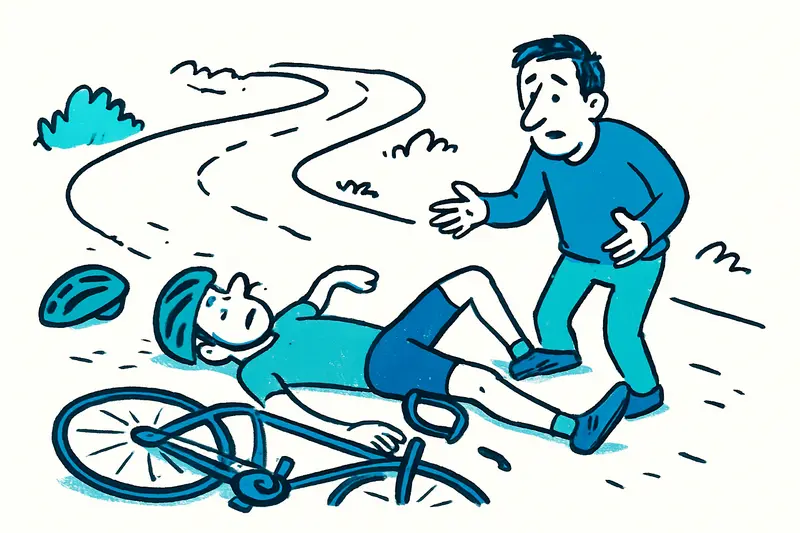
On Sunday at midday there was a fall on the stretch from Port d’Andratx towards Camp de Mar, near kilometre 3: a 66-year-old German cyclist lost control, hit his head on the asphalt and sustained a large laceration. Emergency services and two patrols of the Policía Local of Andratx were on site. According to the responders, the man was conscious after the fall; he was taken to the private Rotger clinic in Palma. Meanwhile, officers reported a second incident: a woman had fallen at the TIB bus stop at the Eroski in Andratx and was also treated medically and later transported to Palma.
Critical analysis
This report at first reads like one of many — and that is precisely the problem. The roadway between Port d’Andratx and Camp de Mar is a narrow, winding section, where I myself often hear the crunch of gravel on the verge and the clicking of road-bike gears as groups approach the descent. Cars, buses, rental scooters and groups of cyclists share very little space there. In such situations a small swerve, a bump or a moment of inattention is enough for a harsh impact on the asphalt.
The immediate helpers — Policía Local and SAMU 061 — did their job. But the view of why such falls recur is too limited in the public debate: it is not only about individual carelessness, but about infrastructure, traffic management and preventive measures.
What is missing in the public discourse
1) An inventory of hazard spots: there are hardly any accessible maps or systematic reports for cyclists about slippery sections, poor visibility in curves or bottlenecks. 2) Responsibility in tourism and traffic planning: many cyclists are visitors with rental bikes, often without local knowledge. Information from rental companies and hotels about critical sections is rarely mandatory. 3) Visible prevention: temporary signs, markings or reduced speed enforcement during peak cycling times are often missing. 4) Local first-aid coverage: who has first-aid kits, where are automated external defibrillators located, and how is radio and rescue access secured in the curves?
Everyday scene from Mallorca
Imagine the road on a mild Sunday afternoon: the air smells of the sea, engines hum, cutlery clatters in harbour cafés. A group of cyclists in colourful jerseys slowly overtakes a slow e-bike rider. Suddenly horns, a bus comes out of the curve, a rental car impatiently passes — a cyclist grabs the brake, the front fork slides on loose gravel, and seconds later someone is on the asphalt. Voices turn to help, a helmet lies shifted and neglected on the ground. Such scenes remind us how quickly everyday life turns into an emergency.
Concrete solutions
Short-term (days to weeks): • Temporary signs at hazard spots, clear info sheets at rental stations and hotels, mobile speed checks on weekends. • Local first-aid stations and publicly accessible AEDs at points with high bike traffic (harbour, Eroski, town centre). • Make checklists for rental bikes (brakes, tyres, saddle) mandatory.
Medium- to long-term (months to years): • Audit the route by traffic planners and cycling representatives: ease bottlenecks, create pull-out bays, stabilise the verge. • Designated, at least temporary, bike lanes or structural traffic calming in critical sections. • Information campaign for visitors: safe routes, group behaviour, protective equipment.
Organizationally: • Cooperation between the municipality of Andratx, rental operators, the tourism sector and emergency services so that hazard spots can be reported and prioritised. • Regular collection and publication of accident locations — not to assign blame, but to identify risk profiles.
Pointed conclusion
The ambulance was able to treat the injured person — that is important and must remain so. Nevertheless, the sequence of fall, emergency care and departure must not be accepted as the final outcome. Those who live here or receive guests share responsibility: simple measures could noticeably reduce the risk. We do not need utopia, but verifiable steps: mark, mitigate, inform. Otherwise the road between Port d’Andratx and Camp de Mar will remain a narrow line between a pleasure ride and an ambulance call.
Frequently asked questions
Why is the Port d’Andratx to Camp de Mar road risky for cyclists on Mallorca?
What short-term safety measures could be implemented on Mallorca’s cycling routes, such as Port d’Andratx–Camp de Mar?
Are hazard maps or cycling guides available for Mallorca, especially around Andratx?
What responsibilities do rental operators and hotels have to improve safety for visitors cycling in Mallorca?
Where would first-aid and AEDs be located along high bike-traffic areas in Andratx?
Is there a plan to create bike lanes or improve traffic calming on Mallorca routes like Port d’Andratx to Camp de Mar?
How can visitors help report hazard spots on Mallorca’s cycling routes?
What practical steps can cyclists take to stay safe on Mallorca’s coastal routes like Port d’Andratx?
Similar News

Four goals, heart-stopping moments, a message: Germania Mallorca takes three points in Consell — questions remain
The new German club on the island won its first away game in Consell 4:3. Celebration, a 4:0 lead, then a nervous finish...

Mueller continues expanding in Mallorca: Artà in 2026, Can Picafort in early summer 2027
The drugstore chain Mueller is opening two new stores in Mallorca: a 1,400 m² shop in Artà on 5 November 2026 and a bran...
The Painter Who Lived Mallorca: Franz Taussig and His Century-Old Secret
A hundred years ago a young Viennese arrived in El Terreno, sketched the island and called himself Francis Caron. Today ...

Airport dispute: Bridge, forecasts and the question of responsibility
A video by the Spanish transport minister has ignited the dispute over DORA figures, capacities and local governance pow...

The Painter Who Invented Himself: How a Young Viennese Drew Mallorca
A hundred years ago a 19-year-old draftsman arrived in El Terreno. His diary and sheets, long known under the pseudonym ...
More to explore
Discover more interesting content

Can Cap de Bou

Townhouse Lleo 72
