
Admission No Longer Free: How Palma's New Pricing Policy Is Changing the City
Admission No Longer Free: How Palma's New Pricing Policy Is Changing the City
Palma now charges admission for San Carlos, Bellver will become more expensive, and bus rides for tourists will also rise. A reality check: Who pays, who benefits — and what is missing from the discussion?
Admission No Longer Free: How Palma's New Pricing Policy Is Changing the City
Key question: Are Palma's public spaces and historic sites quietly turning into paid services — and if so: who loses, who wins?
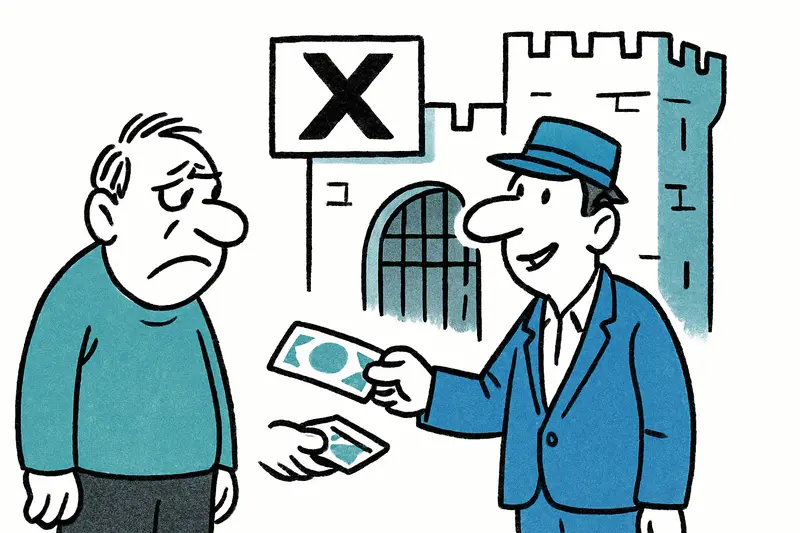
These days a small but symbolic price falls due: five euros admission to the Castillo de San Carlos at Porto Pí. At the same time, the city has significantly raised the fee to visit Castell de Bellver — entrance fee to be doubled for non-residents, and the municipal transport company EMT plans a single-ticket increase for tourists. On paper it is about preserving walls, collections and buses. In the old town, on the Paseo Marítimo and along the harbor edge, however, people talk about something else: accessibility, everyday quality of life and whether Palma is polishing its face for paying guests — at the cost of open access.
Critical view: revenues versus accessibility
Public cultural sites and transport systems need money. But the new line is clear: locals should be spared, visitors must pay. That is a legitimate political aim. What is missing is the probability calculation: How will tourist flows react, how will day trips and spontaneous walks change when a place that was previously free suddenly charges admission? A one-off fee of five euros may be marginal for some, but for others it marks a threshold. Those who plan their day with a budget in mind suddenly visit fewer places — that shifts revenue to cafés, museums and providers of commercial tours.
The justifications offered by those responsible — maintenance, restoration, better accessibility — are understandable. But without transparent figures it remains unclear whether the extra costs flow directly into concrete work or merely plug budget holes. And: differentiating by origin (resident vs. tourist) is administratively sensible, but raises questions about identity checks, bureaucratic effort and potential abuses.
What is missing from the public debate
Three points are hardly discussed: first, a detailed cost breakdown (What does the restoration really cost?); second, an assessment of the impact on visitor numbers and the local economy; third, models for ensuring that non-payers — for example children, low-income residents or short-term visitors — are not excluded from cultural offerings. Instead, headlines about percentages and revenue expectations dominate. The real debate about the right to use public spaces, neighborhood interests and digital control mechanisms remains vague.
Everyday scene from Palma
In the early afternoon, when the Tramuntana wind still blows cool over the harbor pier, pensioners with Tupperware sit on a bench at Moll Vell and look toward the little castle. A bus carrying tourists stops, a group of young people get off, pull out smartphones, briefly discuss the new price — and move on toward La Lonja. In both cases the new fee changes behavior: some stay out of habit, others filter their route. Decisions made in council chambers suddenly become visible in simple gestures: moving on, replanning, or lingering at another, free spot.
Concrete solution approaches
1) Transparency requirement: Before any price increase, detailed cost estimates should be published — including a timeline and priorities for the planned work. 2) Combination tickets and day passes: A regional combo offer (e.g. fortress + bus + museum) with dynamic pricing can retain spontaneous visitors and stabilize revenues. 3) Use social tiering more precisely: Instead of a blanket tourist vs. resident rule, discounts could be provided for families, young travelers or low-income visitors. 4) Cooperation with hotels and ferry lines: Discounts offered through accommodation providers with transparent proof of use can create win-win situations. 5) Citizen participation: Neighborhood assemblies and online consultations before major changes help secure local acceptance. 6) Digital traceability: Public dashboards show how admission fees are used — that builds trust.
What Palma now risks — and what is possible
If price series close like chained cabinets — bus, castles, parking — then everyday sense sits down on the bench faster than statistics. A tourist day with five visited attractions can suddenly become noticeably more expensive; that changes travel planning, and does not necessarily prolong stays, but may steer visitors toward more commercialized offers. On the other hand: used wisely, revenues can finance preservation and quality improvements and relieve neighborhoods from noise and overuse.
Only one thing must not happen: turning public culture into a pure pay-to-access commodity without transparent control and alternatives for access. Otherwise the idea of an open city will be reduced to an entrance gate.
Conclusion: Palma's new pricing policy is more than a sequence of numbers. It is a test of whether urban planning, the tourism industry and neighborhoods can find common rules. Without clear accountability and intelligent balancing mechanisms, displacement effects threaten — not only spatially, but in the cultural everyday life of the island.
Frequently asked questions
Why is Palma charging more for some public sites and transport now?
How much does it cost to enter Castillo de San Carlos in Palma?
Will tourists pay more than residents at Castell de Bellver in Palma?
Can Palma visitors expect public transport to become more expensive too?
What does Palma’s new pricing policy mean for a day trip?
Are there free places to enjoy Palma if paid attractions cost more?
How is Palma deciding who pays more: locals or tourists?
Why are people in Palma concerned about paid access to public culture?
Similar News

Haute Nuit in Puerto Portals: Fashion, Art and Indulgence by the Water
On October 2 the Lobster Club in Puerto Portals will be transformed into a stage for curated fashion, art and culinary e...
Magaluf: Watchtower Alarm – Lifeguards Pull Unconscious Beachgoer from the Water
After a drama in the late afternoon, two lifeguards at Magaluf beach rescued an unconscious 44-year-old man. He was stab...
Turquoise in the City: How dangerous is the color play of the Sa Riera?
The Sa Riera in Palma suddenly turned turquoise — a pretty motif, but behind the effect lies a discharge of saline waste...

Jeckliner at Sunnesching: Cologne spirit sets sail from Palma
In September 2027 the Mein Schiff 2 briefly becomes a floating carnival stage: four days with Cologne bands, comedy and ...
Finally Home: Mike and Leyla Heiter Buy Villa with Sea View in Mallorca
The reality TV couple Mike and Leyla Heiter have bought a house in Mallorca with a roof terrace and sea view. An Instagr...
More to explore
Discover more interesting content

Can Cap de Bou

Townhouse Lleo 72
