
After Four Robberies: How a Suspect Could Stay Hidden for a Year — Arrest in Son Gotleu
After Four Robberies: How a Suspect Could Stay Hidden for a Year — Arrest in Son Gotleu
After a series of four armed robberies in January 2025, the National Police arrested the last suspected perpetrator in a Son Gotleu pizzeria. A reality check: how was this possible and what is missing from the public debate?
After Four Robberies: How a Suspect Could Stay Hidden for a Year — Arrest in Son Gotleu
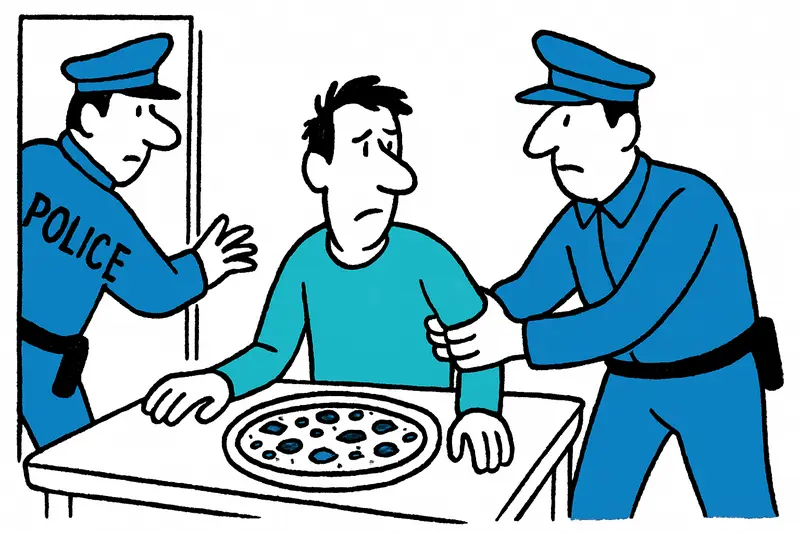
The images are unspectacular: a man, alone at a table, a pizza in front of him, as National Police officers enter and arrest him. The scene in a pizzeria in the Son Gotleu neighborhood seems almost banal — and precisely because of that it exposes a gap in the public perception of safety in Mallorca. It is not only about the arrest of a suspect in connection with four armed robberies from January 2025, but about the question: How could an adult allegedly involved in a series remain undisturbed for more than a year?
Key question
How do investigators manage to identify suspects while at the same time preventing further crimes — and why is it not always possible to remove people, vehicles and weapons from the criminal cycle more quickly?
Critical analysis
The facts: In January 2025 three people allegedly robbed four arcades in Palma and the surrounding area one after another (Arxiduc, Son Forteza, Carrer de Aragó, Molinar). A blank-firing pistol reportedly appeared repeatedly during the robberies, cash was stolen, and the escape ended in a wild chase to Calvià, where the getaway vehicle was later abandoned. The car had previously been stolen in Pollença. Two suspects were arrested promptly, a minor was handed over to the juvenile public prosecutor; the third man only reappeared now, while eating pizza in Son Gotleu. This sequence shows two things: first, that classic criminal investigation work — securing traces on the vehicle, analysing crime scene material, interviews — can be effective; second, that the gap between crime and arrest can be considerable, even with several identical offences in a short time.
Why? Investigations need evidence, witnesses and often technical material. A stolen car that disappeared months earlier from Pollença can resurface at scrap parts markets or end up in other hands — and thus blur the trail. Weapons, even blank-firing guns, are passed on. Cases involving youths in Son Gotleu are treated differently. And people do not always disappear far: they stay in their own neighborhoods, change jobs, learn to adapt. This everyday concealment makes the search more difficult.
What is missing in the public discourse
When these cases are discussed, debates often focus on harsher penalties or dramatic images of police chases. Rarely do they address three concrete points: 1) the resourcing of police and the judiciary for prevention and forensic follow-up; 2) the role of stolen vehicles as raw material for further offences; 3) the social mechanisms in neighbourhoods like Son Gotleu, Arxiduc or Molinar, where neighbour networks, informal work and a lack of offers increase the risk of sliding into crime. These perspectives are missing from headlines, although they are crucial to stopping repeat offenders. For example, public attention is sometimes drawn by operations such as Major operation in Son Gotleu: 60 police officers, many questions, rather than the quieter forensic work that follows.
Everyday scene from Mallorca
I know the area: the pizzeria in Son Gotleu with the oven that already sends tomato and yeast aromas into the street early in the evening; in front, Vespas, children playing with plastic balls, and older women picking up baguettes. Such places are part of everyday life and can at the same time be a hideout and a meeting point. That the arrest took place exactly here is no coincidence, but also an indication that people do not move far — they only shift a little until investigations begin.
Concrete approaches
The issue cannot be solved by more patrols alone. Some sensible steps would be: more targeted combatting of vehicle theft (better licence plate recording, cooperation with municipalities like Pollença), increased control and registration of sales channels for used parts, and more consistent tracking of blank-firing and signal weapons through forensic analysis. At the same time: outreach youth work in neighbourhoods with notable offence patterns, low-threshold offers for training and employment, and better information networking between police authorities on the islands — so that findings about a vehicle or a weapon take effect more quickly.
Technically, more and better-coordinated video cameras in shopping streets, closer cooperation with arcade operators to train staff for dangerous situations and faster exchange of trace analysis results would be helpful. Above all, investigations must take the local context seriously: images of chases may attract attention, but what matters is patience in securing traces and persistence that leads to an arrest like the one in Son Gotleu.
Conclusion
The arrest in the pizzeria is a success for the investigators, but not a blueprint. Anyone who wants to understand how crime arises and can be stopped in Mallorca must dig deeper — into the logistics of stolen cars, into the availability of blank-firing weapons, into the social roots of young offenders. Pragmatism helps: less pathos about pursuits, more work on the structures that enable such crimes. Son Gotleu returned to calm that evening; the pizza eaters came back onto the street. But the questions remain — and they are not only police matters, but political and social tasks as well.
Frequently asked questions
How do Mallorca investigators connect suspects to a string of robberies when the trail goes cold?
Why might a suspect involved in a string of robberies stay in the same Mallorca neighbourhood?
What role do stolen vehicles play in crime investigations across Mallorca?
What steps can communities in Mallorca take to help prevent repeat offences?
What practical measures could reduce vehicle theft and weapon circulation in Mallorca?
How are juvenile suspects treated in Mallorca crime cases?
What does the Son Gotleu arrest reveal about crime and daily life in Mallorca?
What is Mallorca's climate like and when is the best time to visit for outdoor activities?
Similar News

Solar eclipse: Can you safely photograph the sky spectacle in Mallorca with your smartphone?
In the evening the sky briefly darkens. Anyone who wants to capture the partial solar eclipse with their phone should pr...
Sky over Palma: What 17 Hot Days Really Mean for Son Sant Joan
Eurocontrol warns: In August, Palma airport risks capacity bottlenecks on 17 days. What that means for passengers, taxi ...

Champagne, Heat and Dance: A Summer Evening at the Mallorca Country Club
Around 250 guests celebrated in sweltering heat at the Country Club in Santa Ponça. Between the Champagne One premiere, ...

Sant Llorenç says 'Adiós' to horse-drawn carriages — room for quiet electric cabs
The municipality of Sant Llorenç is gradually replacing tourist horse-drawn carriages with electric vehicles. Two e-cabs...
Dilapidated Finca, No Water, No Electricity: When Will the Vacation Rental Bubble on Mallorca Burst?
A German family from Hanover books a holiday finca in eastern Mallorca — and ends up in a dilapidated property without e...
More to explore
Discover more interesting content

Boat Tour with BBQ along Es Trenc Beach

Private transfer from Mallorca Airport (PMI) to Pollensa
