
After the Death of Wolfgang Heichel: How We Deal with the Legacy of a Pop Era
After the Death of Wolfgang Heichel: How We Deal with the Legacy of a Pop Era
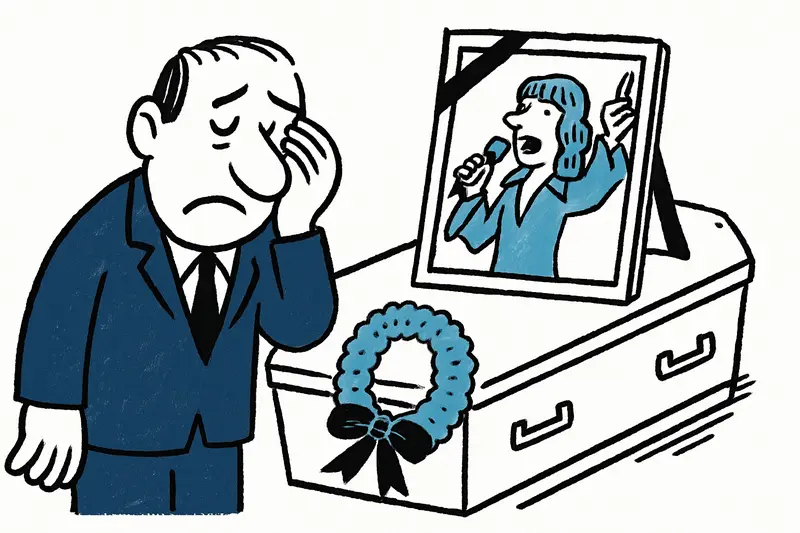
Wolfgang Heichel, the voice of “Dschinghis Khan”, died in January 2026. His former collaborator Stefan Track recalls their years together — and the open questions around legacy, the band name and ageing pop stars.
After the Death of Wolfgang Heichel: How We Deal with the Legacy of a Pop Era
Guiding question: Are memories and social‑media messages enough to responsibly preserve the artistic legacy of a pop act like “Dschinghis Khan”?
In the morning, when the streets of Palma still smell of coffee and damp asphalt and the phone lines at the editorial office on Passeig Mallorca give off a faint hum, the news reaches us: Wolfgang Heichel is dead. He was 75 years old and died in mid‑January at his home, according to the estate. Many people on the island associate his name with summer evenings, international tours and those hits that are still sung in pubs and at family gatherings today; similar dynamics have played out on the island, as in Gottschalk's farewell at Palma's Arena.
Stefan Track, who has been commuting between Majorca and gigs for years and runs the restaurant Goli in Porto Petro, reacted with visible distress. Even though the two men have gone separate professional ways in recent years and there were apparently recurring disagreements, Track says he remembers the pleasant times they shared and offers his condolences to the bereaved. Such personal words provide comfort, but they do not replace the questions that now arise; questions about the sustainability of performance careers and the balance of revenue and costs are discussed in pieces like Heino at the Bierkönig.
Critical analysis: The public handling of an artist's death often remains superficial. A brief message on a social‑media account, condolences from colleagues, then the attention fades. What is lost in the process is the engagement with concrete issues: How secure were the artist's last years? Were there legal regulations regarding the band brand or performances under the former name? Who will decide in future about concerts, audio releases or the use of the trademark “Dschinghis Khan”?
These are not merely legal niceties, but questions with everyday relevance. I think of a scene in Porto Petro: plates clink in front of the restaurant Goli, an old song drifts quietly over the sea; tourists sing along without knowing what agreements lie behind the stage set. Such moments can become confusing when different groups use the same brand name or when older artists are without clear protection.
What is missing from the public discourse: First: transparency about rights and responsibilities around bands whose line‑ups have changed over decades. Second: an open look at pensions and medical care for ageing entertainers — many were self‑employed for a long time, with irregular incomes. Third: an honest exchange about modes of conduct in artistic disputes; fans have the right to know why line‑ups change without conspiracy theories dominating, a dynamic that public incidents such as Wendler at the Megapark can make worse.
Concrete approaches: 1) A simple, publicly accessible documentation of trademark rights and usage permissions for well‑known ensembles. This could be supported by municipalities or cultural offices. 2) Advisory and legal services for older artists in the Balearics — low‑threshold assistance with pension issues, contracts and estate arrangements. 3) An industry initiative: voluntary standards for the use of band names so that fans are not misled and remaining artists have clarity. 4) Local commemorative projects: archives that securely store material and provide space for small exhibitions — not just in Palma, but also in towns like Santanyí or Portocolom, where concerts and cultural history are alive.
Such proposals may sound bureaucratic, but they are practical: anyone who has tried to organise a public exhibition with posters, collected flyers and concert photos in a hot summer season on Majorca knows how quickly original material disappears or rights remain unclear.
Concise conclusion: The death of Wolfgang Heichel is an occasion not only to mourn, but to tidy things up — both administratively and culturally. Memories are valuable; but without clear rules and support what artists leave behind fades away in confusing disputes over use or is simply forgotten. The island would benefit if we had a small, concrete system that secures cultural heritage while respecting the people behind it.
In the end there remains the personal level: on the terrace of a restaurant in Porto Petro, where one can hear the strikes of the waves and a waiter hums quietly while clearing away, people will continue to sing the old melodies. It is up to us — the organisers, the authorities, the colleagues — to ensure that these melodies are carried forward with respect and reason.
Frequently asked questions
What happens to a pop band’s legacy after a founding member dies in Mallorca or elsewhere?
Why are trademark rights important for old pop groups in Mallorca?
Are social media condolences enough to preserve an artist’s memory?
What support do ageing musicians in Mallorca need?
What can Mallorca do to protect the heritage of local concerts and pop culture?
Where in Mallorca is the discussion about pop legacy especially relevant?
Why do band line-up changes cause so much confusion for fans in Mallorca?
How can Mallorca balance mourning an artist with dealing with the legal side of a legacy?
Similar News
Injured captain, big plans: Germania Mallorca before the away match in Consell
The newly founded FC Germania Mallorca travels to Consell on Saturday. Captain Bastian Müller is out injured, but coach ...

Palma, Palma de Mallorca, Palma‑Mallorca: What is it really about?
The debate over the city's name is more than grammar: it concerns identity, law and branding policy. A sober reality che...

Warning to Bathers: Nipping Fish in Cala Major and Other Coves — a Reality Check
In Cala Major and several beaches around Mallorca, bathers report painful “nips”. Who are the animals, why are they gett...

Rental Car Theft in El Arenal: What This Incident Reveals About Our Gaps
A teenager steals a running rental car in El Arenal, flees on foot, climbs over walls and is caught by the Guardia Civil...

Red Rope in Palma's Library: What Helps Against Selfie Tourism — and What's Missing
Palma's city library cordoned off an area with a red rope to keep selfie tourism away from reading and working activitie...
More to explore
Discover more interesting content

Can Cap de Bou

Townhouse Lleo 72
