
Port de Sóller: Beach littered, water at risk — who takes responsibility?
Port de Sóller: Beach littered, water at risk — who takes responsibility?
Playa d’en Repic and Can Generós show plastic, uneven sand and concerns about water quality at the start of the season. Who must act — the municipality, the concession holder or boat owners? A reality check with a day-to-day scene and concrete solution proposals.
Port de Sóller: Beach littered, water at risk — who takes responsibility?
Guiding question: Who will clean up before the postcard beach becomes a problem for locals and visitors?
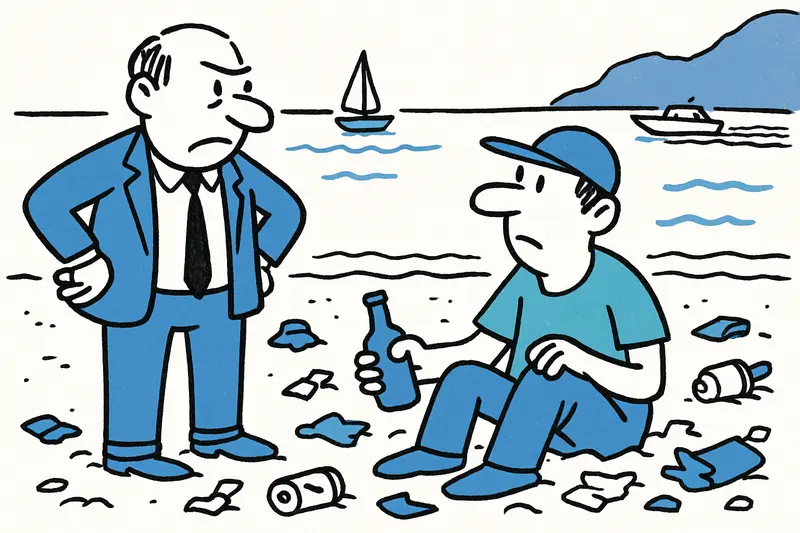
In the early morning, when the tram from Sóller rounds the corner into the harbor and the bell rings briefly over the Passeig, some tourists stand with sunglasses and a disappointed look at the edge of Playa d’en Repic. Between sunbeds and ice cream parlors there is litter, the sand is uneven in places, and further out in the bay boats leave their tracks across the water. This is the scene many residents and visitors currently describe — and it raises the questions: How did it come to this, and who is responsible?
The facts are known: the 2026 season has begun, lifeguards have been on duty since May, but the two beaches of Port de Sóller show clear maintenance deficiencies. In addition, the town lacks the Blue Flag this year — a sign that for many visitors is a quality indicator. Environmental groups warn of negative effects from the high number of yachts in the bay, and in previous years there were occasional warnings due to elevated bacterial contamination; volunteer and official clean-up efforts later revealed the scale of marine waste, with almost eight tons of waste collected off the Balearic Islands.
Critical analysis: Multiple causes, but diffuse responsibilities
The situation is no accident; it is the result of several overlapping problems. First: cleaning and beach maintenance currently seem insufficiently scheduled. Lay observers note that the sand is not raked regularly and waste remains between sunbeds and rocks. Second: the presence of numerous sport and leisure yachts increases the risk of water pollution, especially when vessels do not properly dispose of their wastewater or refueling operations proceed unclearly. Third: the situation is worsened by a lack of transparency — citizens do not know how often water samples are taken, which parameters are monitored, and what measures follow if limits are exceeded.
There is also a structural problem: concession contracts for beach sections regulate maintenance duties, but their control and sanctioning often lie in several hands — municipality, island administration, private operators. This diffuse responsibility is at the heart of Sóller's planned beach regulations. If everyone waits for someone else, beach maintenance remains piecemeal.
What is missing from public discourse
People talk about litter and the missing award, but rarely concretely about the causes: How many and which measurements were taken in 2024/2025, what are the results, and where exactly is the Posidonia affected? Precise information on the concession terms, satellite or drone images of anchoring fields, and yacht waste logistics are missing. Without these data the debate remains superficial and often targets scapegoats — the beach worker, the boat owner, the administration — without addressing the contractual and infrastructure issues.
Everyday scene from Port de Sóller
A local who drinks his coffee on the Passeig every day describes the picture like this: “At eight o’clock it is still quiet, the seagulls cry, the fisherman repairs nets at the quay. Two hours later the families arrive, the children build sandcastles — and you have to fish the biggest plastic scrap out of the sand for them first.” Such small, recurring disruptions add up to an image problem for the town that can spread quickly.
Concrete approaches to solutions
Measures are needed at different levels and visible actions immediately:
Short-term (days to weeks): Increased cleaning intervals, additional bins at access points, mobile morning clean-up teams, visible checks on boat wastewater disposal. Transparent notices on the Paseo with the latest water values and a cleaning schedule would build trust.
Medium-term (months): Agreements on anchoring zones with permanently installed buoys to protect Posidonia; clear rules for yacht sewage and waste; technical filters on storm drains that discharge into the bay; a publicly accessible monitoring portal for water quality and beach maintenance intervals.
Longer-term (years): Review of concession contracts: performance obligations, control mechanisms and penalty clauses should be tightened. Investments in sewage infrastructure and in alternative mooring locations outside sensitive seagrass areas should be considered.
Who must act now?
Responsibility is shared: the municipality must ensure visible cleanliness and public communication, the concession company must meet its contractual maintenance duties, boat owners must act responsibly for the environment, and the island or regional authority must monitor water quality. The missing Blue Flag is a warning signal, not a final verdict — but it should serve as a wake-up call.
Concise conclusion
Port de Sóller has everything a attractive coastal town needs: a bay, sand, charm. If current problems are only debated and not acted on, they will persist. Practical steps, clear responsibilities, transparent measurement data and visible enforcement can still turn the situation around — in time, before the image of an overcrowded, neglected beach defines the season. The next tram ride through the harbor can then once again be accompanied by the sound of a satisfied crowd instead of a disappointed look at the beach.
Frequently asked questions
What is the weather like in Mallorca in late November?
Can you still swim in Mallorca in late autumn?
What should I pack for Mallorca in late November?
Is late November a good time to visit Mallorca?
What can you do in Mallorca when the weather is cooler?
What is Palma like in late November?
Is Sóller worth visiting in late autumn?
How do Mallorca temperatures change after the summer season?
Similar News
Goodbye Megayachts: Why Palma's Port Is Now Focusing on Small Luxury Liners
Four smaller luxury liners berthed in Palma at the same time recently — around 1,600 passengers on board, plus about 2,0...

Fear in the Sa Teulera Forest: Youth Groups Harass Cruising Zone in Palma
In the wooded area of Sa Teulera, those affected report verbal attacks, property damage and intimidation. How safe is th...

Axa opens first health center in Palma: €3 million, 650 m² and more local access for La Vileta
In the heart of La Vileta, Axa has opened its first own health center in Mallorca. On around 650 square meters and with ...

30 Years of Nit de l'Art: What Palma's Art Night Really Shows — and Conceals
Nit de l'Art celebrated its thirtieth anniversary: full galleries, young visitors — and the quiet tensions between the a...

Hunt for Older Holidaymakers: Arrests after Suspected Pickpocketing in Port d'Andratx and Bellver
Five suspects were arrested after investigators accuse them of targeted pickpocketing of elderly tourists in Port d'Andr...
More to explore
Discover more interesting content

Can Cap de Bou

Townhouse Lleo 72
