
Rooftop escape in Lorca: Police arrest alleged dealer — and the bigger question remains
Rooftop escape in Lorca: Police arrest alleged dealer — and the bigger question remains
During a search in Lorca, a detainee attempted to escape across the roofs. Police report doses of cocaine and heroin, cash and weapons. What this incident says about control, prevention and the neighborhood remains unclear.
Rooftop escape in Lorca: Police arrest alleged dealer — and the bigger question remains
Key question: How can an apartment become a permanent hub for drug distribution — and what is missing in the response to this problem?
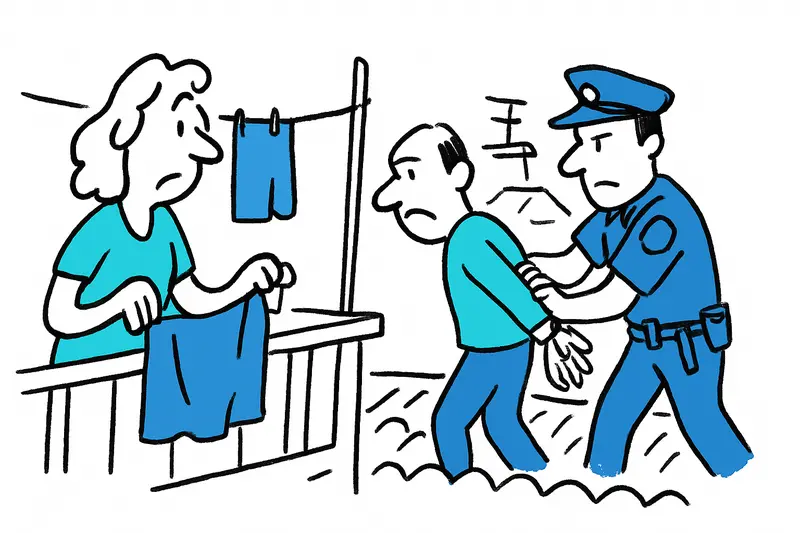
In the early afternoon, when the sun in Lorca beats down hard on the tiled roofs and the streets smell of dust, police special units crossed the alley of a residential area in the San Diego district. According to the Policía Nacional, the operation ended with a man trying to flee across neighboring roofs. Officers caught up with him and put handcuffs on him on the roof.
The facts given by the police are brief and striking: single doses of both substances — cocaine and heroin — as well as several thousand euros in cash were reportedly found in the apartment. Items indicating organized trade were also discovered: a precision scale, packaging materials and, incidentally, dangerous stabbing and bludgeoning tools. Investigations are underway; according to the accused, he had already been on the police radar before.
The scenario is spectacular, almost cinematic: drones supporting the operation, dogs, forensic teams and the fleeing suspect on the roof. Such images dominate public attention, as in Escape in Mallorca: Breakout from Police Vehicle Raises Questions in Llucmajor and Algaida. But they do not answer the real question: what made it possible for an apartment to become a permanent distribution point — without neighbors or authorities intervening effectively earlier?
From a critical perspective there are several fault lines. First: reporting chains and response times. In densely built urban neighborhoods, residents hear small things — visitors, voices, short visits at unusual hours. Yet many delay complaints out of fear of escalation or because reports to authorities get stuck in bureaucratic loops; by contrast, Quiet raid in Palma: Arrest after neighborhood tips — and what's still missing shows the role neighbor reports can play. Second: spatial blind spots. Activities often go unnoticed behind narrow courtyards or on vegetated rooftops. Third: resources and coordination. Repressive operations bring short-term results, but they do not necessarily address demand or the social drivers that lead to drug use.
What is often missing from public debate are the perspectives of the neighborhood and preventive work: social services, low-threshold health care, addiction counseling and access to employment. Without these components, arrests risk becoming mere disruptions to established distribution structures.
An ordinary moment in Lorca illustrates the problem: a neighbor hanging laundry on the balcony, children playing on the sidewalk, and a young man quickly disappearing into a doorway. To outsiders it looks like an ordinary afternoon. The same scene can be unsettling for the household community when unknown people repeatedly show up and small amounts of money change hands. That is precisely where possibilities for intervention begin — not only through police, but through neighborhood work and municipal presence.
Concrete proposals can be separated from each other without undermining investigative work: expand anonymous reporting channels for suspicious activities; targeted prevention programs in neighborhoods with high social risk; closer cooperation between landlords, municipalities and police, for example through mandatory points of contact; regular patrols focused on de-escalation; and regional information exchanges so that insights about distribution structures do not remain siloed locally.
Repressive measures remain necessary — the seizure of drugs, cash and weapons is a success of the investigators, as documented in Raid on Mallorca: Network of Drug Trafficking and Money Laundering Shakes Palma and Surroundings. But the spectacular rooftop escape and the ensuing images must not distract from the fact that long-term answers are needed on multiple fronts: prevention, social support, administration and judicial follow-up.
Conclusion: The operation in Lorca shows that institutions can act when reports accumulate. But it also shows how quickly problems settle into the gaps of everyday life — between clotheslines, gutters and courtyards. Those who want to prevent apartments from becoming hubs for trading goods must address what a single glove or a single can cannot fix: people, neighborhoods and structural precautions.
Frequently asked questions
What signs could indicate an apartment is becoming a drug distribution hub in Mallorca, and what should residents do?
Why do people in Mallorca sometimes hesitate to report suspicious activity, and how can communities improve reporting?
What steps can Mallorca municipalities take to prevent drug distribution networks in urban areas?
How do social services and addiction support help reduce drug trafficking in Mallorca neighborhoods?
What role do landlords play in preventing drug distribution in Mallorca, and how can they coordinate with police?
Why is police action alone not enough to solve drug distribution problems in Mallorca?
How do regional information exchanges help combat drug networks, and could Mallorca benefit from broader cooperation?
What’s Mallorca’s climate like and what should visitors pack for a year-round stay?
Similar News
Axa opens first health center in Palma: €3 million, 650 m² and more local access for La Vileta
In the heart of La Vileta, Axa has opened its first own health center in Mallorca. On around 650 square meters and with ...

30 Years of Nit de l'Art: What Palma's Art Night Really Shows — and Conceals
Nit de l'Art celebrated its thirtieth anniversary: full galleries, young visitors — and the quiet tensions between the a...
Hunt for Older Holidaymakers: Arrests after Suspected Pickpocketing in Port d'Andratx and Bellver
Five suspects were arrested after investigators accuse them of targeted pickpocketing of elderly tourists in Port d'Andr...
Knife stabbing in Magaluf: Why it must not remain an isolated incident
A 21-year-old tourist was stabbed in the chest in Magaluf and is in life-threatening condition. A reality check: what's ...

At Ten, Between Shoots and Schoolwork: Luna's World Tour from Palma
Luna is ten, 1.31 meters tall and already an in-demand child model. Between Ibiza, Paris, Lisbon and Berlin she commutes...
More to explore
Discover more interesting content

Can Cap de Bou

Townhouse Lleo 72
