
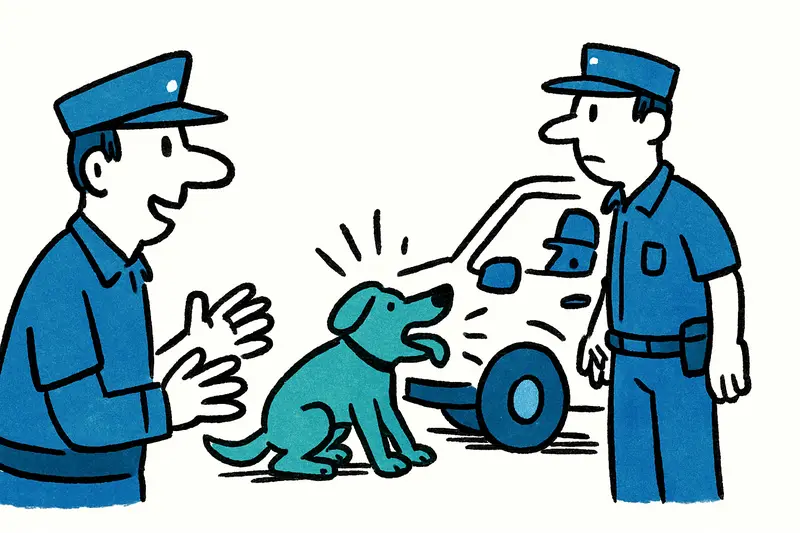
Bomb alert in Palma — False alarm, but questions remain
A police dog detected a suspicious item, the Tedax unit arrived — in the end: no bomb. The incident on Calle Simó Ballester brings relief but also raises questions about resources, communication and the storage of chemicals.
Police dog alerts, Calle Simó Ballester becomes a cordoned-off area
It was an ordinary morning in Palma: the sun had not yet risen high, the smell of espresso drifted from the corner café when sirens suddenly echoed through the quiet street. A duty dog from the National Police had alerted during a routine check of a car parked at the roadside. False bomb alarm in front of Palma police station provided further local coverage of the incident. What followed was a surprising spectacle for residents and breakfast guests: barrier tape fluttered in the light breeze, response vehicles with flashing lights lined up, and officers moved with the serious calm such operations require.
Large deployment, narrow street
About fifty officers, including the explosive ordnance experts of the Tedax unit, cordoned off Calle Simó Ballester and the adjacent pavement. Pedestrians were asked to take detours and some residents briefly left their apartments on instruction. The barista at the café closed the doors for about an hour — not a good morning for croissants and customers, but understandable when specialists are working with measuring devices outside.
All clear after about an hour
The experts searched the vehicle systematically. In the trunk they found several containers with chemical residues — apparently workshop materials, oil traces and cleaning agents. Measurements quickly showed: no explosives, no acute risk of explosion. Around 11:30 a.m. the officers lifted the cordons, and the street once again filled with the usual sounds of engines, bicycle bells and the distant murmur from the Paseo Mallorca.
Relief — and lingering questions
Relief dominated the reactions: “Fortunately nothing happened,” said an older neighbor as she carried her cat into the house. Yet the central question remains: was the response proportional — or will the whole deployment machinery be triggered by every dog alert? This is not a rhetorical question but a serious issue that concerns our sense of security and the allocation of resources. Public debate is often stirred by similar episodes and by other police actions, such as off-duty officers stopping a bag theft in Palma, which feed into perceptions of safety.
What is often missing from public debate
In the quick “coffee-crime” version of the street story, one point is usually omitted: the cause of the alert. Duty dogs are sensitive but not infallible. Smells of petrol, solvents or industrial cleaning agents can trigger false alarms. Equally seldom discussed is how such operations affect small businesses. An hour-long closure can mean a noticeable loss of revenue for a café during the morning rush — for the barista, the part-time worker, and the suppliers.
Analysis: security versus everyday life — a balancing act
The authorities acted correctly if a potential risk existed. Still, these incidents raise questions about efficiency and prevention. Can technological double-checks (additional detection devices, remote diagnostics) reduce false alarms? How well informed are places like workshops or mobile tradespeople about safe storage of chemicals? And: how transparently does the police communicate with residents so that fear and speculation do not grow unnecessarily? Recent cases, including a suspect arrested linked to nine burglaries in Palma, show how security operations and public information interact.
Concrete proposals — small steps with big impact
Practical lessons can be drawn from this small incident:
Prevention measures: Information campaigns for craftsmen and workshops on Mallorca about safe disposal and labeling of hazardous substances.
Technical double-checks: Use of additional analysis devices or a brief, graded risk assessment before large-scale evacuations — without compromising safety.
Better communication: Fast, clear information for residents and businesses so closures are understandable and rumors do not spread.
Support for small businesses: Guidance or a small compensation scheme when revenue losses due to verified operations occur.
Outlook: routine should not mean indifference
False alarms are unpleasant, but they also indicate that safety systems are working. Still, we should learn from them and not simply breathe a sigh of relief and move on. A quiet afternoon on the Paseo Mallorca, the scent of the sea and freshly brewed coffee — that is worth pairing caution with common sense. If authorities, tradespeople and neighbors cooperate, the number of unnecessary deployments can be reduced without losing sensitivity to real dangers.
In the end it remained a small mystery for the café table. The response teams did their job. The residents returned to their homes. And the cats found peace again. Only the question of better prevention remains — and that should be taken seriously in Mallorca.
Frequently asked questions
Why would police cordon off a street in Palma after a dog alert?
How long do bomb checks usually take in Palma?
What should residents do if police close their street in Mallorca?
Can everyday chemicals trigger a false bomb alarm in Palma?
Are false bomb alerts common in Palma?
Why do small businesses in Palma get affected by police cordons?
What time of year is Palma busiest for street-level incidents and closures?
What does a police operation near Paseo Mallorca mean for local traffic?
Similar News

A Spanish Evening at the Auditorium: Guitar, Colors and the Sea in Palma
Rodrigo, Ravel, Albéniz — and a new work by the guitarist: the second subscription concert brings Spanish music in a lar...

When Palma Becomes a Zombie Zone: 'Mallorca Z', AI and the Thought Experiment with Side Effects
A Mallorcan lawyer built a strategy game over a weekend using AI that treats the island as the scene of a zombie crisis....
Learning to Wait: How Leisure Is Making Space Again on Mallorca
Waiting doesn't have to be lost time. A mild October day in Palma shows how small pauses slow down our lives — and what ...
Cala en Brut: Body in the Sea — a Fatal Autumn Day and What’s Missing
In Cala en Brut (Ciutadella) a man's body was recovered during storm Dana "Adam". Why do autumn storms in the Balearics ...
When the road is gone: Port de Valldemossa cut off after storm 'Adam'
After heavy rains a retaining wall gave way and two sections of mountain road MA-1131 became impassable. Why are rural p...
More to explore
Discover more interesting content

Can Cap de Bou

Townhouse Lleo 72
