
Alcúdia tightens rules for e-scooters – more control instead of chaos?
Alcúdia tightens rules for e-scooters – more control instead of chaos?
Alcúdia has adopted a new regulation for e-scooters: minimum age 15, a helmet requirement with a 200-euro fine, up to 500 euros for missing insurance and other bans. One month of information, then enforcement. A reality check from everyday life.
Alcúdia tightens rules for e-scooters – more control instead of chaos?
Key question: Are tougher penalties alone enough to improve safety on Alcúdia's streets?
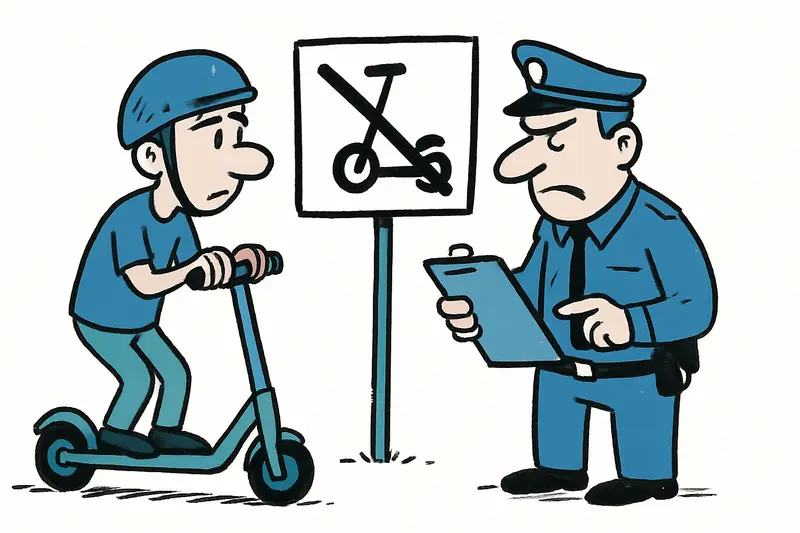
At the harbor of Port d'Alcúdia on a mild morning, teenagers race along the promenade. Music comes from a backpack, two people share a single electric scooter, one is on the phone. That very scene has now come into the municipality's focus: the town council has adopted a new ordinance that significantly tightens the rules for e-scooter use. Core points are a minimum age of 15 years, a 200-euro fine for riding without a helmet, up to 500 euros for missing insurance, as well as bans on carrying passengers, using headphones or phones, and riding on sidewalks. There will be an approximately one-month information phase, followed by strict enforcement. In 2025 the police in Alcúdia reported more than 300 citations for improper use — that is the background to the measure.
The ordinance hits a nerve. In the narrow alleys of the old town, between cafés and souvenir shops, improperly parked scooters obstruct pedestrians; on the seafront promenade conflicts arise between walkers and speeding e-scooter riders. Such everyday experiences are not isolated, and the municipality is responding. But the tightening raises questions that often get lost in quick news reports.
Critical analysis: tougher sanctions are only part of the answer. Fines can deter if they are reliably imposed and those affected feel the rules are fair and practicable. For young people the question remains how the minimum age will be checked: rental companies often operate online, and ID verification can be technically circumvented. And: a helmet requirement makes sense — as highlighted by a 66-year-old who died after an e-scooter fall in Alcúdia — but who pays for equipment that is only rented by the hour? A straightforward fine hits users who may not be deliberately negligent but simply uninformed.
What is missing from the public debate are concrete agreements with rental companies and clear responsibilities. Media reports often leave open how checks should be carried out and who is liable if an accident causes damage. There is also a missing perspective for tourists: many users are visitors who stay only a few days and do not know local traffic rules. This becomes urgent because infrastructure and lighting issues have contributed to serious accidents, for example a man crashed at night on the Carretera de Artà. Finally, bicycle lanes and narrow passages in Alcúdia are not everywhere clearly marked — that remains a structural problem.
A concrete everyday image: on weekends at the Passeig Marítim you see families with prams, older people taking walks and rental scooters carelessly parked in front of cafés. The heat makes the asphalt shimmer, and from the background come sentences like 'This can't go on like this.' These voices come from residents as well as shop owners. It is this mixture of holiday bustle and local life that makes Alcúdia special — and that makes the rules demanding.
Concrete solutions beyond fines: first, a clear registration requirement for rental devices with verified age checks by ID at on-site handover. Second, cooperation with rental companies to set up helmet stations at hotspots or provide helmets via delivery options; discounts for users who complete safety courses. Third, visible information campaigns in multiple languages at beach access points, parking areas and ferry terminals — not only digital but also with on-site signage. Fourth, better infrastructure: separate protected lanes on heavily used waterfront stretches and clear parking zones for scooters so sidewalks remain free. Fifth, a graduated sanctions model that confronts first-time offenders with warnings and educational offers instead of immediate fines, while repeat offenders are penalized more severely.
The role of the police is central but not solely decisive. Random checks are not enough; coordinated operations with clear documentation and a digital reporting system that makes incidents traceable are needed. Also: checking insurance requirements means insurance conditions must be standardized and understandable for users.
Conclusion: the tightened rules in Alcúdia are a clear signal against careless e-scooter use. They can help reduce conflicts and prevent accidents. However, fines alone will not solve the underlying problems. Those who truly want calm promenades and safe streets must combine technical checks, rental obligations, better infrastructure and educational measures. Otherwise, after the one-month information phase there will soon be only one outcome: less scooter chaos, but more frustration — among youngsters, tourists and locals alike. And that would be a shame for a place that thrives on community.
Frequently asked questions
What are the new e-scooter rules in Alcúdia, Mallorca?
Do you need to wear a helmet on an e-scooter in Alcúdia?
Can tourists rent and ride e-scooters in Mallorca without knowing the local rules?
Why is Alcúdia cracking down on e-scooters now?
Are e-scooters allowed on sidewalks in Alcúdia?
What happens after the information period for Alcúdia’s e-scooter rules?
What safety problems do e-scooters cause in Port d'Alcúdia?
How much can e-scooter users be fined in Alcúdia?
Similar News

More water than last year: Mallorca's reservoirs breathe easier
September rain refilled the Tramuntana's reserves: overall fill around 35 percent, Cúber at 40.42 percent, Gorg Blau at ...

Three Luxury Hotels in Banyalbufar: Lots of Money, Many Questions
A Danish investor plans three exclusive accommodations in Banyalbufar — including the historic Son Valentí. The announce...
2.1 tonnes of cocaine on sailing yacht off Spain's coast – a reality check for the coastguard
A 14-metre yacht was seized with 2.1 tonnes of cocaine. Who monitors the ports, how does the international hunt succeed ...

Heat Bonus in Mallorca: 100 Euros Extra for Outdoor Staff at MarSenses
MarSenses pays employees who worked outdoors in August an extra €100 as recognition. Lighter uniforms, reduced hours for...
Renovating in Mallorca: What You Really Can Do Without Neighbour Consent
Many think they can do whatever they want in their apartment. That's partly true — but only as long as structural elemen...
More to explore
Discover more interesting content

Can Cap de Bou

Townhouse Lleo 72
