
From Ruin to Neighborhood: Andratx Plans 30 Affordable Apartments Near the Church
From Ruin to Neighborhood: Andratx Plans 30 Affordable Apartments Near the Church
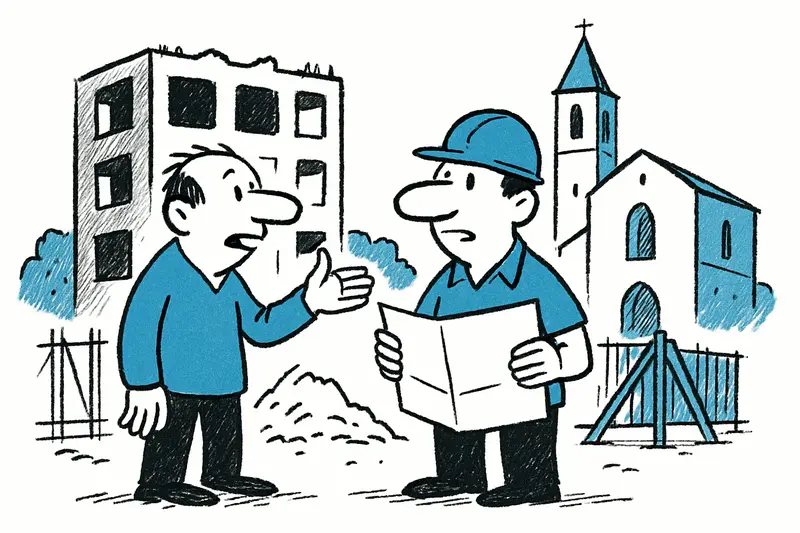
The municipality of Andratx wants to transform a half-finished construction site in sight of the parish church that has stood unfinished for over 20 years into a housing project with 30 affordable apartments for local families. Mayor Gonzalvo sees it as an opportunity to tackle the local housing shortage.
From Ruin to Neighborhood: Andratx Plans 30 Affordable Apartments Near the Church
On the small square, where in the mornings the church bells ring over the market and the scent of orange blossoms occasionally fills the street cafés, there had for years been an unfinished concrete block that gave every stroll through the village a somewhat gray weight. The building, which locals call s'Hort dels tarongers, is now set to begin a new chapter: the municipality has initiated the completion of a residential complex with 30 apartments to be offered at capped prices and primarily intended for people from Andratx.
This piece of the townscape has stood half-finished for more than two decades and is visible from many parts of the village. Originally the plot belonged to the parish; in the early 2000s a developer acquired the site and applied for a building permit for three residential blocks. After the subsequent economic crisis the project stalled, the construction company declared insolvency and the shell structure continued to deteriorate. A new owner has since taken over the site and submitted an application to finish the works.
Andratx is using a regional government regulation that allows buildings with expired permits to be completed and then used as price-regulated apartments. The municipality sees this as a pragmatic response to a pressing issue: for many locals, affordable housing is hardly available. The planned 30 units are intended largely for families and households from the town, with proof of long-term registration — ten years — forming part of the allocation criteria so that the offer truly benefits the local population.
In everyday life this means: no more monotonous shell at a central square, but lively windows, balconies and perhaps a small café downstairs where messy construction fences now stand. Such changes have a double effect in Mallorca: they not only improve the appearance, they also bring people back to the center, who work there, shop locally and strengthen social life, and municipal measures like Andratx creates 400 new parking spaces – who really benefits? can shape how people access the center.
The mayor of Andratx emphasizes that the project is deliberately aimed at resident-focused planning and that implementing the apartments is an opportunity to turn a previously unused, urbanistically disruptive site into housing for locals. It is a step that is being discussed in many municipalities on the island, as in Palma plans 3,500 apartments: Opportunity for Son Güells — or too much speed, too little planning?, reusing brownfield sites instead of sealing new land.
In practice there are still steps to take: permits must be formally completed, technical regulations complied with and consideration given to the historical surroundings — the parish church lies in immediate proximity. Even routine infrastructure works can be complex, as reported in Renovation in Port d'Andratx: Between Construction Site and Long-Term Security.
The neighborhood, which for a long time knew the sad reminder of a failed construction project, now hopes for less of a construction-ruin atmosphere and for apartments that give people rooted in Andratx good opportunities.
If you stroll through the plaça on a sunny morning, you hear traders talking, children quickly grabbing an ice cream, and occasionally a discussion about the future of the town. In these conversations lies the strength of such initiatives: small, central projects can change everyday life significantly. That a ruin will in future provide a roof over people's heads almost feels like a pragmatic form of town beautification — not just for tourist photos, but for those who live here.
Outlook: If implementation proceeds as planned, the project in Andratx could serve as an example for other places on the island that have similar half-finished buildings in historic centers. The combination of visible urban repair and targeted allocation to long-term residents is a form of local cohesion — and a pragmatic answer to the housing question that many Mallorcans face daily.
Why this is good for Mallorca
This project combines three things: it removes an urban scar, creates genuinely usable housing for locals and uses existing infrastructure instead of consuming new land. For a village like Andratx, which relies heavily on its atmosphere, this is more than a construction project — it is a return to the community.
Frequently asked questions
What is happening with the unfinished building near the church in Andratx?
Who will be able to apply for the new affordable apartments in Andratx?
Why is Andratx using an old building site for housing instead of building on new land?
How could the new apartments change daily life in central Andratx?
Are there still permits or technical steps needed before the Andratx apartments can be finished?
Is affordable housing a bigger issue in Andratx and Mallorca?
What happened to the unfinished s'Hort dels tarongers building in Andratx?
Could the Andratx housing project become a model for other Mallorca towns?
Similar News

Carriages Without Horses: Palma Plans E-Carriages – a Reality Check
Palma plans to switch to electric carriages in 2027. The prototype was shown near the cathedral. What is the technology ...

Record season, empty coffers: Who really benefits from the tourism boom?
Full hotels and more flights: the numbers sound impressive — yet many locals feel no benefit. A reality check with an ev...

Pool ordered for €46,000 – €23,000 paid, no work carried out: A fraud case in Palma
A homeowner in Palma transferred €23,000 for the construction of a pool. Weeks later it emerged that no building applica...

Summer greetings from the Pitiusas island: Gottschalk and Krüger enjoy the sun on Ibiza
A friendly photo of Thomas Gottschalk and Mike Krüger on Ibiza evokes memories of their shared film years and shows that...
Occupied in a Few Days: When Property in Mallorca Turns into a Dispute
Six young men were arrested in Palma after homeowners returned and could no longer open their own door. A case that rais...
More to explore
Discover more interesting content

Can Cap de Bou

Townhouse Lleo 72
