
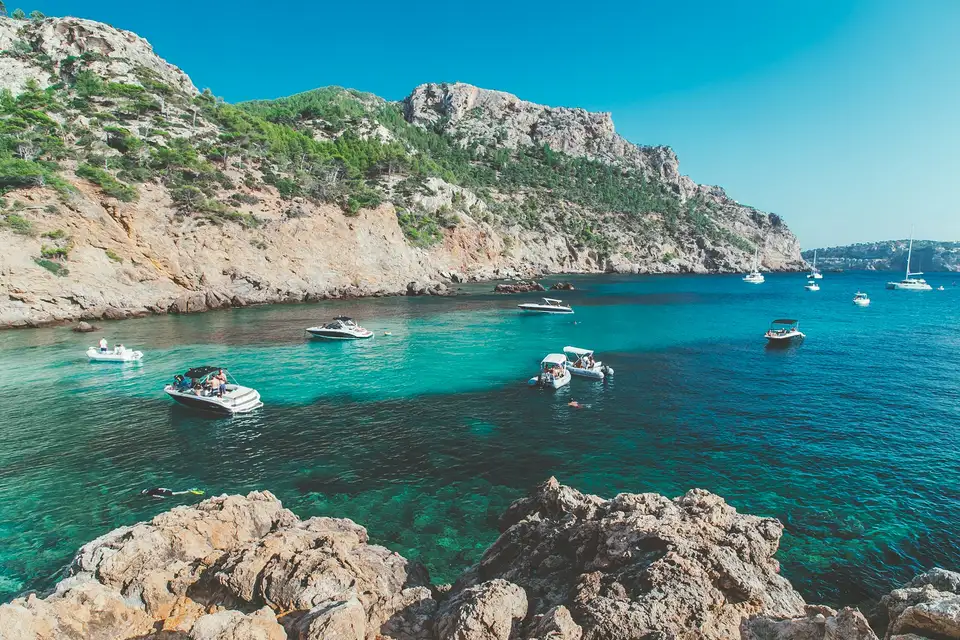
Arrest in Cala Rajada: Wanted German Apprehended in Holiday Apartment Complex — What's Missing in the Investigation?
A man wanted in Germany was arrested in an apartment complex in Cala Rajada. The tip came from Madrid and the National Police moved in. A reality check on gaps and possible solutions.
Arrest in Cala Rajada: Wanted German Apprehended in Holiday Apartment Complex — What's Missing in the Investigation?
Who controls who hides in the countless apartments in Mallorca during the summer? This question has resurfaced after the National Police arrested a man in Cala Rajada who was wanted under a European arrest warrant. According to investigators, the decisive tip came from the central Spanish manhunt unit UDYCO in Madrid; after the operation on Tuesday morning, a court ordered provisional detention. The suspect is now in Palma prison and is to be extradited to Germany.
The allegations are serious: German authorities say the arrested man was part of an organization in 2023 that delivered large quantities of narcotics. The charges carry a possible sentence of up to 15 years under German narcotics law. Those are the hard facts — without much rhetoric: an arrest warrant, a tip, an operation in an apartment complex in the northeast of the island.
What often gets lost in the exchange of reports is the everyday backdrop: Cala Rajada at seven in the morning, the air still salty, fishing boats in the harbor, a cleaner walking up the stairs in a holiday complex, a delivery van unloading pallets of drink crates. In this mix of tourism and normality there are hideouts for people who want to benefit from Iberian sun and anonymous overnight stays. That the National Police were successful here shows the system works — at least in this instance.
But the success also raises questions. How long do investigations have to run until a single tip puts investigators on the right track? Why do wanted persons end up in apartments rather than on the streets or at ports? And: are checks in the tourism sector, with short-term rental platforms and landlords, sufficient to make tips visible earlier?
Viewed critically, there are several problem areas: first, the registration and traceability of short-term rentals. Many apartments constantly change tenants; reporting systems are fragmented. Second, local authorities sometimes lack resources for preventive inspections — personnel are spread across operations and routine tasks. Third, reports from the public or hotel sectors are not always structured enough to become actionable manhunt leads without time-consuming follow-up.
Concrete levers that could improve the situation are practical: a lean, digitally linked reporting system for short-term rentals would make anomalies visible more quickly. More exchange between the Policía Nacional, Guardia Civil and local Policía Local — with clear interfaces to central units like UDYCO — would close information gaps. Training for landlords, caretakers and staff of apartment complexes on what to look for when there is suspicion could also provide early leads. Last but not least: accelerated administrative procedures for extradition requests so provisional detention periods are not extended unnecessarily.
Of course these are no magic bullets. Every intervention must respect rights and data protection; arbitrary checks would affect tourism and residents alike. But targeted measures — better digital reporting, clearer reporting channels, resource-oriented control deployments — would increase responsiveness without surveilling the island as a whole.
Conclusion: The arrest in Cala Rajada is a success of cooperation between national and central manhunt units such as those discussed in Mallorca's Most Wanted: The Trail to Sami Bekal — How a Case from Palma Became an International Manhunt. It also shows how much we rely on individual tips instead of a consistent, well-networked early-warning system. More has to happen between the doorbells of apartments and Palma's boulevards so that the next lead is not found again only by indirect routes.
Frequently asked questions
Why are wanted people sometimes found in holiday apartments in Mallorca?
What happened in Cala Rajada during the police arrest?
How do police in Mallorca usually find wanted suspects in tourist areas?
What should landlords and apartment staff in Mallorca watch for?
How serious are narcotics charges linked to a European arrest warrant in Germany?
Does Mallorca need tighter controls on short-term rentals?
What does provisional detention mean after an arrest in Palma?
Why do Mallorca authorities rely so much on tips in manhunt cases?
Similar News

Who Benefits from the Half‑Hourly Flight on the Edge? Aena, Investments and the Island's Interests
Almost one billion euros is flowing into Son Sant Joan. The figures show the scale of investment and expected beneficiar...

Are the Balearic Islands the Southern Border of Europe? A Reality Check on Immigration
The Balearic Islands are again calling for EU aid after a sharp rise in arrivals by sea. Conflicting priorities between ...

"Expensive chaos" and many open questions: What clients can do when a lawyer suddenly stops responding
Several clients complain that a well-known German lawyer in Mallorca has been unreachable for months. Key question: What...
TV tip: 'The Last Problem' — Mallorca as the setting of a classic crime
A classic whodunit on Mallorca: A new miniseries set in spring 1959 brings storm, an isolated hotel and a dense web of s...

Nipping Sea Creatures: Why Bathers in Cala Major and Elsewhere Should Be Cautious
In Cala Major, bathers have reported being nipped by small fish. What is behind it, how can problems be avoided — and wh...
More to explore
Discover more interesting content

Can Cap de Bou

Townhouse Lleo 72
