
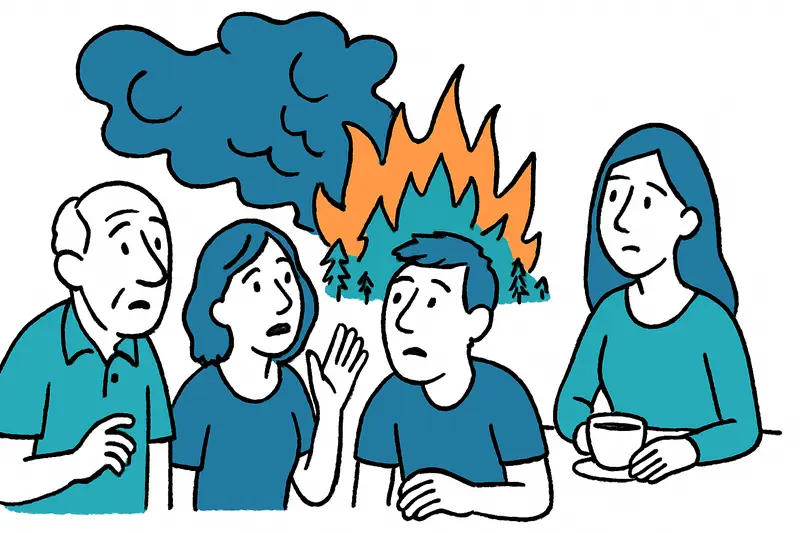
Major fires near Madrid and Avila: A reality check for Mallorca
Major fires near Madrid and Avila: A reality check for Mallorca
More than 60,000 people are affected, a state of emergency has been declared. What do the major fires around Madrid tell us about the security situation in Mallorca? A critical look.
Major fires near Madrid and Avila: A reality check for Mallorca
Guiding question: What does the fire chaos in central Spain mean for us in Mallorca?
The figures reported in the past hours are harsh: more than 60,000 people are affected by the fires in the Madrid region and the province of Avila; in Madrid about 50,000 people had to leave their homes or were asked to stay at home, in Avila around 13,000 people are affected, and authorities say roughly 9,000 hectares have already burned there. Spain has declared a state of emergency, military units are supporting operations, and additional firefighting aircraft from Italy and Greece are expected to arrive — and the Balearic Islands Declared a Disaster Zone: What This Now Means for Mallorca and Ibiza coverage explains implications for local support. These facts should not leave us on Mallorca indifferent — even if the flames on the island are not (yet) raging, as reporting such as Spain is Burning: Fire Traces as Far as Mallorca – Is the Country Really Prepared? shows.
In short and direct terms: these events show how quickly an ordinary summer week can become a national crisis. The question is not if, but when the next major wave of fires will hit a region — and how well we are prepared. That applies to Madrid and Avila, and it concerns us here.
Critical analysis: weaknesses exposed, strengths overstretched
The mobilized resources are large, air support comes from abroad, and satellite data help coordinate efforts. Still, responders repeatedly faced two problems: first, the sheer force of the fire fronts themselves — wind, dry vegetation, hot air. Second, organizational bottlenecks in evacuations and caring for those affected. When a crisis forces a state of emergency for the first time at this scale, it shows that existing resources are powerful but not infinitely scalable.
For Mallorca this means: we have our own fire brigades, local crews and limited aerial capacity; recent events such as the Field fire near Manacor: What the operation on the Ma-15 reveals about Mallorca's fire risk highlighted local evacuations and equipment limits. But in the long run our protection also relies on the national and European network of mutual aid. If multiple disaster regions need assistance in one summer season, supply chains, aircraft and even water reserves will be stretched.
What is missing from the public discourse
Reporting focuses on images of destruction and on quick figures — understandable, but insufficient. Four questions often remain unanswered: How strong is local prevention? How effective are fuel breaks and access corridors? Who is responsible for abandoned or neglected land that now serves as fuel? And how are long-term compensation and reforestation organized? In Mallorca we talk too much about acute risks and too little about structured prevention in the off-season.
A scene from Palma: what neighbors are saying now
In front of the café on Passeig Mallorca, the air conditioning cuts the heat into small pieces, two pensioners, a teacher and a young restaurant owner discuss the situation. “We get the pictures, but nobody explains how we should help,” says the teacher, stirring her café con leche. The restaurant owner looks toward the harbor and adds quietly: “If the wind shifts like it did there, we’re just waiting too.” Conversations like these show: concern is real, willingness to help exists — but concrete information is often missing.
Concrete solutions — what should be done
1) Early investment in local firefighting capacity: additional water reservoirs, mobile pumps and targeted training for municipal brigades. 2) Strategic fuel reduction: maintenance of orchards and pastures, planned controlled clearings at forest edges and the creation of fuel breaks, especially around settlements and infrastructure. 3) Expansion of early warning and communication chains: clear, multilingual evacuation plans that tourists and seasonal workers understand, together with digital alert chains for residents. 4) Financing mechanisms: establish a regional disaster fund that provides immediate aid to those affected and resources for rapid reforestation. 5) Strengthen EU-wide coordination: priority rules for air support and personnel so that multiple fire sites do not compete for the same resources simultaneously.
Why this matters for Mallorca
In the height of summer many people are on the move here, tourist centers are full of visitors and infrastructure is under pressure. If air fleets and specialized equipment are tied up elsewhere, our resilience decreases. Additionally, Mallorca has flammable pine forests, olive groves and old, dry maquis. Prevention is cheaper than reconstruction. That should be clear to every local politician currently deciding on building permits or forest management, and alerts like Mallorca on Alert: Highest Wildfire Warning Level and Scorching Heat – What to Do Now underscore the immediacy of that choice.
Conclusion: act instead of just react
The images from Madrid and Avila are an alarm, not merely television footage. These are people, houses and landscapes — and a wake-up call for our island community. In the short term we must closely monitor which national resources can be deployed. In the medium term we need to strengthen local structures: more water extraction points, clear evacuation routes, and a culture of prevention in municipalities. Anyone on Mallorca who just watches now risks finding themselves in need of help next summer.
Pointed closing remark: Fire cannot be ignored. It does not smell like politics, but like management. We should deliver both.
Frequently asked questions
What do the Madrid and Avila fires mean for Mallorca's wildfire risk this summer?
How prepared is Mallorca for wildfires compared with mainland Spain?
What practical steps can Mallorca towns take to reduce wildfire risk this summer?
How does weather drive wildfires, and could Mallorca be affected by conditions elsewhere in Spain?
What evacuation planning should Mallorca improve for residents and visitors?
Why is prevention emphasized over reconstruction for Mallorca?
What lessons can Mallorca draw from the Madrid-Avila crisis about response coordination?
Which landscapes in Mallorca are most at risk during wildfires?
Similar News

"Expensive chaos" and many open questions: What clients can do when a lawyer suddenly stops responding
Several clients complain that a well-known German lawyer in Mallorca has been unreachable for months. Key question: What...
TV tip: 'The Last Problem' — Mallorca as the setting of a classic crime
A classic whodunit on Mallorca: A new miniseries set in spring 1959 brings storm, an isolated hotel and a dense web of s...
Nipping Sea Creatures: Why Bathers in Cala Major and Elsewhere Should Be Cautious
In Cala Major, bathers have reported being nipped by small fish. What is behind it, how can problems be avoided — and wh...
Forced eviction in Santa Catalina: When a 65-year-old slept in her car and showered on the beach — a question of responsibility
The story of Pilar López from Santa Catalina represents a problem affecting many Mallorcans: How can an island with a bo...
New traffic rules from October 1: What Mallorca visitors and locals need to know
From October 1, 2026, Spain will implement far-reaching changes to traffic regulations. Important for Mallorca: greater ...
More to explore
Discover more interesting content

Can Cap de Bou

Townhouse Lleo 72
