
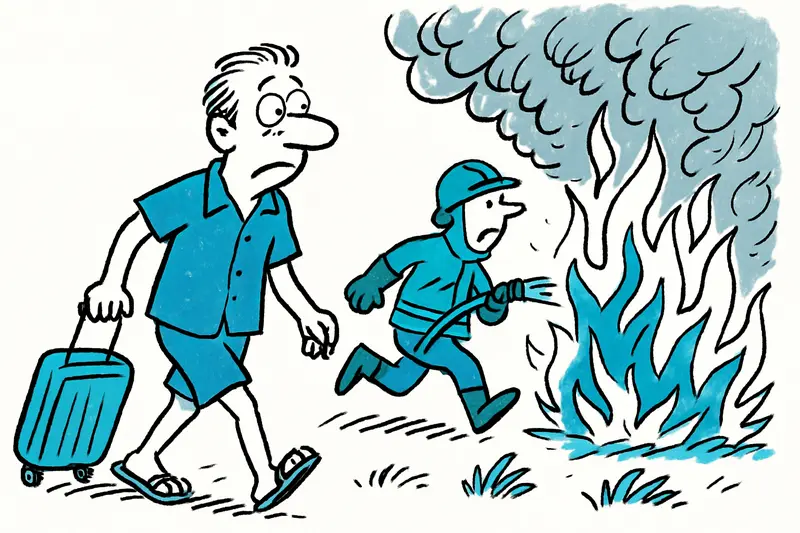
Spain is Burning: Fire Traces as Far as Mallorca – Is the Country Really Prepared?
Smoke from Galicia and Castile drifts as far as Palma. The images are shocking — and raise an urgent question: Are prevention and strategies against large wildfires still sufficient?
Plumes of Smoke, Sirens, Politics: What Really Matters Now
The dramatic images from Galicia and Castile are still fresh when Prime Minister Pedro Sánchez cuts short his vacation and travels to the affected regions. On Mallorca we feel the aftermath: some mornings the air in Palma still smells of smoke, fishermen at Portopí shake their heads, and at Platja de Palma the shimmering horizon becomes the talk of the beach café. But the central question remains: Are the resources and strategies sufficient to prevent such mega-fires in the future? As reported in Mallorca on Alert: Highest Wildfire Warning Level and Scorching Heat – What to Do Now.
What the Public Often Doesn't See
The images show flames, evacuations and burning slopes. Less visible, however, are the structural problems that fuel these disasters: decades of rural depopulation, abandoned farms, neglected grazing lands. That means more dry, contiguous fuel. Combined with rising temperatures due to climate change, a dangerous mix emerges.
Added to that is the question of resource allocation. Yes, helicopters and water bombers are in action and international aid is on the way. Local deployments are also underway, as described in Mallorca's emergency crews head to the mainland: solidarity — and open questions. But how long can Spain's island-and-mainland structure withstand sustained pressure when multiple regions are burning at the same time? On Mallorca we are closer to the situation than we would like — not only because of the smell in the air, but because such extreme weather events are becoming more likely here as well.
Arson, Politics and Prevention: A Triad of Problems
There are indications of arson and initial arrests. That is outrageous and must be prosecuted. But tougher punishments alone will not solve the problem. More decisive are preventive measures: active landscape management, financial incentives for pastoral farming, controlled burns in trained hands, and local fire protection plans that work on a small scale. On Mallorca there are municipalities already trying this; in other regions of Spain, personnel and budgets are often lacking.
What receives too little attention is the role of EU agricultural policy and how subsidies shape land use. When financial incentives disappear, land is left fallow. And fallow land is highly flammable in hot summers.
Concrete Approaches – What Would Help Now
Short term: better early warning systems using satellites, drones and networked sensors; rapid mobilization of firefighting capacity where fires start; coordinated international assistance without bureaucratic delay. Important: transparent information policies so people can be evacuated in time.
Medium and long term we must think differently: see landscapes as protective infrastructure. That means targeted grazing, restoration of historical mosaic landscapes, a return to small-scale agriculture, reforestation with more fire-resistant species and removal of sealed surfaces. Municipalities need funding programs that reward active maintenance — not the opposite. And last but not least: widespread training for volunteer and professional fire services that can operate in rugged terrain.
What Role Does Mallorca Play?
Even if the fires are far away, we feel the effects: air quality, tourist perception and expressions of solidarity from visitors. At the local level there is already engagement: volunteers collect relief supplies, mayors coordinate donation drives, and the coast guard is stepping up aerial monitoring, as covered in Balearic Islands Head to Castilla‑León: Solidarity, Logistics and the Uncomfortable Questions. That is good — but not a substitute for nationwide strategies.
An example in practice: In some Tramuntana villages cooperation between shepherds, municipalities and the fire brigade already works much better than elsewhere. Where sheep herds graze again on the mountains, the fire risk is measurably reduced. This is reflected in accounts such as Back from the firefront: What Mallorca's responders really need.
Conclusion: Not Just Extinguish, But Reshape
The images of burning forests are shocking. They evoke compassion and a desire to help. But they should also prompt a rethink: away from a pure reflex to extinguish, toward active landscape and social policies that make prevention possible. Spain now has the momentum to prioritize solutions — and we on Mallorca should listen, learn and strengthen our own protection strategies. Because the smell of smoke in the early morning is not only a sign of proximity: it is a reminder that we too become more vulnerable if nothing changes.
Frequently asked questions
Why does smoke from mainland wildfires sometimes reach Mallorca?
Is Mallorca at higher wildfire risk during extreme heat?
What should people in Mallorca do when wildfire warnings are high?
When is wildfire season in Mallorca usually worst?
How do wildfires in Spain affect tourism in Mallorca?
Why are rural areas around Mallorca important for wildfire prevention?
What role do Mallorca firefighters play when the mainland is burning?
What parts of Mallorca are most focused on fire prevention?
Similar News
Why the Striped Breams in Cala Pí Should Be a Wake-up Call
Once again bathers in Cala Pí were surrounded while swimming by small, nippy fish — some wounds bled. Time for clear rul...
Daily from New York: How Palma's Air Traffic Is Growing — and What Must Change
United will increase the Newark–Palma service to daily flights in 2027 (Boeing, 231 seats). Strong tourist numbers clash...

When Love Ends in Shards: Destruction in Son Vida and the Questions That Remain
In Son Vida a relationship dispute escalated: a woman destroyed furniture in a luxury villa, later pressed a panic butto...
Who Bears the Burden? Mallorca Between Tenant Protection and Landlord Fears
Madrid's new housing decrees strengthen tenant rights — but on Mallorca concern is growing: will the law drive small lan...
On the Edge: What Mallorca's Airport Loses If a Major Low-Cost Carrier Falters
The company that operates numerous connections from Palma to France and domestically is negotiating with creditors to re...
More to explore
Discover more interesting content

Can Cap de Bou

Townhouse Lleo 72
