
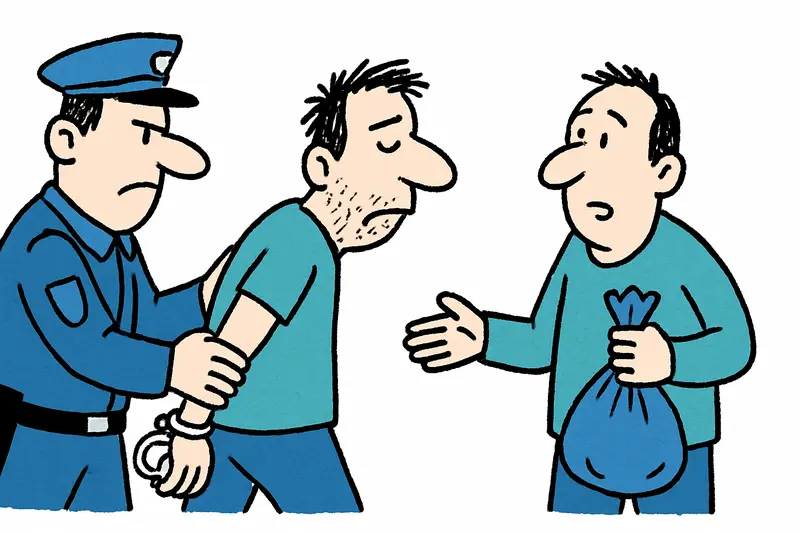
Arrest in Cala Ratjada: European Arrest Warrant Leads to Operation
Arrest in Cala Ratjada: European Arrest Warrant Leads to Operation
The Policía Nacional arrested a man in Cala Ratjada who was wanted under a European Arrest Warrant from Germany. He is suspected of membership in a drug organization and trading large quantities of narcotics. What does this case reveal about cross-border crime and everyday life in Mallorca?
Arrest in Cala Ratjada: European Arrest Warrant Leads to Operation
What the case reveals about cross-border crime and local security
On 11 June 2026 the Policía Nacional carried out an operation in an apartment complex in Cala Ratjada. A man wanted by German authorities under a European Arrest Warrant was arrested. He is suspected of being part of a criminal organization and of trading large quantities of drugs. In Germany he faces up to 15 years in prison; he is currently in Spanish pre-trial detention and is to be extradited.
Key question: What remains after such an arrest — security for residents and tourists, or merely another blow against a branched network whose edges are visible here on the island, as covered in Major raid in Mallorca: Arrest of an alleged clan leader raises big questions?
In the short term the operation is reassuring: plainclothes officers, no dramatic flashing lights, but a focused action in a residential complex near the harbor. For the people of Cala Ratjada — the fishermen in the morning, the baker on the Carrer Major, the beach bar owners at Praia Son Moll — such news brings both concern and relief. Concern because criminal structures reach into neighbourhoods; relief because the security authorities are acting.
Critical analysis: The European Arrest Warrant functions here as an instrument of cross-border cooperation, as explored in Arrest in Mallorca after European arrest warrants: How safe is the island as a hideout?. But an arrest alone does not answer the deeper questions: How do large quantities of drugs reach the island? What infrastructure do the networks use — legal cargo, small transports via charter boats, or hiding places in tourist apartments? And how much of the investigative work remains invisible to the public?
The public discourse has gaps. Short-lived headlines about arrests often dominate while debates about prevention, property and housing market problems, or money laundering are missing. On Mallorca vacant apartments and short-term rentals are repeatedly named as risks — yet a systematic review is lacking: Who controls short-term rentals? How are ownership structures checked? What effects does seasonality have on investigations and witness protection? These concerns are also reflected in Spanish-language reporting such as Detención en Mallorca tras órdenes de detención: ¿Qué tan segura es la isla como escondite?.
An everyday scene: Early in the morning the wind plays with the palms on the promenade of Cala Ratjada, a fisherman repairs nets, a tourist orders a café con leche. The police arrive — discreet, professional — and after two hours the street is free again. Such scenes seem normal, but they also remind us that police successes depend closely on neighbours, property managers and local businesses. Neighbours who report unusual deliveries or strange visitors are often the quiet helpers of these investigations.
Concrete solutions that go beyond individual arrests: First, better control and transparency for short-term rentals; mandatory registration and cross-checking with national watchlists would be one approach. Second, expanded cooperation between port authorities, Guardia Civil, Policía Nacional and European partners — not only for arrests but for data analysis and pattern recognition. Third, targeted prevention work in neighborhoods with high turnover: social services, low-threshold contact points and information campaigns for landlords. Fourth, strengthened anti-money-laundering controls: check real estate flows for anomalies, report and communicate suspicious cases.
It is also important that investigators’ work remains visible — not through sensational reporting, but through transparent information from the authorities about procedures and perspectives. That builds trust. And for the island: sustainable measures instead of episodic raids.
Punchy conclusion: The arrest in Cala Ratjada is a necessary step, but not an endpoint. Those who truly want Mallorca to remain safe must broaden the view — from the single apartment to the structure, from the headline to lasting oversight. Cases like this make clear that police and neighbourhoods must cooperate; only then will everyday life stay as calm as the fishing boats in the morning in the harbour of Cala Ratjada.
Frequently asked questions
What is the weather usually like in Mallorca in late spring?
Is Mallorca warm enough to swim in during late spring?
What should I pack for Mallorca in late spring?
Is late spring a good time to visit Mallorca?
What is Cala Bona like in late spring?
Is late spring a good time to walk around Port de Pollença?
How busy is Mallorca in late spring?
What kind of activities work well in Mallorca in late spring?
Similar News
Stolen Motorcycle in Palma: Fatal Crash in Coll d'en Rabassa Shortly After Theft
A motorcycle parked on Plaza Miquel Dolç in Son Gotleu was reportedly stolen in the early hours. Hours later two men cra...
When More Guests Mean Less: Mallorca's Restaurants at the Limit
Despite record visitor numbers, the revenues of many restaurants are shrinking. Why more visitors don't automatically me...
Ballermann 2026: Heat, crowded promenade and rising prices – how much longer?
Bright sunshine, over 35 degrees in the shade and busy venues at Playa de Palma: Tourists enjoy the parties, restaurateu...
Stolen motorcycle, high-speed escape, deadly crash: An accident in Palma that raises questions
A motorcycle stolen in Son Gotleu ended up hours later on the Cardenal-Rossell in Coll d'en Rabassa in a deadly collisio...

Found dead in Son Gotleu: Dog walk ends fatally — what is missing in the investigation?
A 68-year-old man was found dead on Sunday morning on Tomás Rullàn street in Son Gotleu. According to his partner, he ha...
More to explore
Discover more interesting content

Boat Tour with BBQ along Es Trenc Beach

Private transfer from Mallorca Airport (PMI) to Pollensa
