
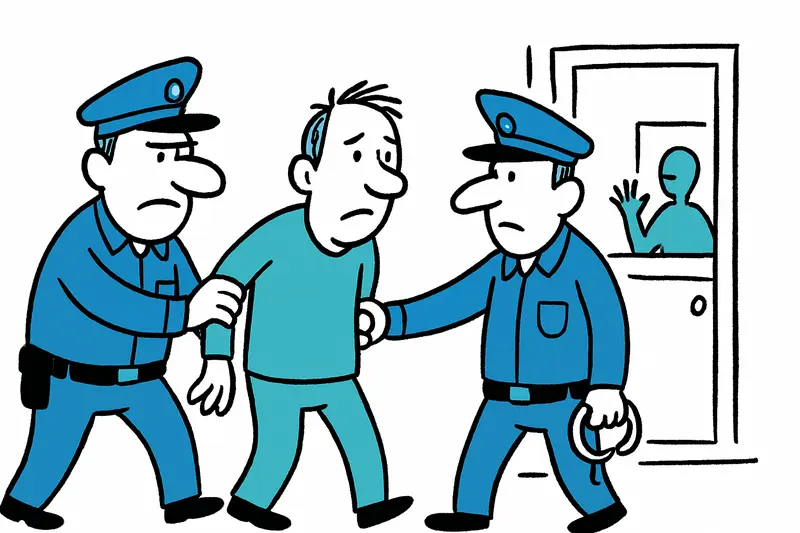
Arrest in Es Rafal: How safe is housing in Palma?
Three men — two Spaniards, one German — were arrested in Es Rafal after neighbors reported a forced entry into an apartment. A reality check: What is missing in the debate about property protection?
Arrest in Es Rafal: How safe is housing in Palma?
On Saturday night a disturbance in the Es Rafal residential area caused alarm: residents called the police because three people were allegedly trying to force their way into an apartment. A National Police patrol shortly afterwards found two Spaniards and a German in a car and arrested them. Authorities say: door damaged, alarm system destroyed and thrown into a toilet, burglary tools found — the suspects are said to have confessed during questioning and will be brought before a judge. This echoes other recent police actions reported in After nine burglaries in Palma: Arrest brings relief — but questions remain.
Key question
How well protected are private apartments in Palma when attacks happen in the middle of the night and the perpetrators appear to act purposefully?
Critical analysis
At first glance the sequence seems positive: neighbors dial 091, a patrol responds and the suspects are caught. But the details reveal problems. The image of a damaged door and a destroyed alarm system already shows that simple physical barriers are not enough. Security personnel hired by owners are often the first witnesses — in this case such an employee was on site. That raises questions about training, equipment and communication channels between private guards and the police. Also: if perpetrators deliberately destroy an alarm system, investment in such technology loses much of its effectiveness.
What's missing in the public debate
The perspective of those affected is often missing: How do people whose door has been forced feel? What costs arise from repairs, replacing security equipment and lost peace of mind? Rarely is the role of security companies discussed — their response times, liability issues and standards for staff. And finally, the question remains how preventive measures at neighborhood level could look: Are there functioning alarm chains, neighborhood networks or municipal contact points that support property owners?
Everyday scene from Es Rafal
Imagine the street: streetlights cast a pale light over narrow pavements, a dog barks somewhere, an elderly woman in her pajamas leans against the shutter and looks down. A neighbor on the first floor, who usually listens to the radio at that time, instead hears the dull pounding on a front door. A woman's voice calling 091 is agitated. Minutes later the blue lights, footsteps, the rustle of paper — statements are recorded, questions are asked, the security guard notes the condition of the door. Similar concerns about safety in confined streets are explored in Arrest in Barcelona after Watch Robbery — What Does It Mean for Palma's Old Town?. Such scenes shape the local feeling of safety more than any statistic.
Concrete solutions
1) Better networking: civic WhatsApp or Signal groups, paired with clear rules of conduct, can spread alert signals faster. 2) Standards for private security services: agreed minimum requirements for training, equipment and communication with the police would strengthen the initial response. 3) Protection of technology: alarm systems should be designed so that sabotage does not automatically interrupt the entire alarm chain — for example through redundant sensors or remote notifications that cannot be switched off locally. 4) Legal clarity and support: owners need quick access to legal advice and emergency services that offer immediate repair measures such as barricading or emergency locking. 5) Public education: information days in neighborhoods about effective doors, locks and behavior when calling the police create low-threshold prevention.
What the police can do — and where limits lie
The National Police responded in this case and arrested the people. But prevention begins before emergency services arrive: the better neighborhoods are prepared, and the faster owners and security services coordinate, the less violent interventions have to be. The police can optimize processes, set priorities and negotiate standards with local security firms — but they cannot alone eradicate the roots of the problem. Recent police operations are discussed in Major Raid in Palma: What the Searches of Law Firms Mean for the Island.
Punchy conclusion
The incident in Es Rafal is more than an isolated crime: it is a signal. Not only harsher penalties or more presence build trust, but reliable technology, better cooperation between residents, security services and police and concrete, locally implementable prevention measures. Anyone who wants to sleep peacefully in Palma at night needs more than blue lights — they need a network that alarms early, protects and repairs.
Frequently asked questions
How safe are apartments in Palma at night?
What should Mallorca residents do if someone tries to force entry into their home?
Are alarm systems enough to protect a flat in Palma?
What can neighbours in Palma do to improve local security?
What role do private security guards play in Mallorca apartment buildings?
Why is Es Rafal in Palma being mentioned in security discussions?
What makes a flat in Palma more secure against burglary?
How can Mallorca residents recover after a break-in attempt?
Similar News
Palma, Palma de Mallorca, Palma‑Mallorca: What is it really about?
The debate over the city's name is more than grammar: it concerns identity, law and branding policy. A sober reality che...
Warning to Bathers: Nipping Fish in Cala Major and Other Coves — a Reality Check
In Cala Major and several beaches around Mallorca, bathers report painful “nips”. Who are the animals, why are they gett...
Rental Car Theft in El Arenal: What This Incident Reveals About Our Gaps
A teenager steals a running rental car in El Arenal, flees on foot, climbs over walls and is caught by the Guardia Civil...
Red Rope in Palma's Library: What Helps Against Selfie Tourism — and What's Missing
Palma's city library cordoned off an area with a red rope to keep selfie tourism away from reading and working activitie...
Fort San Carlos: Museum, Harbor Dispute — and a Conflict That Demands Answers
The military museum at Fort San Carlos sits right on Palma's harbor, with unexpectedly quiet rooms filled with cannons a...
More to explore
Discover more interesting content

Can Cap de Bou

Townhouse Lleo 72
