
Illegal Filler Treatments: Why Palma Must Crack Down Harder on the Beauty Black Market
An allegedly non-medical filler procedure in a rented studio in Palma ended in hospital. A case that raises questions about inspections, social‑media offers and prevention.
Filler emergency in Palma: One case, many questions
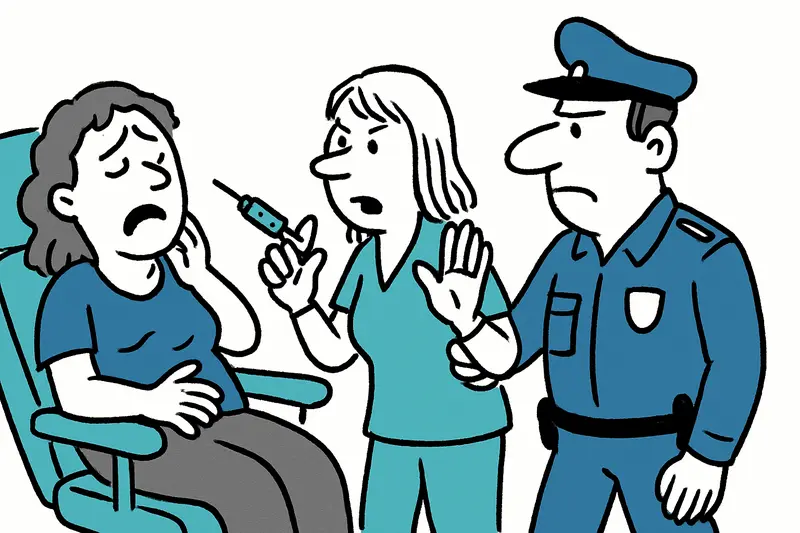
Early on Tuesday morning Avinguda Jaime III was busy with traffic – and in the middle of it a story that has almost become a sad routine on our island: a woman was arrested in Palma after a cosmetic injection apparently caused severe complications. The patient was taken to Son Espases hospital as an emergency; the suspected practitioner was detained by the police.
What happened — and what we still don't know
According to investigators, the accused had rented rooms in a small studio and advertised appointments via Instagram and messenger apps. A client received a NHS guidance on dermal fillers in the chin area. Shortly afterwards she experienced severe pain, skin discoloration and early signs of necrosis. The injured woman arrived at the emergency department and doctors had to act immediately. Whether there will be permanent damage is still unclear.
It is important to emphasize: the police say the woman apparently does not have a medical license. She is being investigated for bodily harm and unauthorized practice of a profession. Documents are currently being secured and witnesses questioned — also to find out whether there are further victims.
The central question: How can prevention succeed?
This is more than an isolated incident. The decisive guiding question is: how can Palma prevent medical procedures from taking place in secret and harming people? The problem has several facets that are often overlooked in public debate.
First: social media and messenger services create a grey area. Quick appointments, pretty before‑and‑after pictures and low prices are tempting — especially for tourists, seasonal workers or people short on time. Second: economic pressure. Many providers work cheaply, are mobile or operate from temporarily rented rooms. Third: shame and lack of information among those affected. People who are reluctant to ask “officially” are more likely to seek alternative channels.
Where inspections fall short
Legally, injections with fillers are considered information on dermal fillers from the American Society of Plastic Surgeons — yet enforcement is difficult. Authorities must prove that a treatment was not carried out by a licensed professional. Mobile studios, changing premises and anonymous social‑media accounts complicate investigations. In addition, many platforms offer only limited options to verify or report offers.
This has consequences for public health. Incorrectly injected fillers can cause not only infections but also circulation problems and tissue necrosis. In severe cases there is a risk of scarring, permanent damage or even loss of an eye — consequences that do not disappear after an Instagram story.
Concrete approaches — what would help now
A few ideas that could be implemented relatively quickly in Palma:
1. Visible certificates and registries: A public register of licensed doctors and medical institutes on Mallorca’s official websites would create transparency. A simple plausibility check of online ads by the police could uncover violations more quickly.
2. Platform cooperation: Local authorities should work with social networks so that suspicious accounts can be reported and, if necessary, temporarily blocked.
3. Information campaigns: Education in German, Spanish and English — in pharmacies, at universities, in tourist centers and at weekly markets. Many people do not know that some offers pose a real health risk.
4. Low‑threshold contact points: Free advice hotlines or consultation hours in certified clinics where people can ask questions without shame.
5. More frequent inspections: Targeted inspections in neighbourhoods with many temporary studios could reduce the risk. Legal violations must be pursued consistently — not only as a deterrent but to protect potential victims.
What this has to do with everyday life in Mallorca
Such incidents affect neighbours directly. I was at the market in Santa Catalina yesterday afternoon; vendors complained about uncertainty, guests whispered at the fish stall. Mallorca lives from its appearance — and from the people who work and live here. When medical risks happen behind closed doors, it concerns the whole community.
The arrest in Palma is a signal: authorities are stepping in, but that is not enough by itself. We need more prevention, better controls and a public that does not look away when beauty offers suddenly become dangerous. In the short term: caution helps. Anyone considering an injection should insist on certified practices, ask for references and, if in doubt, double‑check.
The market smelled of oranges and coffee, voices were loud — and yet there was a quiet note: the neighbour who had recently mentioned a cheap treatment seemed to fall silent for now.
For related local reporting see Cuando la ganga acaba en el hospital: fraude médico en Palma and investigations into Ofertas ocultas en los salones de masajes de Mallorca: entre legalidad y coacción.
Frequently asked questions
How can you tell if a filler treatment in Mallorca is safe and legal?
What are the warning signs of illegal beauty injections in Palma?
What should I do if I have a bad reaction after a filler treatment in Mallorca?
Why are illegal filler treatments hard to stop in Palma?
Are dermal fillers considered a medical procedure in Mallorca?
Where can people in Mallorca check whether a clinic is licensed?
Why are social media filler offers risky in Mallorca?
What kind of prevention would help reduce illegal cosmetic treatments in Palma?
Similar News
Man Exposes Himself in Front of Café in Palma: Why This Must Not Be Dismissed as an Isolated Case
A man was arrested in Palma after he lowered his trousers in front of a café and exposed himself to minors. What does th...

Brawl at the Airport: Who Is Responsible for the Escalation Among Transfer Drivers?
A dispute between two transfer drivers escalated on Saturday morning in the arrivals area of Son Sant Joan. One man was ...
Collision in Palma: Why an E-scooter and a Patrol Car Ended Up on a Collision Course
At an intersection in Palma in early September a young e-scooter rider collided with a local police patrol car. No one w...
Warty on the Green: When a Cyborg Is Supposed to Learn Golf in Mallorca
A silver humanoid named Warty visits Son Gual – as advertising for Water D and as a guinea pig for golf lessons. A criti...
Balearics Consider Restrictions on Second-Home Purchases – a Reality Check
The regional government is examining whether purchases of second homes by non-residents can be restricted in future — bu...
More to explore
Discover more interesting content

Boat Tour with BBQ along Es Trenc Beach

Private transfer from Mallorca Airport (PMI) to Pollensa
