
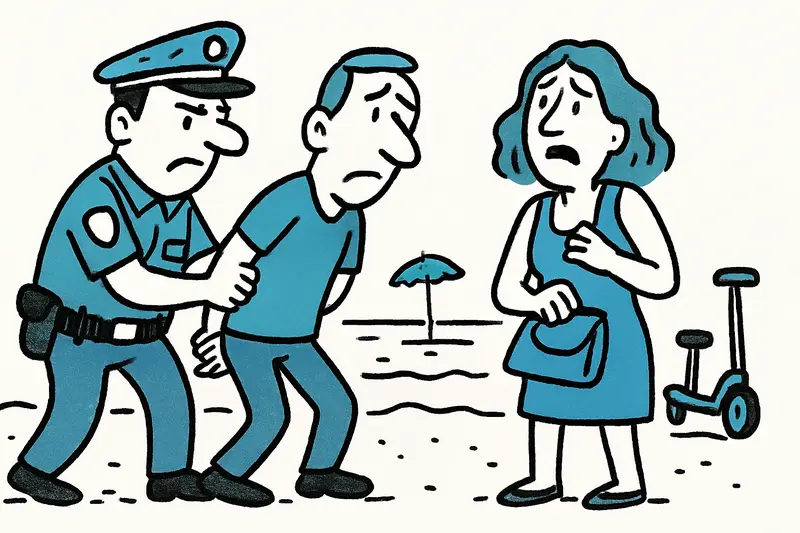
Arrests after Beach Thefts: How Safe Are Mallorca's Beaches Really?
Arrests after Beach Thefts: How Safe Are Mallorca's Beaches Really?
After a large-scale operation, 19 suspects were arrested. The case raises questions: why were thieves able to strike for so long on popular beaches, what gaps do e-scooters and second-hand markets reveal — and what do locals and tourists need now?
Arrests after beach thefts: How safe are Mallorca's beaches really?
Key question: Why were gangs able to operate systematically on popular beaches — and what needs to change?
The scenes are familiar: crowded towels, rattling e-scooters on the promenade, the sound of the sea and somewhere in between the quiet chill when a handbag is empty. In recent days, 19 young men were arrested in a coordinated police operation. The suspects are accused of targeting phones, jewelry and bags on beaches around Palma and in the municipality of Calvià and selling the loot. Many mobile phones, several e-scooters with removed serial numbers and other allegedly stolen goods were seized, as reported in Arrests at Playa de Palma: How safe are phones on the Schinkenstraße?.
The question that remains: Was this a sudden flare-up of criminal activity or a symptom of structural weaknesses — in prevention, the control of rental bike and scooter fleets, and the traceability of stolen goods? Local cases such as Beach theft in Cala d’Or: Four arrests — what can really protect tourists have spotlighted these issues.
Analysis: speed, mobility, marketplace. Descriptions of the operations show a striking pattern: perpetrators approach by scooter, act in groups, take advantage of inattention on busy beaches and disappear into traffic. Electric scooters aid escape and mobility; second-hand sales channels facilitate disposal. When serial numbers are ground off and devices appear in large numbers, forensic tracing becomes more difficult. Equally problematic is that many beaches are only sparsely equipped with surveillance or permanent police posts — especially outside the high season; this is reflected in reporting such as Palma takes stock: Arrests made — is that enough to make beaches safer?.
What is often missing from the public debate: three things are rarely discussed. First: the role of disposal chains — flea markets, private online marketplaces and unofficial dealers — that absorb stolen goods. Second: technical obstacles to tracing and blocking devices; even if IMEI numbers exist, enforcing them in an international tourist market is complicated. Third: regulatory gaps among e-scooter providers and in the sale of used scooters, which make it easier to remove identification features.
A scene from everyday life: Strolling along the Passeig Marítim on a sunny afternoon, you feel the mix of sea salt, coffee aroma and the ringing of bike bells. Families from Germany and Scandinavia lie close together; children run to the water, parents place handbags behind them in the sand. At the Can Pastilla corner, scooters hum down onto the curb. Nobody hears how a hand skillfully reaches for a smartphone out of a group on the rocks. So quickly that many victims only notice later that something is missing; a similar incident is recounted in Beach robbery in Illetes: When a moment ruins a holiday.
Concrete solutions that could be implemented in Palma and Calvià: increased presence during peak times through combined beach and bike patrols by the local police; targeted checks of traders and second-hand platforms; mandatory marking and registration of rental scooters with a fixed rental record; mobile lockers at busy beaches and multilingual information or warning signs for tourists with simple protection rules.
On the technical side, protected blocking procedures for stolen devices help, better cooperation with manufacturers and network operators, and quick reporting centers for tourists who were robbed while on holiday. Legally, prosecution in cases of organized gangs and handling stolen goods is possible, but it will be more effective with better international cooperation and faster action against sales channels.
What must not happen: generalization or stigmatization of entire population groups. Crime has social and economic causes; parallel measures for integration, labor market strategy and youth work should be part of long-term prevention — not for humanitarian reasons, but for pragmatic ones: fewer prospects mean less criminal recruitment.
Conclusion: The recent arrests show that authorities can react. At the same time, the cases reveal weaknesses that go beyond isolated incidents: mobility tools without clear identification, disposal channels that swallow stolen goods, and tourists' awareness that often relies on summer mood rather than caution. Those who come to Mallorca's beaches should keep their eyes open. And those who live here should ask: How do we build real protection for our coast from control, technology and social policy measures?
A final thought: In the evening, when the beach bars close and the light softens, special police operations should not be the only response. An island where people can live safely by the sea and go on holiday needs continuous reflection rather than just sporadic operations.
Frequently asked questions
How safe are Mallorca's beaches for tourists right now?
What practical steps can beachgoers take to prevent theft on Mallorca's shores?
What concrete measures are being proposed to deter coordinated beach thefts on Mallorca?
How do thefts relate to devices like e-scooters and what's being done to trace stolen goods on Mallorca?
Are the beaches around Palma and Calvià hotspots for theft, and what should visitors know?
What should you do if you're robbed on a Mallorca beach while on holiday?
What longer-term strategies are suggested to reduce crime on Mallorca’s coast beyond policing?
Do theft risks vary with the tourist season, and how should visitors plan?
Similar News
No more tap water in Cala Millor – what happens when the tap runs dry?
Sant Llorenç del Cardassar has cut fresh water services at beaches due to the drought and issued further usage bans. Who...
Trash everywhere at Consell–Alaró station: Why the mess doesn't just disappear
The station between Consell and Alaró is full of bottles, bags and littered fences. Who is responsible remains unclear —...

When coercive fines aren't enough: Could holiday rental owners soon face prosecution?
The island administration is stepping up action against unauthorized holiday rentals: high daily coercive fines up to €5...

Palma Airport on an Expansion Course — Who Decides How Much Growth the Island Needs?
Aena and Madrid are planning multi-million euro investments for Son Sant Joan and project higher capacities. Concern is ...
Who Gets Left Out? Why Overbookings Will Hit Many Mallorca Travelers This Summer
On hot check-in days at Son Sant Joan, frustrated travelers pile up. New figures from Reclamador.es show that a large sh...
More to explore
Discover more interesting content

Can Cap de Bou

Townhouse Lleo 72
