
Held up at the gate: Why an incident at Münster/Osnabrück Airport raises questions for Mallorca
Held up at the gate: Why an incident at Münster/Osnabrück Airport raises questions for Mallorca
A member of parliament was not allowed to fly: At Münster/Osnabrück Airport a politician was denied transport to Palma. What does this mean for crew safety, airport procedures and Mallorca's image? A critical look.
Held up at the gate: Why an incident at the airport raises questions for Mallorca
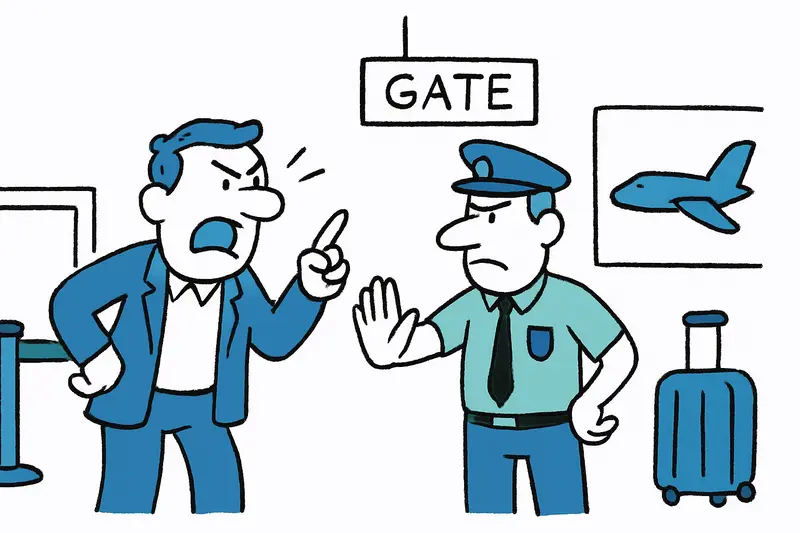
On October 18 a member of the German Bundestag was refused carriage on a Ryanair flight from Münster/Osnabrück to Palma de Mallorca. According to the airline, disruptive behaviour was the reason; the man is also said to have insulted a member of the aircraft crew. The local police in Steinfurt are investigating the incident.
Key question
How do airlines, airports and authorities deal with verbal assaults on crew members — and what impact does this have on safety and the image of destinations like Mallorca?
Critical analysis
The situation is delicate for several reasons. First: airlines have the right and duty to operate flights safely. If a passenger behaves conspicuously at the gate, it is to be expected that carriage will be refused. Second: the boundary between "disruptive behaviour" and punishable insult is not always legally clear. Authorities must determine whether it was merely a reprimand of the crew or a punishable offence that justifies charges; there have been cases leading to Handcuffed Straight from Palma: Cross‑Border Manhunts, Mistakes and Mallorca's Image. Third: Mallorca is affected because flights between Germany and the island repeatedly come into focus when passengers attract attention. For example, Ryanair stops intoxicated passenger at Memmingen Airport. That dents everyday tourism and the working conditions of staff who are often left alone to deal with such situations.
What is missing from the public discourse
Public debate usually focuses only on the traveller or the airline's decision. Less visible are several points: the perspective of the affected crew, standardised procedures at the gate, the question of interpreters for international crews and the role of airport security. There is also a lack of sober overview of follow-up processes: How often are charges filed? And how are affected employees cared for after an incident? Media reports such as When Mental Health Crises Disrupt Air Travel: Lessons for Mallorca After the Nuremberg Incident illustrate some of these follow-up challenges.
A scene from everyday life in Mallorca
Anyone who comes off the baggage carousel in Palma knows the muted hum at the exit, the announcements at Son Sant Joan airport and the signs to the car rental desks. It is precisely in those relaxed minutes that you notice when a flight is delayed due to extra personnel needs or an aircraft is reassigned at short notice — the taxi industry, airport cafés and the people picking someone up feel it. A loud conflict at the gate is not just an incident for an airline; in the hours afterwards it is perceived on the island as a disruption of normal operations, similar to An Outrage at Palma Airport: Why Did Passengers Disembark — and the Plane Fly Off Empty?.
Concrete solutions
1) Clear reporting and documentation duties: airports and airlines should set binding rules for documenting incidents at the gate (e.g. short reports, witness statements, video recordings where legally permissible). 2) Protection and aftercare for crew: a standardised offer for affected staff — legal advice, psychological support, fixed contacts at the airline. 3) Transparent communication: airport security teams could more often make public how they handle incidents without disclosing personal data. That would prevent rumours. 4) Prevention through training: staff at gates, checkpoints and boarding should receive regular de‑escalation training; at the same time security forces need clear escalation plans. 5) Building bridges between countries: for operations with international crews, information sheets in several languages and easily accessible interpreter assistance are sensible.
Legal aspects and responsibilities
Legally: carriage can be refused if safety or operations appear to be at risk. Whether a criminally relevant offence has occurred is for the investigating authority to decide. For travellers this means: a verbal altercation can have immediate consequences — from denied carriage to criminal investigations. For the island it means: even if Mallorca is not the place of the incident, travellers, crew and tourism businesses fall into a shared field of view when conflicts on flights or at airports escalate.
Concluding points
The incident at the Münster/Osnabrück gate is not just a personnel matter for an airline. It is a magnifying glass for larger issues: how do we protect people who work in aviation? How do we prevent disputes from disrupting everyday travel? And how can authorities and transport companies create transparency without descending into sensationalist reporting? Mallorca needs functioning procedures and reliable partners at departure airports so that the early morning at the terminal continues to be associated with the smell of coffee and soft announcements — not with shouting at the gate.
Frequently asked questions
How do airlines decide when to refuse boarding due to disruptive behavior?
What impact can gate incidents have on Mallorca's tourism and airport staff?
What steps are recommended to prevent gate incidents from disrupting travel to Mallorca?
How are international crews supported at airports like Palma de Mallorca when incidents occur?
What are the consequences for travelers if they engage in verbal altercations at the gate?
What kind of transparency should airports use when handling gate incidents near Mallorca?
How can Mallorca airports and airlines build trust with passengers after an incident?
What is the role of de-escalation training in preventing gate conflicts for Mallorca-bound flights?
Similar News
"Everyone does it" — Why petty thefts in Palma recur more often
Two men were caught within days at the same shopping center — beer cans, milk cartons, a sarcastic remark. What does thi...
Twelve in Son Sardina: How a Men's Flatshare Keeps Football Alive in Mallorca
Eleven players, one house, six bedrooms: How FC Germania Mallorca in small Son Sardina builds cohesion, solves problems ...

Til Schweiger in Mallorca: Calm, New Closeness and an Alcohol-Free Fresh Start at the Finca
The actor appears to have found a different life on the island: rural everyday life on the finca, a new partner and a co...
Playa de Palma: How expensive watches disappeared on the promenade – a reality check
Two apparently linked incidents at Playa de Palma — thefts of luxury watches worth a total of €34,000, one person arrest...
Ryanair to fly from Kassel-Calden to Mallorca in summer 2027 – a boost for the island
For the first time, Ryanair will offer twice-weekly connections from Kassel-Calden to Palma in summer 2027. What this me...
More to explore
Discover more interesting content

Can Cap de Bou

Townhouse Lleo 72
