
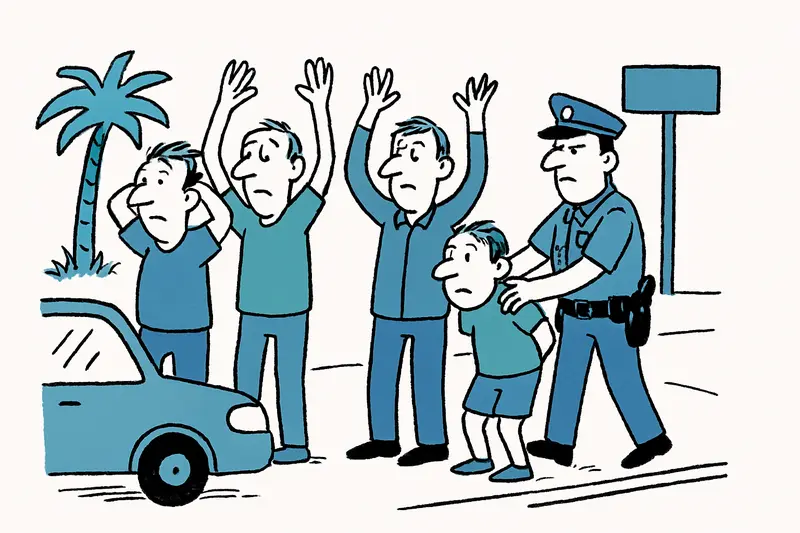
Arrests at Playa de Palma: How safe are phones on the Schinkenstraße?
Four men were arrested after a vehicle check with a trunk full of phones. A success, but are isolated actions enough to tackle pickpocketing on the Schinkenstraße?
Four arrests at Playa de Palma – a success, but only a beginning
It was shortly after two in the morning: the clubs sent their basslines into the street, a salty breeze came from the promenade, and the lamps of the Schinkenstraße bathed pedestrians and street cafés in warm yellow. A patrol stopped a conspicuously fast car on the access road – at the end of the check there were four men in handcuffs and a trunk full of phones. Some devices looked as if they had just shaken sand off the beach, a pattern described in how pickpockets exploit Playa de Palma.
How the acts were carried out
Investigators describe a pattern that worries many night owls: closeness as a distraction. Hugs, close dancing, brief squeezes in the crowd – and pockets or trouser pockets are easier to empty. In one case a suspect tried to throw a pink phone out of the car. The device didn't land far; a woman later reported her loss after dancing near a well-known club, a scenario similar to cases where phone tracking caught a suspect at Playa de Palma.
Key question: lone perpetrators or systematic gangs?
The four arrests are tangible police work and a relief for those affected. But the central question remains: are we dealing with opportunistic lone offenders, or with organized groups that work seasonally and withdraw quickly? The answer influences how authorities, hospitality businesses and city administration must respond. It also echoes incidents in which a smartphone signal led to an arrest in Palma.
Aspects that are hardly on the radar
1) The mobility of the perpetrators: Some gangs operate in changing teams, appear only briefly and use country roads for the getaway. That makes tracking and attributing offenses considerably more difficult.
2) Internal reporting chains in venues: Not every club or bar has clear procedures when a theft occurs. Bouncers are often first witnesses but do not always know how to secure clues or when to call the police.
3) Visible but sensitive police presence: Visible patrols deter. Too many checks, however, can unsettle tourists and reduce the feeling of freedom. This is a political balancing act between security and hospitality.
Concrete opportunities: What would help locally right away
The arrests show: presence works. But a multi-track strategy is needed so that nightlife does not become a danger zone.
- Better networking: Regular situation briefings between the police, club operators, taxi drivers and the city. Short digital reporting channels for suspicious vehicles or persons could reduce reaction times.
- Training for staff: Bouncers and service staff need simple guidelines: how to de-escalate, how to secure evidence, when to inform the police. Often a calm address is enough to push offenders out of the circle.
- Visibility instead of harassment: Targeted, clearly visible patrols during peak times – not blanket checkpoints. And: strategic lighting at critical bottlenecks so that dark nooks disappear.
- Technology with restraint: Cameras at selected locations, legally secured and combined with clear retention rules. QR codes at stands or in taxis that allow found items to be reported.
- Prevention for guests: Small tips at check-in: carry bags close to the body, leave valuables in the safe, activate location services. A simple checklist card helps more than many think.
What nightgoers can do right away
The advice is unspectacular but effective: no phones in back pockets, carry bags in front, note down IMEI numbers – preferably before the trip. If threatened: call staff or the police immediately. And file a report – only then patterns become visible and investigations can be effective.
Conclusion: Arrests as a signal, not a solution
The four arrests at Playa are important; they show that action makes a difference. But they are not an endpoint. When music, the murmur of voices and Palma's night air come together, vigilance is required – from guests, hospitality and authorities. The real task is to change structures: better networking, targeted prevention and a smart balance between safety and joie de vivre. Then partying on the Schinkenstraße remains possible without constantly watching your phone while dancing.
Frequently asked questions
How safe are phones at Playa de Palma nightlife spots?
What should I do if my phone is stolen in Mallorca?
Are pickpocket thefts in Playa de Palma usually random or organised?
What are the best phone safety tips for a night out in Mallorca?
Why do police checks matter at Playa de Palma?
What should clubs and bars in Playa de Palma do after a phone theft?
Is Playa de Palma safe for tourists at night?
Should I carry my phone in my back pocket in Mallorca?
Similar News
Why the Striped Breams in Cala Pí Should Be a Wake-up Call
Once again bathers in Cala Pí were surrounded while swimming by small, nippy fish — some wounds bled. Time for clear rul...
Daily from New York: How Palma's Air Traffic Is Growing — and What Must Change
United will increase the Newark–Palma service to daily flights in 2027 (Boeing, 231 seats). Strong tourist numbers clash...

When Love Ends in Shards: Destruction in Son Vida and the Questions That Remain
In Son Vida a relationship dispute escalated: a woman destroyed furniture in a luxury villa, later pressed a panic butto...

Who Bears the Burden? Mallorca Between Tenant Protection and Landlord Fears
Madrid's new housing decrees strengthen tenant rights — but on Mallorca concern is growing: will the law drive small lan...
On the Edge: What Mallorca's Airport Loses If a Major Low-Cost Carrier Falters
The company that operates numerous connections from Palma to France and domestically is negotiating with creditors to re...
More to explore
Discover more interesting content

Can Cap de Bou

Townhouse Lleo 72
