
After Attack at Palma Airport: Who Protects Airport Employees?
After Attack at Palma Airport: Who Protects Airport Employees?
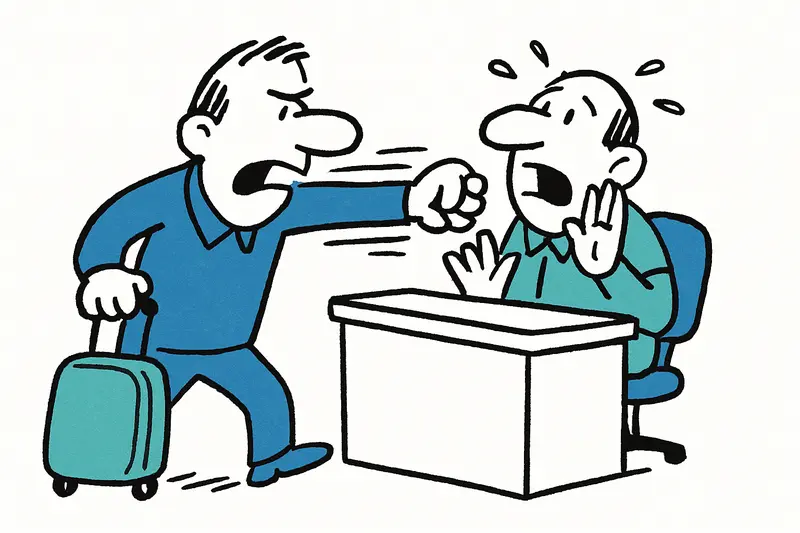
A Ryanair employee was brutally attacked at the check-in desk at Palma Airport and lost several teeth. The union CC.OO. now demands that Aena review the security situation. A reality check: who is responsible — and which measures really help?
After Attack at Palma Airport: Who Protects Airport Employees?
Key question: Why does this happen in broad daylight amid the arrival and departure chaos at Son Sant Joan — and who must act?
At the counter of a low-cost airline at Palma Airport a dispute recently escalated: a passenger struck so hard that an employee lost several teeth. The union Comisiones Obreras (CC.OO.) condemned the incident as unacceptable and called on Aena, the airport operator, to review security measures after incidents including Another accident at Palma Airport: Worker falls on construction site — who protects the employees?. Such news leaves many of us with an uneasy feeling: we see the same scenes every day — suitcases being shoved, loud announcements, the espresso-like air in the arrivals hall — and hope that the people behind the counters are protected.
Critical analysis: Who bears responsibility? The answer is not only legal but organizational. Aena is responsible for airport infrastructure and overall security planning. Airlines operate the check-in counters and staff them according to their own criteria. Both sides have interfaces, but practice reveals gaps: at peak times there are often only a few employees at overcrowded counters, visible security personnel are sporadic, and physical barriers are missing at many workstations. That creates situations in which conflicts can easily escalate.
What is missing from public debate: so far the discussion has focused mainly on outrage and expressions of solidarity. Important questions remain underexposed: Is there a central recording of all assaults at the airport? What do the deployment protocols of the security services look like — and are they adapted to real peak loads? How often is staff rotated because of overtime or stress so that routine in de-escalation training suffers? Without such data, any demand for “more security” is more a slogan than a measure.
Everyday scene from Mallorca: Imagine this — Friday, 2 p.m. Bus line 1 struggles from the airport toward Plaça d’Espanya; in front of the counters stands a queue of families with prams, elderly travelers and businesspeople. A child is crying, a whiff of duty-free perfume mixes with frying oil from the snack bars. At the Ryanair counter a woman is loudly talking on the phone, someone else is unsuccessfully trying to explain excess baggage, a frequent source of tension covered in Ryanair Hand Luggage Checks: Between Efficiency and Frustration at Palma Airport. Tension sparks — not long until it erupts. It was exactly here that the assault took place.
Concrete solutions that are more than mere show:
1) Visible presence and short response times: Unified duty schedules for airside security and private guards, coordinated with passenger flows. If during check-in peaks there is always a functioning rapid-response team that can arrive within three minutes, the tendency to escalate is significantly reduced.
2) Physical protective measures: Simple partitions at counters, clear markings for waiting zones and separate routes for difficult cases (e.g., unaccompanied minors, aggressive passengers). These measures do not cost the world but reduce direct physical contact.
3) Reporting and documentation obligation: A unified registry of assaults, maintained by Aena and accessible to unions and airlines. Only those who systematically record incidents can identify risk zones and adjust staffing.
4) Training and protection rights for staff: Regular de-escalation courses, mandatory short briefings before each shift and simple technical aids such as panic buttons with direct connection to airport police. Also: psychological aftercare for those affected and clear labor-law support for filing complaints and pursuing legal action.
5) Prevention through service design: More advance information for passengers (clear baggage rules, incentives for online check-in), additional self-service stations during peak times and a fixed minimum staffing level at low-cost check-ins. Less confusion means less aggression.
What could happen faster: Aena and the major airlines — including low-cost carriers — should negotiate a binding protocol that regulates immediate measures after attacks: first aid, secure care for the victim, rapid filing of police reports and internal notification obligations, as tensions have played out in Ryanair vs. Aena: When an Airline Dispute Lands on Mallorca. Unions like CC.OO. must be involved in this work; they are the voice of the employees and know the daily hotspots, as demonstrated in Strike at Ryanair Ground Handler: A Stress Test for Mallorca’s Summer Operations.
Conclusion: People who work at the airport need more than lip service. Those responsible must plan concretely, invest and document. Son Sant Joan is not a lawless zone, and the people behind the counters are not a pass-through. If we as a society truly mean that occupational safety is more than a sign on the wall, then we start now with pragmatic, measurable steps — otherwise another avoidable incident will soon repeat itself.
Frequently asked questions
Who is responsible for airport employee safety at Palma Airport?
Why can tensions escalate at Palma Airport check-in counters?
What security measures could better protect staff at Palma Airport?
What should passengers know before flying from Palma Airport to avoid problems at check-in?
What happens after an assault on an airport worker at Palma Airport?
Is Palma Airport bus line 1 affected by busy airport peak times?
What role do unions like CC.OO. play at Palma Airport?
What can airlines and Aena do together to improve safety at Palma Airport?
Similar News
Injured captain, big plans: Germania Mallorca before the away match in Consell
The newly founded FC Germania Mallorca travels to Consell on Saturday. Captain Bastian Müller is out injured, but coach ...
Palma, Palma de Mallorca, Palma‑Mallorca: What is it really about?
The debate over the city's name is more than grammar: it concerns identity, law and branding policy. A sober reality che...
Warning to Bathers: Nipping Fish in Cala Major and Other Coves — a Reality Check
In Cala Major and several beaches around Mallorca, bathers report painful “nips”. Who are the animals, why are they gett...

Rental Car Theft in El Arenal: What This Incident Reveals About Our Gaps
A teenager steals a running rental car in El Arenal, flees on foot, climbs over walls and is caught by the Guardia Civil...

Red Rope in Palma's Library: What Helps Against Selfie Tourism — and What's Missing
Palma's city library cordoned off an area with a red rope to keep selfie tourism away from reading and working activitie...
More to explore
Discover more interesting content

Can Cap de Bou

Townhouse Lleo 72
