
Authority warns: Toblerone batches on Mallorca — allergens not labeled in Spanish
Authority warns: Toblerone batches on Mallorca — allergens not labeled in Spanish
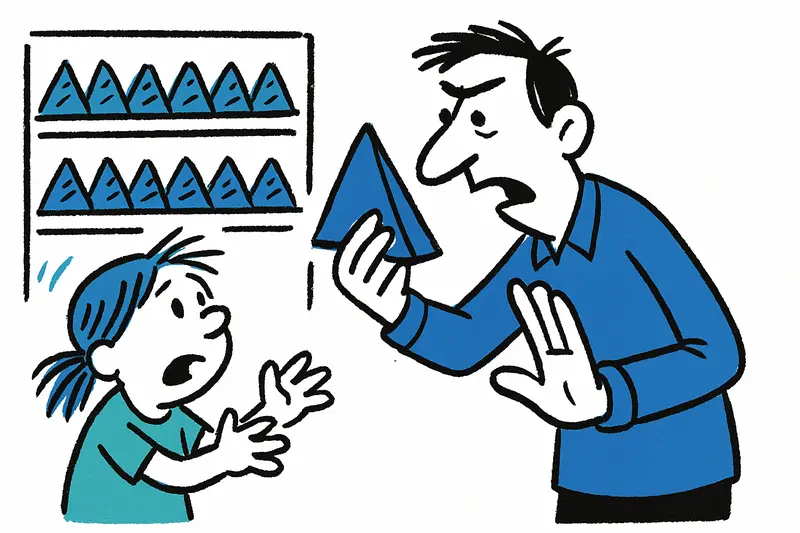
The Spanish food authority AESAN warns about two batches of Toblerone bars: almonds, soy, egg and milk are present, but the warnings are missing from the Spanish label. People with relevant allergies should not eat the packages and retailers should check.
Authority warns: Toblerone batches on Mallorca — allergens not labeled in Spanish
Key question: How safe are chocolate shelves when important notices are missing in the local language?
The morning Olivar market smells of freshly brewed coffee, and pallets of international sweets stand on the supermarket shelves on Avenida Jaime III. This is precisely where the problem arises: the state Agency for Food Safety and Nutrition (AESAN) has issued a warning because two batches of a dark Toblerone bar contain allergens — almonds, soy, egg and milk — without these details being correctly indicated on the label in Spanish. The affected packages were also delivered to the Balearic Islands, including Mallorca.
The situation can be summarized as follows: the product in question is "Dark chocolate with nougat, 10% honey and almonds" with batch numbers OOY3154711 (best before 20.05.2027) and OOY3155111 (best before 17.06.2027). AESAN received the notice via the health authorities of the Autonomous Community of Madrid. As a precaution, the agency recommends that people with allergies or intolerances to almonds, soy, egg and milk components should not consume any existing packages.
The manufacturer reports that the problem lies in the missing Spanish labeling; the ingredient and allergen list otherwise corresponds to what is normally distributed in Spain and only two batches are affected. The company also states that other products of the brand and portfolio in Spain are not affected.
Critical analysis
It is a triviality, but with serious consequences: one missing word on the label can be life-threatening for people with severe food allergies. Regulations require clear information in the national language so that buyers can immediately recognize whether a product is safe for them. If the Spanish labeling is missing on a popular chocolate bar, the risk is that someone in the rush of everyday life — during a quick shop before school or on the way to work — makes the wrong decision. Control of supply chains and packaging processes must be organized so that language information reliably arrives, not only in the large distribution centers but also in small supermarkets in Cala Major or Port de Sóller.
The bare notice lacks details: Which packaging line caused the error? Has the merchandise already been removed from sale? How quickly did logistics partners and retailers in the communities inform customers? AESAN's warning is correct, but people expect concrete instructions on how to proceed — not just the dry recommendation to avoid eating the product, as seen in the Recall of Knorr chicken soup in Mallorca: what buyers must do now.
What is missing in the public discourse
We rarely talk about the practicality of recalls for consumers: small shops often do not receive automatic updates; the owner of a grocery store in Son Gotleu says she only learns about recalls from customers or when she checks the shelves herself, a problem that also surfaced in cases like 231 kilos of spoiled meat: Guardia Civil reportedly seizes reprocessed goods at plant south of Palma. Mallorca's linguistic diversity also plays a role: tourists buy English-labeled goods, residents expect Spanish information. The dialogue between manufacturers, distribution systems and local retailers must improve.
Everyday scene in Mallorca
Imagine: late morning on Passeig Marítim, the promenade still gleaming from the night's rain, a father buys chocolate for his daughter as a small reward after a doctor's appointment. He glances at the packaging — everything is clear in German and English, but nothing in Spanish. He doesn't notice. A medical emergency waiting inside was not planned by anyone. Such scenes can be prevented if labeling is present and visible everywhere in the national language.
Concrete solutions
1) Control checklist for retailers: supermarket chains and small shops should regularly cross-check batch lists from AESAN and have an internal procedure to isolate suspicious packages immediately. 2) Public batch checks: AESAN could offer an easy-to-use search field on its website where customers can enter batch numbers — ideally with QR codes on packaging that lead directly to batch information. 3) Rapid notifications in sales channels: manufacturers and distributors must send mandatory notifications to all registered points of sale (email/SMS), as local alert chains were shown to be weak during the Orange Alert in Mallorca: Are We Really Prepared?, underlining the need for faster notifications. 4) For allergy sufferers: doctors and pharmacies on Mallorca should have local information sheets on how to act in the event of recalls; patients with anaphylaxis must always carry their emergency medication. 5) Stronger checks of language labeling at import: border and logistics points should check packaging languages more thoroughly before goods are distributed in the country.
Conclusion
The current warning is serious and justified. It is not only a manufacturers' problem but a systemic failure: language, logistics and local retailer communication must work better together so that no one in a busy street in Palma or in a small country shop is put at risk by a missing translation. If you have a Toblerone at home with the mentioned batches and suffer from one of the listed allergies: set it aside, inform the retailer, check return options. For everyone else this is a wake-up call — labels are not just decoration, they save lives.
Frequently asked questions
Which Toblerone batches have been recalled in Mallorca because of missing Spanish allergen labeling?
Is Toblerone safe to eat if I have an allergy to almonds, soy, egg, or milk?
What should I do if I bought the affected Toblerone in Mallorca?
Why is missing Spanish labeling on food packaging such a problem in Mallorca?
Where were the affected Toblerone bars sold in Mallorca?
How can I check whether a chocolate bar in Mallorca is part of a food recall?
Do food recalls in Mallorca only affect supermarket chains, or also small local shops?
What should allergy sufferers in Mallorca do during a food recall?
Similar News
Why the End of "Los Últimos Mohicanos" Is More Than the Closing of a Bar
With squealing tires and one last glass, an icon on the Palma–Manacor expressway closes. Why the demise of this German b...

Protest camp on Plaza España: Who asks for solutions to the right to housing?
Around 30 activists set up a tent camp on Palma's Plaza España to push for stronger tenant rights. Our analysis asks: Ar...
In the Name of a Gang: Alleged Extortion in El Molinar and What It Reveals About the Protection of Sex Workers
A man is accused of posing as a member of the Hells Angels and extorting two women at accommodation in El Molinar. The s...

When Chile Meets the Mediterranean: A New Flavor at Can Bordoy
At Can Bordoy in Palma's old town, Chilean chef Jhonatan Maldonado combines Patagonian seafood with Mediterranean island...
End of an Era on the Ma-15: Why the Biker Hangout at Son Gual Is More Than Just a Restaurant
"Los Últimos Mohicanos" closes unexpectedly. A meeting place for motorcyclists on the Palma–Algaida border is disappeari...
More to explore
Discover more interesting content

Can Cap de Bou

Townhouse Lleo 72
