
Catalan Place Names in Court Documents: Symbol or Systemic Change?
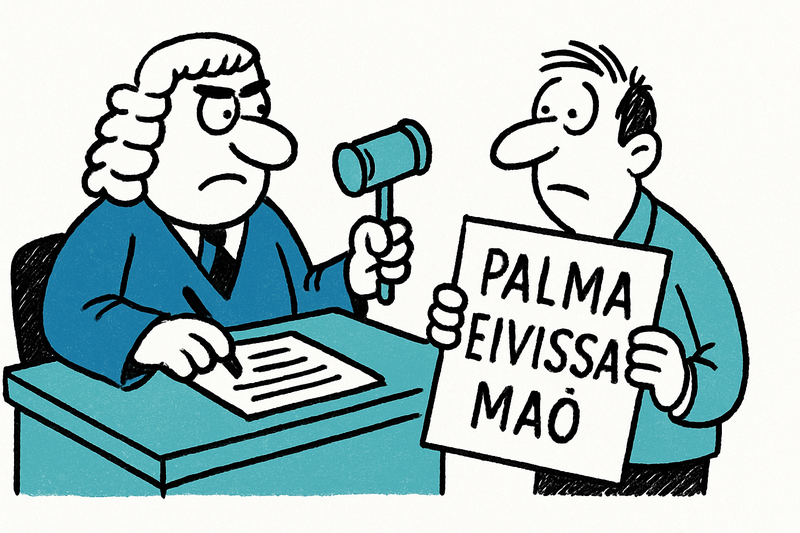
The Ministry of Justice will henceforth use Palma, Eivissa and Maó in official court papers. A step to increase the language's visibility — but what does this mean in practice for judges, lawyers and local citizens?
Catalan Place Names in Court Documents: Symbol or Systemic Change?
In the morning, when the market women at the Mercat de l'Olivar unpack their boxes and the smell of freshly brewed coffee drifts through the alleys, people in Palma are now also discussing an issue that usually belongs in administrative offices rather than at café tables: court documents are to bear the Catalan place names — Palma instead of "Palma de Mallorca" Palma or Palma de Mallorca? The name debate returns, Eivissa instead of "Ibiza" and Maó instead of "Mahón". The Ministry of Justice has decided on the step, officially with the aim of giving the language more visibility in the justice system. But the decision raises questions that go beyond symbolism.
The Main Question: Who Benefits, Who Needs Solutions?
At first glance, the change seems like a long-overdue act of cultural recognition. Catalan is an official language in the Balearic Islands and part of the identity of many residents. But the most important question is: does this measure actually improve access to justice or does it remain a gesture without tangible consequences? Especially in a courtroom, where precision, service routes and international documents matter, switching to different place names can have tricky practical effects.
Practical Consequences That Are Rarely Discussed
One aspect that receives little attention is legal clarity for non-Catalan speakers. At the court counters in Palma, Spanish, English and sometimes German are commonly heard — particularly during the tourist months. If judgments, summonses or enforcement orders bear different place names, it must be ensured that recipients understand the documents and can respond in a legally effective way. This concerns not only individuals but also law firms, notaries and companies working with international contracts.
Another point: what role will interpreters, translations and IT systems play? Court databases, electronic files and form templates must be adapted. Without clear guidelines, additional costs and delays threaten — and here transparency is needed: who will bear the costs, what deadlines apply for the technical transition, and what transitional rules will apply to ongoing proceedings? Similar questions about who bears costs after judicial decisions have arisen in other contexts, for example in rulings described in Judges in Palma strengthen passenger rights — a win with open questions.
Tensions in Society
In the streets of Sóller and along the Passeig des Born, reactions can be heard diverging. Language activists celebrate the move, while older and newly arrived residents react mixedly: for some it is an expression of local dignity, for others the measure feels like an unnecessary break with what they are used to. An underlying concern is that language-policy decisions could further fragment society — unless communication and educational work are carried out in parallel, and debates about funding and priorities are addressed as in Language dispute in Mallorca: subsidies, comparisons and the question of cultural justice.
Concrete Proposals Instead of Mere Symbolism
If the decision is to be taken seriously, it must be followed up. Some possible concrete measures:
Bilingual transitional arrangements: Court papers could initially be issued bilingually — Catalan with a brief Spanish summary — until IT systems and staff are trained.
Training for justice personnel: Judges, clerks and court interpreters need timely training so that formulations remain legally secure and procedural rights are not unintentionally affected.
Clear guidelines and transparency: Published FAQs, a timetable for the transition and disclosure of expected costs would build trust — especially in a region where people discuss administrative matters on sunny Sunday afternoons.
Ensuring legal certainty: For international administrations and foreign documents, binding rules should determine how the different place names must appear in official translations.
A Signal with Options
The decision is more than just a change of words on paper. It is a signal that seeks to recognize identity. Whether it will actually lead to greater use of Catalan in the judiciary depends, however, on how the implementation is carried out. Without a clear plan, citizens could experience the measure as mere symbolic politics — with potential ensuing conflicts in a daily life where the sea roars, buses honk and weekly markets debate how much a single word can change things. This echoes earlier discussions in Palma or Palma de Mallorca? The Name Dispute and What It Really Means.
The Balearic Islands now face the task of linking cultural recognition with legal practice. If successful, the archipelago could become a model for balancing regional language and functional administration. If implementation fails, it will remain a debate at the café table — loud, passionate and typically Mallorcan.
Frequently asked questions
Why are Mallorca court documents starting to use Catalan place names?
Will Catalan place names in legal documents affect people who do not speak Catalan in Mallorca?
What practical changes do Mallorca courts need to make for this language switch?
Will court documents in Mallorca be bilingual during the transition?
How are people in Palma reacting to Catalan place names in court papers?
What does the name change from Palma de Mallorca to Palma mean in official documents?
When is the best time to visit Mallorca if you want to avoid court and administration delays?
Does the Catalan place-name change affect international contracts and translations in Mallorca?
Similar News

Release after bloody attack in Palma: Why the court's decision raises questions
An 18-year-old who allegedly inflicted a serious neck injury on a man at Plaza Gomila using a wristwatch wrapped around ...
Kidnappings in Inca: Three young men forced into car trunks and abused in the forest – a reality check
In Inca, three 18-year-old men were forced into car trunks by masked assailants at the Plaça des Bestiar, taken to a for...
Spreading Massification: The Brake That Still Has Much Work to Do
Marga Prohens announces limits on volume tourism. The measures sound harsh — but are they enough to save everyday life, ...

Through the Keyhole onto the Party Yacht: How Daniela Katzenberger Is Planning Her 40th on Mallorca
Daniela Katzenberger turns 40 and wants to celebrate it on the island — likely with a boat, cake and her mother. A relax...
By Boat Instead of the Road: Palma's Water Bus — a Reality Check
The 'Bus Nàutic' launches in two stages — but questions remain over interim operations, fares and environmental requirem...
More to explore
Discover more interesting content

Can Cap de Bou

Townhouse Lleo 72
