
43 Percent of Little Ones in Daycare: A Test for Palma and the Islands
In the Balearic Islands around 43 percent of children under three now attend a daycare center. This eases life for families — but it also raises new questions: Are there enough places, opening hours, and staff?
More children, more demand — and the city is listening
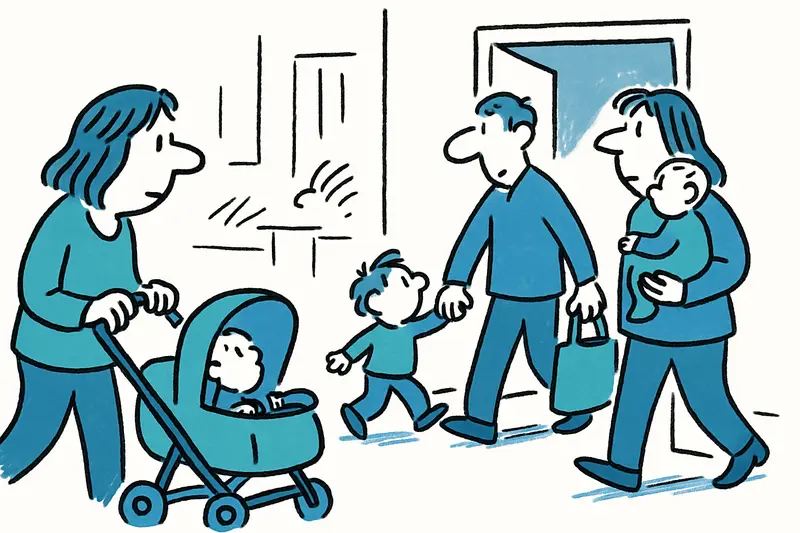
When I stroll along the Passeig on a Tuesday morning around 8:30, the sound is not just the click of stroller wheels but also the rustle of planners. Parents with bags, a quick hug in front of the daycare gate, a quiet 'Have a good day' to a caregiver — the scene is now part of everyday life. The stark number makes it clear: in the Balearic Islands about 43 percent of children under three attend a daycare center.
Is the expansion enough? The central question
Twenty years ago it was different. The rate has more than doubled. Municipalities and providers have invested, created new places, expanded available facilities. But the key question remains: is the infrastructure keeping pace with demand — not just in quantity but in quality? Here that means specifically: are opening hours family-friendly? Is there enough staff? Are daycares located close to homes and workplaces?
Carla from El Terreno puts it simply: 'The daycare was a real relief — we can organize mornings better.' Voices like this are common. But with more places come waiting lists, bottlenecks in opening hours, and debates about fees.
What is often missing from public debate
People talk a lot about figures. Less discussed, however, is the staggered opening hours in an island economy shaped by tourism, shift work, and seasonal contracts. Or the question of how daycares can integrate children with special needs. Also rarely on the table: the spatial link between housing, work and childcare. If families cannot find housing nearby, the best daycare place is of little use.
Another topic: professionals. Many educators work under high pressure with low wages. That leads to staff turnover and makes continuity of care difficult — a factor especially important for toddlers.
Concrete opportunities — and practical solutions
The answer cannot be only more places. Some approaches that repeatedly come up in talks with parents, daycare directors and city administrations:
Flexible opening hours: Daycares that offer shift times, early and late services or modular care blocks would make life easier for many families.
Transparent digital allocation systems: A central waiting list with clear rules reduces frustration and blackboards full of notes.
Cooperation with employers: Company childcare, subsidies or shared care models between firms and municipalities could fill gaps — especially in industrial areas and ports.
Improved staff support: Higher wages, further training and recognition would help retain professionals. Maybe not glamorous, but fundamental.
Mobile or seasonal crèches: For tourist peaks or rural areas, flexible, time-limited offers could be a solution.
What this means concretely in Palma
In the old town, around Carrer de Sant Miquel and Mercat de l'Olivar, you feel the change: more children on the way to daycare, more cafe-table discussions about settling in and lunch. In the outskirts, waiting lists are often longer because fewer new places have been created. Dense areas attract people — but the infrastructure remains a puzzle of building space, staffing policy and city priorities.
Conclusion: Progress — but not the final chapter
The rising care rate is a major step forward. For many families it means predictability and relief. But expansion alone is not enough. A whole bundle of measures is needed: more flexible offers, better pay for educators, smarter linking of housing and childcare infrastructure and more transparency in place allocation. The debate is happening here, at the corner between daycare and office — between strollers and the smell of freshly brewed coffee on the Passeig. And it will likely continue, because family life in Mallorca remains in motion.
Frequently asked questions
How common is daycare for children under three in Mallorca?
Why are daycare places still hard to get in Mallorca?
Are daycare opening hours in Mallorca suitable for parents who work shifts?
What is the biggest challenge for daycare staff in Mallorca?
How are daycare places allocated in Mallorca?
Why does housing matter for daycare access in Mallorca?
What is the daycare situation like in Palma’s city centre?
Do families in Palma’s outskirts face longer daycare waiting lists?
Similar News

Nine-year-old rescued after cliff fall at Cala Murada — How safe are Mallorca's coastal paths?
A boy fell roughly five meters down the rocks near Cala Murada. The dusk rescue was elaborate; a helper also had to be r...

How safe are tourists in the luxury marinas? After arrests: a reality check
The Guardia Civil arrested two men in Calvià who are suspected of stealing luxury watches in Port d'Andratx and Puerto P...

Palma Chases Wealthy US Tourists — The Key Question: Who Should the City Actually Serve?
The city is investing more than €200,000 to attract high-paying visitors in several US cities. A good idea — but what is...
Enough swimming: Why Port de Pollenca is louder than the sea
More than 200 people formed a human chain in Port de Pollenca — not only as a protest but as a wake-up call. Guiding que...

Mysterious disappearance in Alcúdia: Where is 24-year-old Lisa B.?
Since August 3 there has been no trace of 24-year-old German Lisa B. The family has traveled to Mallorca and urgently re...
More to explore
Discover more interesting content

Boat Tour with BBQ along Es Trenc Beach

Private transfer from Mallorca Airport (PMI) to Pollensa
