
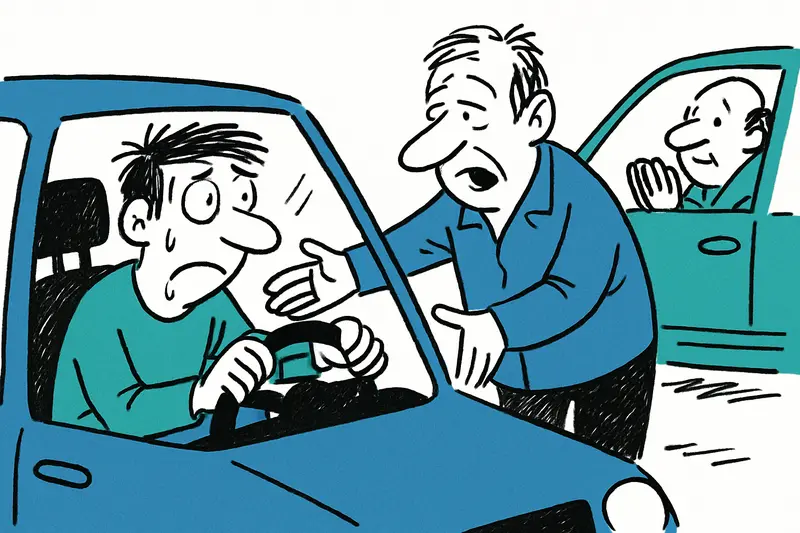
Only One in Three Passes: Why the Driving Test in the Balearic Islands Rarely Succeeds on the First Try
The practical driving test in the Balearic Islands is passed on the first attempt by only about one third of candidates. What factors are behind this — and how could the pass rate be improved?
Why does only one in three pass here on the first attempt?
When the driving test traffic rolls up to the Centro de Exámenes in Palma at 8:20 in the morning, it sounds like everyday life: engines, the click of a front door, distant church bells, parents shouting last-minute tips. Yet the statistic remains stark: on the Balearic Islands only about one third of candidates pass the practical test on their very first try Only about 36% pass the practical driving test on the first attempt. The key question is: Is it the candidates, the driving instructors, economic pressures, or the examination system itself Atasco de exámenes en las Baleares: 7.000 alumnos esperan — ¿por qué faltan los examinadores??
The obvious reasons — and those that are rarely talked about
At the top of the list are the usual suspects: insufficient practice, exam nerves, poor timing. But underneath these lie more complex causes that don’t always come up in everyday conversations at petrol stations or in front of driving schools. Cheap offers from driving schools lure many with “fast-track to the test” packages. The result: candidates often take the exam too early, without enough routine on rural roads, at night or in the rain. Experience shows that an extra hour on country roads or one more practice session on the course often makes the difference between failing and passing.
Another point, often overlooked, is test scheduling. Exams frequently take place at times with heavy traffic — rush hour in Palma, narrow through-roads in Sóller or Campanet — and then skills are assessed in unfamiliar surroundings. For someone whose practice was mainly on the training ground, that is a harsh cut.
The perspective of driving schools and the economic logic
Driving schools feel the demand and react: quick turnovers compete with thorough training. Instructors report that some candidates think theory and a few hours of city driving are enough. What is rarely discussed: the instructors themselves are under pressure. They must run courses economically, and each additional practice hour costs the student more — a factor that inevitably pushes families with limited budgets toward cheaper but often insufficient packages.
There is also a lack of uniform control over advertising claims. Some offers promise “fast test dates” without making it clear that success depends on additional practice. That leads to frustration, extra exam fees and puts strain on the system — more retakes, more appointments, longer waiting lists, as documented in Around 7,000 driving students in the Balearic Islands are waiting months for an appointment for the practical driving test.
Concrete problems in the practical test
In Palma’s test areas it is often detail tasks that cause failure: correct lane positioning at roundabouts, confident behavior at the curb when parking, calm reactions to unpredictable situations (skittering mopeds, suddenly parked cars). In small villages there are narrow lanes and blind intersections. Someone who has only practiced on the training ground rarely experiences these scenarios in real time.
Solutions — realistic and locally rooted
Lowering standards is not an option — the traffic authority also stresses this, as shown on the Dirección General de Tráfico (DGT) official site. Instead, we should tweak driver education. Concrete proposals:
1. Mandatory minimum hours, but modular: Not just a number, but compulsory modules — night driving, rural roads, rain practice — that must be completed before an exam can be scheduled.
2. Practical pre-tests before the official exam: A short, standardized check by independent examiners or partner driving schools to better time the official test.
3. Transparent advertising and disclosure obligations: Driving schools should clearly state what is included in a package — and which risks an early exam attempt carries.
4. Mental preparation: Simulated exams with stress factors (friends as observers, traffic noise, time pressure) are inexpensive and effective in practice, as described in a general practical driving test overview. Often it is not the skill that is lacking, but the ability to remain calm under observation.
5. Pilot projects on Mallorca: Regional initiatives could test whether mandatory rural road hours or subsidized extra lessons after a failure sustainably increase the pass rate.
A practical tip to finish
If you are about to take the test: practice specifically where the tests take place — in Palma’s confusing streets, in the narrow alleys of Sóller, on the toll-free country road early in the morning. Drive in bad weather, practice parking at different times of day and simulate test pressure. A quiet morning, a hot coffee and an instructor who doesn’t rush — often that’s all it takes.
The potential is there: the islands are small, the routes manageable. With better preparation and more realistic expectations, significantly more candidates could pass the test on their first try. Until then the lesson remains: practice, reflect, and treat the second chance as an investment — even if a more expensive one.
Frequently asked questions
Why do so many people fail the practical driving test in Mallorca on the first try?
How can I improve my chances of passing the driving test in Mallorca?
Is the driving test in Mallorca more difficult in Palma than in smaller towns?
What mistakes do learners commonly make during the Mallorca driving test?
Should I take extra driving lessons before the test in Mallorca?
Why do some people in Mallorca take the driving test too early?
What kind of roads should I practise on before a driving test in Mallorca?
Does practising in bad weather help for the driving test in Mallorca?
Similar News
Release after bloody attack in Palma: Why the court's decision raises questions
An 18-year-old who allegedly inflicted a serious neck injury on a man at Plaza Gomila using a wristwatch wrapped around ...
Kidnappings in Inca: Three young men forced into car trunks and abused in the forest – a reality check
In Inca, three 18-year-old men were forced into car trunks by masked assailants at the Plaça des Bestiar, taken to a for...
Spreading Massification: The Brake That Still Has Much Work to Do
Marga Prohens announces limits on volume tourism. The measures sound harsh — but are they enough to save everyday life, ...
Through the Keyhole onto the Party Yacht: How Daniela Katzenberger Is Planning Her 40th on Mallorca
Daniela Katzenberger turns 40 and wants to celebrate it on the island — likely with a boat, cake and her mother. A relax...
By Boat Instead of the Road: Palma's Water Bus — a Reality Check
The 'Bus Nàutic' launches in two stages — but questions remain over interim operations, fares and environmental requirem...
More to explore
Discover more interesting content

Can Cap de Bou

Townhouse Lleo 72
