
Baliza on the Car Roof: When a Safety Gimmick Becomes a Risk for Heart Patients
Baliza on the Car Roof: When a Safety Gimmick Becomes a Risk for Heart Patients
The new V-16 warning light with a magnetic base, mandatory since January 2025, is causing concern in Mallorca: it can interfere with pacemakers and defibrillators. Who is affected, what distances apply, and what practical steps can those affected take now.
Baliza on the Car Roof: When a Safety Gimmick Becomes a Risk for Heart Patients
Key question
Can a newly mandated warning light on cars endanger people with implanted cardiac devices — and how should Mallorca handle this without undermining road safety?
Critical analysis
Since 1 January 2025, Spain requires that, at breakdowns, classic warning triangles are no longer placed but instead a V-16 type light must be carried. For local implementation and penalties see V16 Warning Light: What Will Be Mandatory in the Glove Compartment in Majorca from 2026 — a Reality Check. Technically the device is practical: highly visible, reflective and with a strong magnetic base so it holds to the vehicle surface in wind and rain. That very magnet, however, is the problem. Magnetic switches in pacemakers and implantable defibrillators react to strong magnetic fields and can temporarily switch these life‑critical devices into an asynchronous mode — in some cases to a fixed rate that does not match the individual needs of the wearer. In practice this means: a heart patient who, out of concern for road safety, clamps the baliza to the inside or outside of the roof brings the magnetic field very close to the chest. Experts estimate a recommended safety distance of 15 to 30 centimetres; in many everyday situations that distance is not kept.
What's missing in the public debate
Public reports emphasize that the V-16 is intended to prevent accidents. Detailed guidance for drivers in Mallorca is summarised in V16 Mandatory in Mallorca: What Drivers Really Need to Know. The necessary flip side — concrete guidance for people with cardiac implants — is often only mentioned in passing. In the minutes after a breakdown every second counts; helpers are stressed, it is raining, children get out. Rarely does anyone then think in centimetres. There is also still a lack of a clear, easily accessible instruction from transport authorities or traffic supervision on how affected people should act safely. In local car parks and at insurance desks in Palma I was told repeatedly that although instructions exist, they are not clearly visible in every set of the light.
A Mallorca everyday scene
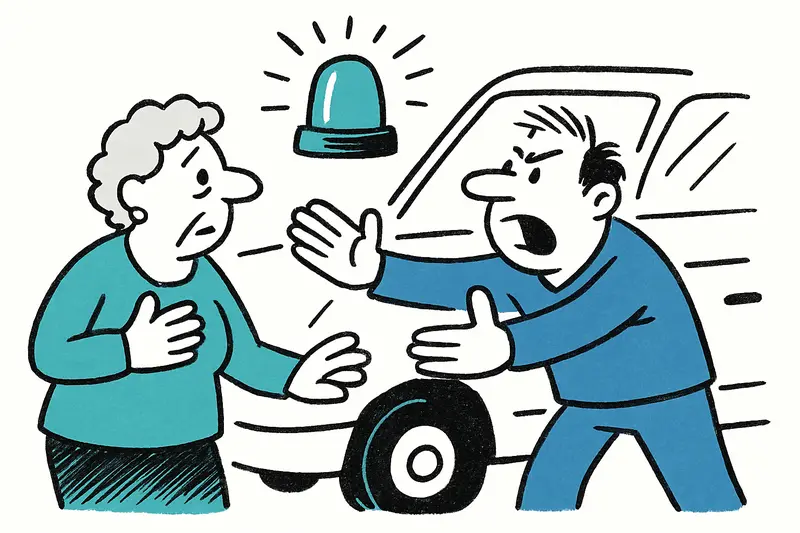
It is a grey morning on the Passeig Marítim. A small van is pulled to the roadside, the driver gestures, the baliza flashes on the roof. A retiree with an implant leans anxiously against the kerb, visibly unsure whether to help or keep her distance. In the distance a seagull screams, a motorcyclist honks. Nobody has a tape measure. This scene shows: on the narrow coastal roads here the recommended safety distance easily shrinks to zero.
Concrete solutions
1) Practical advice for those affected: People with pacemakers or defibrillators should not attach the baliza directly to the roof or bonnet. Better options: put on a high-visibility vest, place the light on a cloth that hangs over the roof edge, or put the light in the trunk and hang the vest in a visible place. If unsure, call roadside assistance first and remain in the vehicle if it is safely parked.
2) Manufacturer responsibilities: Producers of V-16 devices should include a clearly visible warning label and offer alternative non-magnetic attachment options — for example an adapter base with a suction cup or Velcro. An increase in lights without strong permanent magnets would be a technical solution that secures fixation in wind while minimising risk for implant wearers.
3) Authorities and traffic supervision: The traffic authority should issue binding additions to the use of the V-16 — clear short rules in Spanish, Catalan, English and German. Mobile checkpoints and repair shops could receive information leaflets. Driving schools and inspection stations should include the topic in practical instruction.
4) Medical education: Cardiologists and general practitioners on Mallorca should specifically inform patients during discharge discussions or routine check-ups about how to behave in the event of a breakdown. Cards with the most important rules of conduct should be included in patients' records.
Why this matters now
In Spain the number of pacemaker implantations each year can be roughly measured in the tens of thousands; with an ageing population the number of affected people continues to rise. On an island with narrow roads, tourist traffic and many older residents, precautions are not a luxury. A simple sticker on the packaging or a short information sheet could significantly reduce the residual risk without undermining underlying road safety.
Conclusion
The V-16 is a sensible innovation for road safety. But it must not be introduced over the heads of people whose lives depend on implanted cardiac devices. Authorities, manufacturers and clinicians must now work together to ensure that warning lights remain safe to use — for the elderly neighbour in Son Sardina or the holidaymaker in Cala Major. Someone who reads and follows a simple, practical safety tip today may prevent a medical emergency on the motorway tomorrow.
Frequently asked questions
Can the V-16 warning light be a problem for people with pacemakers in Mallorca?
How should drivers in Mallorca use a V-16 light safely during a breakdown?
What should I do if I have a pacemaker and my car breaks down in Mallorca?
Is the V-16 warning light replacing the old warning triangle in Spain and Mallorca?
What safety distance should people with implanted cardiac devices keep from a magnetic V-16 light?
Why is the V-16 light a concern on Mallorca’s roads?
Should Mallorca doctors warn pacemaker patients about the V-16 light?
Are there safer alternatives to the magnetic V-16 light for people with heart implants in Mallorca?
Similar News
Injured captain, big plans: Germania Mallorca before the away match in Consell
The newly founded FC Germania Mallorca travels to Consell on Saturday. Captain Bastian Müller is out injured, but coach ...
Palma, Palma de Mallorca, Palma‑Mallorca: What is it really about?
The debate over the city's name is more than grammar: it concerns identity, law and branding policy. A sober reality che...
Warning to Bathers: Nipping Fish in Cala Major and Other Coves — a Reality Check
In Cala Major and several beaches around Mallorca, bathers report painful “nips”. Who are the animals, why are they gett...
Rental Car Theft in El Arenal: What This Incident Reveals About Our Gaps
A teenager steals a running rental car in El Arenal, flees on foot, climbs over walls and is caught by the Guardia Civil...
Red Rope in Palma's Library: What Helps Against Selfie Tourism — and What's Missing
Palma's city library cordoned off an area with a red rope to keep selfie tourism away from reading and working activitie...
More to explore
Discover more interesting content

Can Cap de Bou

Townhouse Lleo 72
