
Body on board the 'Lind' in Palma: Who protects crew members on luxury yachts?
Body on board the 'Lind' in Palma: Who protects crew members on luxury yachts?
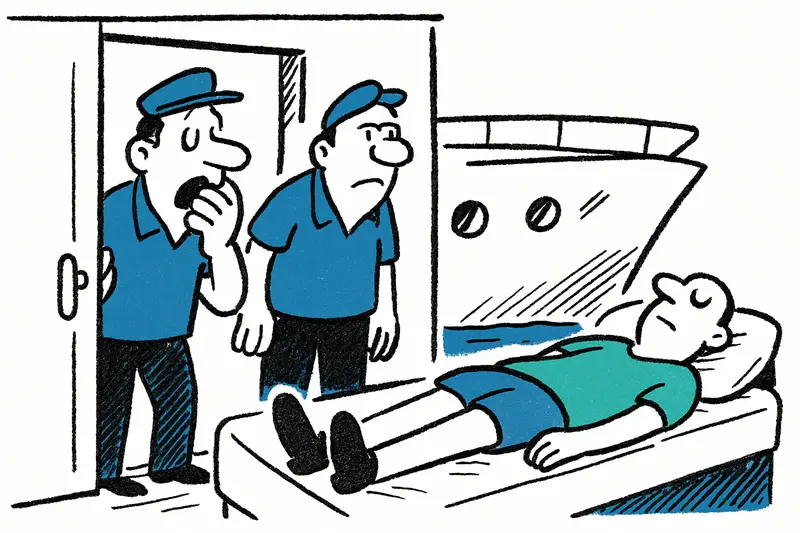
A 29-year-old British woman was found dead in her cabin on the 52-meter yacht 'Lind' in Palma harbor. The Guardia Civil is investigating and an autopsy is pending. The facts raise uncomfortable questions about safety on board and how working conditions are handled.
Body on board the 'Lind' in Palma: Who protects crew members on luxury yachts?
Key question: How adequate are health care and oversight mechanisms for people who work on the large private boats moored in Palma harbor?
Late on Sunday evening, around 9 p.m., a colleague found the young woman lifeless in a sleeping cabin aboard the 52-meter yacht 'Lind', which has been docked at the old mole in the harbor since mid-February. Paramedics could only confirm the death. According to available information, the deceased is a 29-year-old from the United Kingdom. A medical examiner and officers from the Guardia Civil examined the scene on board and report that there are so far no obvious signs of external interference; the final results of the autopsy are still pending.
Such sober facts read briefly – but in the harbor emotions and questions hang in the air. The yacht, with four decks, flying the Cayman Islands flag, is being linked to a German entrepreneur from Munich. Whether and how that affects the investigation remains unclear; for investigators, the medical clarification of the death is the priority for now.
Critical analysis
Investigations start with visible traces; if no signs of violence are discovered, that does not mean the matter is closed. Heart problems, overdose, allergic reaction, undetected pre-existing condition, or a medical emergency that was noticed too late – these are plausible scenarios. Such scenarios have featured in other local cases (Body in Es Carnatge: Investigations After Discovery on the Shore).
What often gets lost in public perception: crew members work in a confined, closed environment, with shift systems, night watches and sometimes long separation from medical infrastructure on land.
Added to this: superyachts are legally complex entities – flag state, ownership structures, employment contracts under different jurisdictions. These general rules complicate quick clarification and traceability. Authority actions, crew issues and health protection do not always run in sync.
What is missing in public discourse
Reporting understandably focuses on identity, the scene and the ownership of the yacht. More important, but less frequently discussed, is the crew's working situation: access to regular health checks, networking with local rescue services, mandatory information about medical equipment on board. Also often missing is the question of how quickly and transparently investigations may proceed without jeopardizing investigative work. Local coverage has also highlighted other recoveries and ongoing inquiries (Body Recovered off East Coast: A Sign of Larger Problems at Sea?).
And one more thing easily slips from view: the role of the port as a workplace. On the Paseo Marítimo you see tourists, joggers and boat workers; at night it is the shadowed ship professions doing long shifts – here risks arise that nobody wants to hear about until something happens.
Everyday scene in Palma
Anyone who walks along the old mole knows the clack of the bollards, the occasional honk of the ferry and the screech of the seagulls. You see deckhands carrying toolboxes, chefs with large pots, uniforms flapping in the wind. When an ambulance with flashing lights arrives, conversation stops: fishermen, restaurateurs and port workers watch. This mixture of bustle and public calm makes the atmosphere unusual – and shows how quickly a private incident becomes a public issue.
Concrete approaches
• Basic medical care for crew: mandatory basic examinations before the season starts and accessible emergency protocols for harbor rescue.
• Transparency obligations for large yachts: a registry with information on crew size, emergency equipment and a local contact person.
• Coordinated emergency routes: clear agreements between the port authority, Spanish emergency services and ship crews so that help reaches the vessel faster.
• Regular inspections: labor and safety checks that focus not only on technical aspects but also on working conditions.
• Whistleblower protection: crew members must be able to request medical help without fear of reprisals.
Concluding remark
It is human to be distracted by ownership issues and celebrity aspects. But the case on the 'Lind' should be a wake-up call: not every incident on board is spectacular, but every one deserves care and systemic scrutiny. Authorities are now clarifying the cause of death — similar inquiries are underway in other coastal cases (Two bodies on the coast: Investigations in Ciutadella and off Alcúdia – Many questions remain) — for the rest, the port administration, employers and society must be prepared to create rules that protect people before a life becomes a headline.
Frequently asked questions
How safe is medical care for crew members working on superyachts in Mallorca?
What happens when someone is found dead on a yacht in Palma?
Why are superyacht crew members in Palma especially vulnerable at work?
What should large yachts in Mallorca carry for medical emergencies?
What is the old mole in Palma harbour known for?
Who investigates unexplained deaths on yachts in Mallorca?
Do superyacht crews in Palma have regular health checks?
Why does a death on a yacht in Palma raise wider questions about labour conditions?
Similar News
Bendinat as a meeting place: Padel Cup brings together nearly 120 players
Three days of padel at the Bendinat Urban Country Club: organized by El Económico and Borbalán, with around 120 particip...
Large-scale Anti-Tourism Graffiti at Cala Mendia: Protest or Vandalism?
On the morning walkers discovered an approximately 50-meter-long slogan against tourism on the wall above Cala Mendia. W...
Bomb threat before Jet2 flight in Tenerife: A reality check for security protocols
A passenger reported a bomb in luggage shortly before departure in Tenerife. Evacuation, baggage checks, delays — and ma...
Who is stripping Mallorca's coast bare? Why entire slopes are being removed for villas
On Mallorca steep slopes are again being removed to make way for luxury construction sites. Who bears the responsibility...
Robber Falls While Fleeing in Sant Agustí: Who Takes Responsibility?
During a purse-snatching in Sant Agustí, a non-commissioned officer chased the suspect; the man jumped from a bridge and...
More to explore
Discover more interesting content

Can Cap de Bou

Townhouse Lleo 72
