
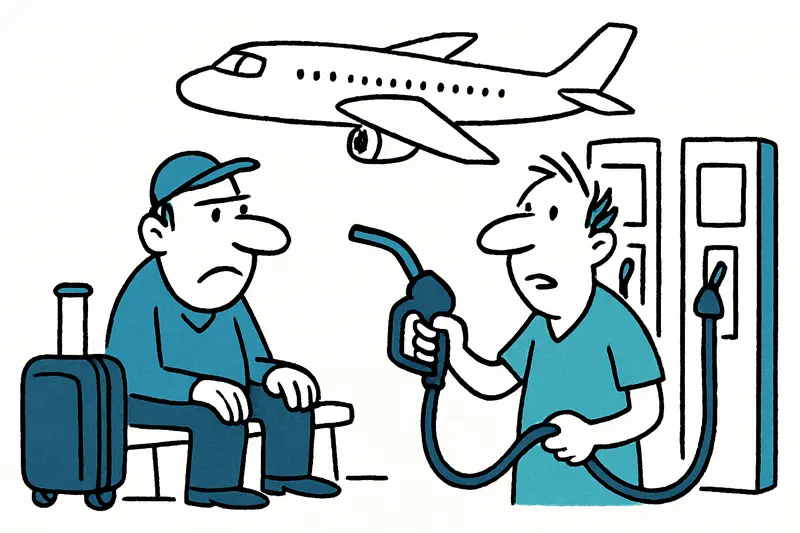
Air Traffic Backups and Fuel Pumps: How the Middle East Conflict Reaches Mallorca
Air Traffic Backups and Fuel Pumps: How the Middle East Conflict Reaches Mallorca
Hundreds of thousands of kilometers away, yet tangibly felt on the island: stranded Mallorcans, pricier fuel and air traffic partly in critical condition. An assessment and reality check from Palma.
Air Traffic Backups and Fuel Pumps: How the Middle East Conflict Reaches Mallorca
Key question: How are people and the island's economy actually protected — and what is missing now?
In the early afternoon on the Passeig Mallorca, the seats in the café opposite the newsroom still warm from the morning sun, you hear buses squeal and the hum of the city: conversations are no longer just about the weather but about return flights and petrol prices. Hundreds of Balearic residents are currently stranded in countries around the Persian Gulf or in Asia. Estimates from the regional travel association speak of roughly 600 affected people; many were able to return in the first days, but a complete return does not appear likely in the short term.
What is behind this? Flight routes are being diverted because of airspace closures, as in a recent drone refueling stop on Menorca, airlines in several cases invoke force majeure and refuse to cover additional costs. For individual travelers this can mean replacement connections that often cost several thousand euros — in one documented case the alternative offers were around €6,000 for two people. At the same time, oil and gas markets react sensitively: the strategic importance of the Strait of Hormuz makes prices twitch, and the petrol station association of the Balearics already reports an increase of around three cents per liter within a few days.
The result is twofold: people who need help, and an island economy that, with rising fuel costs, becomes even more sensitive to price fluctuations. Economists argue about the extent: some see limited direct dependence of Europe on Gulf oil, others warn of imported inflation that also becomes noticeable in gastronomy and retail through higher transport costs.
Critical analysis: Who bears responsibility — and who speaks plainly?
The actors are opaque. Airlines rely on force majeure; that is legally sound but offers little comfort to travelers. Tour operators and associations like Aviba provide figures, yet coordinated repatriation actions are rarely visible at the regional level. On the consumer side, the OCU warns of later petrol pump surcharges of eight to ten cents per liter — a warning that has not yet manifested to the same degree in everyday reality.
Most important criticism: there is no clear, publicly known emergency plan for travelers from the Balearics. Who do you contact first? What steps can the regional administration take, and when does the foreign ministry step in with consular assistance? The answers are often scattered across websites and hotlines that those affected can hardly overview — and recent cyberattacks that disrupted check-in systems have worsened the confusion.
What rarely appears in the public discourse
The debate revolves around figures and market forecasts. Three aspects are too often left out: first, the social dimension — some stranded people are pensioners with tight budgets, others are families with children. Second, the burden on local service providers: travel agencies, local taxi drivers, hotels offering short-term accommodation. Third, the long-term perspective: if airfares rise permanently, the island’s regular guests will be hit particularly hard.
A scene from Palma
In front of the departure area at the airport two older travelers sit on a bench, suitcases beside them, the radio of a kiosk blares football results. They talk about canceled flights, the frustration over missing refund information and the head-shaking at online offers that show five-figure prices, similar to passengers affected by an hours-long delay at BER. In the old town the owner of a small rental office asks how she should arrange return options for guests, while the attendants at the nearby station separate the wheat from the chaff — regular customers are reassured, but supplies and prices remain an open issue.
Concrete approaches
1. A public, easy-to-find checklist for those affected from the Balearics: phone numbers of consulates, step-by-step guides on claims for compensation, information on travel insurance benefits. The regional government could publish this online at short notice and post it in tourist centers.
2. Coordination between the Balearic government, the foreign ministry and major airlines: targeted coordination for temporary charter flights to repatriate citizens. This option is expensive but feasible in crises and useful for particularly vulnerable groups.
3. A regional hardship fund: grants or low-interest loans for travelers with verifiable emergencies, financed by a time-limited levy on large tour operators.
4. Transparent monitoring of fuel prices: the government could publish weekly reports at short notice so the public can follow price jumps and speculation can be countered.
Conclusion — pointed
The island feels the effects of a distant conflict in a sober, practical way: people are left without clear help, and the economy must brace for higher transport costs. Real relief does not require grand words, but rules and procedures that work in a crisis. If authorities, industry and consumer advocates work pragmatically now, the situation for those affected can be noticeably improved. If not, beyond personal frustration there is a risk of an economic aftermath that will occupy us here in Palma for a long time.
Our tip: Travelers should check their insurance immediately, document every cancellation in writing and contact regional travel associations. And if you see a free seat in a café in the city: sit down. A conversation can help in finding the way home.
Frequently asked questions
How are Mallorca travellers affected when flights are diverted because of conflict in the Middle East?
What should I do if my Mallorca flight is cancelled and the airline says it is force majeure?
Will fuel prices rise in Mallorca because of tensions in the Middle East?
How do higher fuel costs affect everyday life in Mallorca?
Are there any official emergency contacts for Mallorca residents stranded abroad?
Who helps Mallorca tourists if they need to get home after a major flight disruption?
What can Mallorca hotels and taxi drivers expect when travellers are stranded?
Is Mallorca likely to see long-term effects on tourism if airfares keep rising?
Similar News

Rental Car Theft in El Arenal: What This Incident Reveals About Our Gaps
A teenager steals a running rental car in El Arenal, flees on foot, climbs over walls and is caught by the Guardia Civil...

Red Rope in Palma's Library: What Helps Against Selfie Tourism — and What's Missing
Palma's city library cordoned off an area with a red rope to keep selfie tourism away from reading and working activitie...
Fort San Carlos: Museum, Harbor Dispute — and a Conflict That Demands Answers
The military museum at Fort San Carlos sits right on Palma's harbor, with unexpectedly quiet rooms filled with cannons a...

Old Town Under Pressure: When a Doorway Becomes a Sleeping and Shower Place
For months a woman has been living with a parasol, a clothes rack and personal belongings next to the social welfare off...
When Shopping Weighs Heavier: Mallorca Demands a Tax Pause on Food and Fuel
Rising prices are putting pressure on households and agriculture. The Balearic Islands are calling for temporary tax rel...
More to explore
Discover more interesting content

Can Cap de Bou

Townhouse Lleo 72
