
Bendinat Case: The Unsolved Death Mystery of a German Resident from 1989
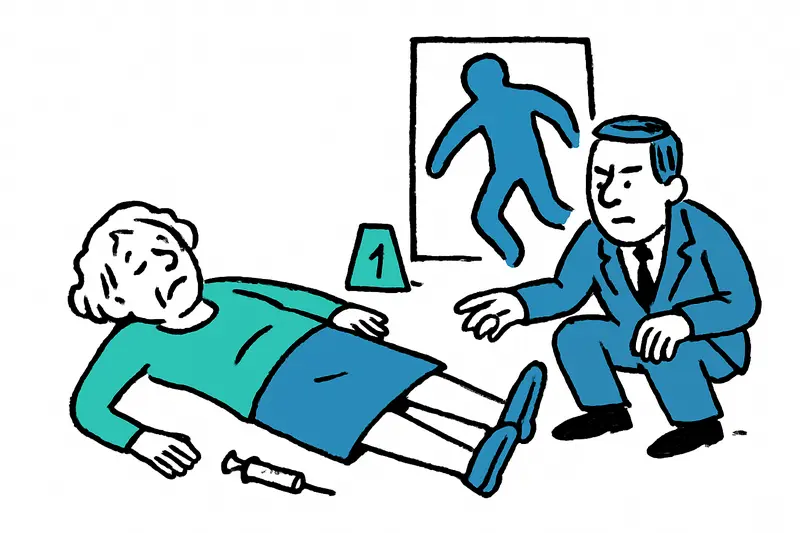
Thirty-six years ago a 69-year-old German resident in Bendinat was the victim of a break-in and a syringe attack. The perpetrator escaped and the woman died of a heart attack. Why did the case remain unsolved and what would need to happen today to provide clarity?
Bendinat Case: The Unsolved Death Mystery of a German Resident from 1989
Key question: Why was this assault with a fatal outcome never conclusively solved?
On the late afternoon of 29 December 1989, a quiet villa street in Bendinat was changed forever. A 69-year-old German resident unexpectedly encountered a burglar who had already searched several rooms of her house and taken jewellery and cash. During the encounter she was injured with a needle, collapsed and died later that evening of a heart attack at the Son Dureta clinic. The perpetrator fled and remains unknown to this day.
Critical analysis: Individual facts, a big question mark
The available facts paint a clear yet incomplete picture: there was an encounter in front of the villa, an injection near the eyebrow, an immediate collapse and confirmation of death a few hours later. A suspect initially arrested had an alibi and was released. Investigations at the time focused on certain neighborhoods of Palma, including locations where stolen items might have been disposed of. Despite the rapid response of the Guardia Civil and the local police, the fugitive could not be caught.
The pattern fits the late 1980s: an island with seasonal tourism, limited forensic capacities and a drug problem that could have influenced offender profiles, as seen in Unsolved discovery off Cala d’Or: The brutal death of a young German tourist in 1988.
But the sober question remains: was it merely a tragic burglary with fatal consequences, or is there more behind it that remained hidden due to investigative gaps at the time?
What is missing so far from the public discourse
The public narrative often only recounts the chronology of the crime, but rarely the methodological weaknesses: what traces were secured, if any? Was the stabbing tool ever examined for residues or fingerprints? How systematically were potential buyers of the jewellery checked afterwards? These practical questions are crucial, yet they are scarcely present in the debate.
There is also a lack of an honest assessment of the cooperation at the time between local units and the Guardia Civil. Without clarity about responsibilities and procedures, it remains unclear whether opportunities for preserving traces were missed.
Everyday scene: Bendinat today, and the echo of 1989
Anyone walking in Bendinat today hears the gentle rustle of the sea, sees cypress trees and well-kept driveways, and may meet an elderly neighbour who still talks about the incident; recent local reports such as Bendinat accident: Unnoticed under the cliffs for hours — jetski rescue at midday show the area's continuing incidents. On the footpath toward the harbour the chatter of pigeons is loud, occasionally interrupted by a delivery van stopping at a driveway. Such everyday details make clear how close past and present lie: a single moment can change an entire life, while the street itself remains unchanged and carries the memory forward.
Concrete approaches — what should be done now
• Case file review: An independent review of the investigation files could reveal blind spots and set priorities for new steps.
• Forensic re-examination: If evidence has been archived, modern analyses — DNA or toxicology — could produce results that were inconceivable in 1989.
• Witness re-interviewing: Re-interviewing old witnesses, especially neighbors and relatives, can trigger new memories or uncover contradictions. Memories fade, but sometimes details resurface later.
• Data matching: Comparing the crime description with known offenders from the period or with later offences could reveal patterns. National and international databases now allow comparisons that were not possible then.
• Public outreach: A renewed appeal to the public, with clear contact channels and a possible reward, could bring previously hidden tips to the authorities.
Practical obstacles
Of course there are hurdles: evidence may be missing or unusable, witnesses have aged and memories are uncertain. Legal and organisational questions about opening files and reopening dormant investigations must be clarified. But lack of certainty is also a lasting burden for the bereaved.
Conclusion: A case that demands answers
The incident in Bendinat is not merely an archival item; it is an open chapter in the local criminal history. A targeted effort that combines modern forensic tools, thorough file work and renewed witness interviews could set the case in motion again. When the street before the villa is still on a winter day, the question remains: why, after 36 years, has no definitive lead to the perpetrator been found? The answer would not only bring legal clarity, but would also honour the memory of the deceased.
Frequently asked questions
What happened in the Bendinat case in Mallorca in 1989?
Why was the death in Bendinat never solved?
Could a case like the Bendinat mystery be reopened today?
What makes the Bendinat case important in Mallorca?
What is Bendinat like today after the 1989 case?
What happened near Son Dureta clinic after the Bendinat attack?
Were stolen jewellery and cash ever recovered in the Bendinat burglary case?
What should investigators look for if the Bendinat case is reviewed again?
Similar News
By Boat Instead of the Road: Palma's Water Bus — a Reality Check
The 'Bus Nàutic' launches in two stages — but questions remain over interim operations, fares and environmental requirem...
Several Days of Rain Approaching: How Well Is Mallorca Prepared?
Aemet says: rain from Thursday until at least Tuesday, especially heavy on Monday. Temperatures remain mild. A reality c...
Nervous Reaction at a Traffic Stop: Why Campos Is Not Just a Sniffer-Dog Problem
At a traffic stop in Campos a 37-year-old German was arrested with a bag full of drugs. Our reality check explains why s...

Cameras Against Illegal Dumping: Porto Cristo Monitors Problem Areas – a Reality Check
Manacor has installed four surveillance cameras at particularly problematic waste spots in Porto Cristo. A local check a...
Reality check: Palma's "white" torrent — harmless salt or neglected warning sign?
White crusts on the Torrent de Sa Riera are causing a stir. Emaya describes them as salt deposits. Our reality check: wh...
More to explore
Discover more interesting content

Can Cap de Bou

Townhouse Lleo 72
