
Beware of 'Fake Beaches' – How Misleading Tips Lead Tourists Astray in Mallorca
More and more maps and posts send tourists to so-called secret beaches — often to dead ends. Why this happens, the consequences, and how you can protect yourself.
Why 'Fake Beaches' Are Suddenly Being Discussed
Summer is approaching, engines are starting up, and suddenly supposed insider tips are circulating in messenger groups and social networks: Tragedy in Son Bauló: Small Cove, Big Questions — How Safe Are Mallorca's Unassuming Beaches?, hardly known, with evocative names and perfect pictures. Some links, however, end at a street corner, a residential area or even private property, as highlighted in Beware of Rental Offers on Facebook & Instagram: How to Protect Yourself in Mallorca. That leads to puzzled faces at the Plaça Major and in many holiday resorts — and it is more than just an internet joke.
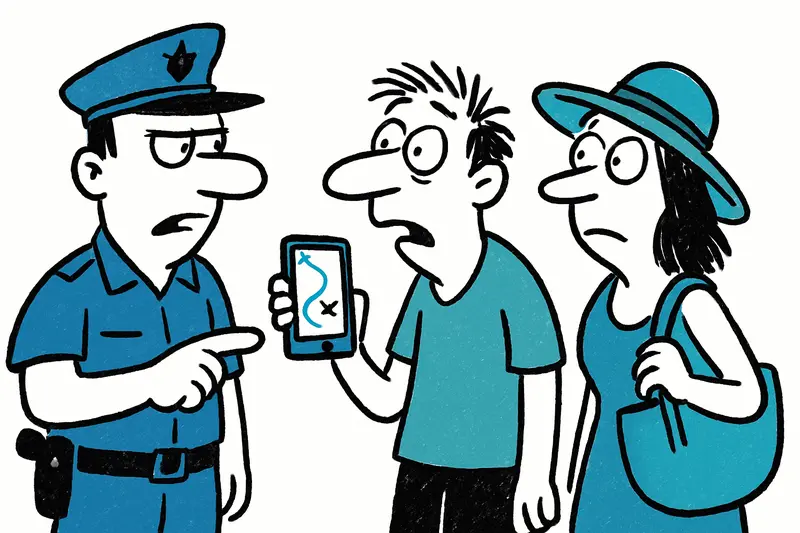
Last Thursday at 10 a.m. I watched two holidaymakers with phones in their hands standing in front of a café, trying in vain to decipher a coordinate. The church bells were ringing, the scent of freshly brewed café con leche hung in the air, a policeman pulled a map out of his backpack and advised, "Ask the tourist office." Scenes like this are repeating in several places at the moment, even in busy stretches such as New Tricks at Ballermann: How Pickpockets Exploit Playa de Palma — and What Actually Helps.
Who Is Behind the Lists — and Why?
Many entries are created by activists who want to draw attention to the problem of overcrowded beaches. They list seemingly "secret" coves to redirect visitors or to provoke discussion. In other cases, users share incorrect information out of ignorance or simply to gain clicks. The result: uncertainty, unnecessary searches — and sometimes trouble for residents.
Less noticed is that these actions also carry risks: wrong directions can lead people into unsafe areas, onto private land or to erosion-prone spots where there is no official access. Emergency services and lifeguards are unnecessarily burdened as a result.
The Central Question: Protest or Risk?
The key question remains: does this serve to protect the island — or does it create new problems? Activism aimed at slowing down tourism and protecting nature is legitimate. But if false information is spread deliberately, a counterproductive effect is likely: visitors become suspicious, locals get annoyed, and the credibility of genuine conservation appeals suffers.
One example: after a demonstration in June, several maps with "non-beaches" appeared. Some posts were emotionally charged, others simply misleading. There is a lack of transparency: who creates the lists? According to which criteria? Who checks the information?
Practical Tips for Uncertain Holidaymakers
Check sources: Not every tip from the internet is genuine. Compare location details, look at satellite images and only follow entries if several trustworthy sources agree.
Ask locally: Hotel staff, taxi drivers, bus schedule controllers or the nearest lifeguard know the routes. Mallorcans are often proud of their island — and curious enough to provide information. For related hotel concerns, see Fake Reservation at Playa de Palma: How Hotels Can Protect Their Receptions.
Avoid risky routes: If a route leads through residential areas or along unpaved paths, turn back. Safety comes before a so-called insider tip.
Look for official information: Municipal websites, the tourist office or recognized map providers are more reliable than anonymous posts. A short phone call can avoid embarrassing and dangerous detours.
What Municipalities Could Do
There are practical solutions that are still underused. Municipalities could provide verified beach maps with QR codes at bus stops and tourist centers. An official site plan with access points — quickly accessible via an app or flyer — would prevent much confusion.
Educational campaigns would also be helpful: explaining why some beaches are protected, when access roads are closed and how visitors can show consideration. Mediation between activists and tourism associations could also ensure that protests are visible but not misleading.
A Small Appeal at the End
Panic helps no one. A healthy skepticism toward online insider tips protects you from frustration — and protects Mallorca's residents and nature. If you discover a real gem, be sparing with sharing it. Sometimes a place is most beautiful because not everyone knows about it.
And if you're still unsure: go to the tourist office, listen to the seagulls, feel the wind — and just ask. The answer is usually friendly and clear.
Frequently asked questions
How can I tell if a beach tip in Mallorca is real or fake?
Why are people sharing fake beach locations in Mallorca?
What should I do if a Mallorca beach route looks suspicious?
Are some hidden beaches in Mallorca unsafe to visit?
When is the best time to visit Mallorca beaches if I want fewer crowds?
What is the safest way to find a beach in Mallorca using my phone?
Who should I ask in Mallorca if I am unsure about a beach location?
What can Mallorca municipalities do about misleading beach maps?
Similar News
First Day, First Consequences: What Palma's Rent Freeze Really Means
A new decree stops a planned eviction in Palma — but what really changes for tenants and landlords? A reality check with...
When Housing Becomes a Matter of Survival: Mallorca Between Rental Frenzy and Everyday Life
The case of 87-year-old Maricarmen showed that on Mallorca many people's lives are poised between affordable and uninhab...
Autumn in Mallorca: When Melancholy Gets a Window
Why autumn quietly tightens here — and how to make use of the mood: walks, culture, candles and the light from Palma to ...
Near-miss on Lanzarote: Landing Ryanair Jet and Iberia Takeoff — what really went wrong
On Lanzarote there was a dangerous incident: A Ryanair flight (FR5910) from Dublin landed on runway 03 while an Iberia E...
Eurowings introduces new Premium Business seats on Mallorca routes
From December 1, selected Eurowings flights to Palma and other destinations will feature eight particularly generous sea...
More to explore
Discover more interesting content

Can Cap de Bou

Townhouse Lleo 72
