
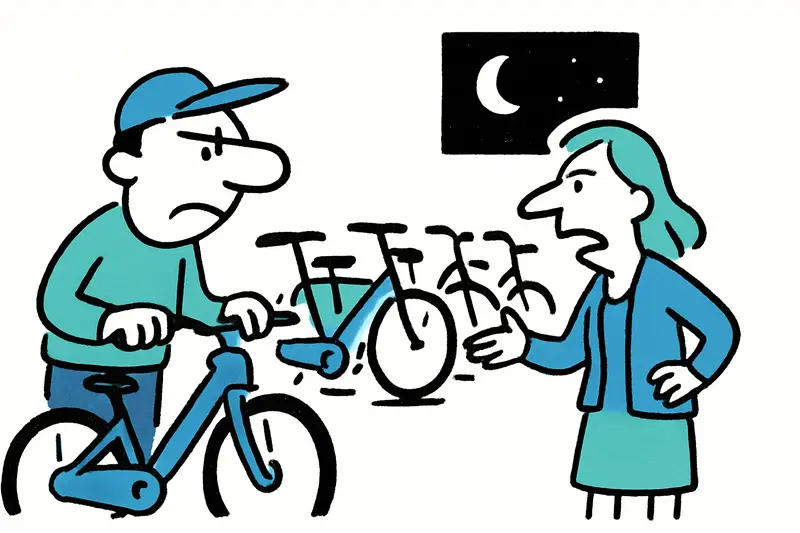
BiciPalma now operates at night — more bikes in the morning or just for show?
BiciPalma now operates at night — more bikes in the morning or just for show?
BiciPalma will redistribute rental bikes between 22:30 and 06:00 on weekdays. Good idea, but how will success be measured? A reality check from Palma.
BiciPalma now operates at night — more bikes in the morning or just for show?
Key question: Does the night redistribution actually bring more availability in the morning?
Since this week, BiciPalma staff have been moving bikes between stations not only during the day but also at night. The new service runs on weekdays from 22:30 to 06:00. The goal is that many stations will have more bikes available in the morning. The budget for additional staff is €400,000. In addition, the Son Espanyolet station (number 12) is fully back in operation after construction work.
It sounds pragmatic when you imagine the scene: on a clear January night at the Plaça de Cort, small transport vehicles quietly roll by and redistribute bikes so commuters and students won't find empty racks in the morning. But the announcement raises questions — and this is our reality check.
Critical analysis
First: It is unclear how success will be measured. Is the sheer number of bikes at the stations a sufficient metric, or should availability, usage duration and the number of defective bikes be tracked separately? Second: The 22:30–06:00 time window covers the night, but why only on weekdays? Weekends often see tourist peaks with evening movements; the lack of weekend service could leave gaps there, as discussed in Palma 2026: More Parking Spaces, 230 E‑Bikes — Opportunity or Detour?. Third: €400,000 for additional staff says nothing about contract types, working conditions or shift arrangements. Will nights be covered by existing personnel or will new positions with night supplements be created? Fourth: The promised faster reaction to defects is welcome, but details on repair logistics, storage capacity and spare parts are missing — without these the measure remains half-hearted.
What is missing in the public debate
The debate so far revolves around more or fewer bikes. There is little discussion about noise, the safety of night teams on Palma's side streets, or the CO2 balance of the transport trips, nor about how parking and e-bike deployment interact in the city, as examined in Palma's balancing act: More parking — more e-bikes — can they coexist?. Who will pay the €400,000 in the long term? The city administration, the operator or funding programs? See Who pays for the pink bike? BiciPalma raises prices and removes youth fares. Social questions are also rarely addressed: how will shift work change for people who already have precarious employment in the mobility sector?
Everyday scene from Palma
I see it often: at half past seven in the morning at the Estació Intermodal a small line of commuters forms, hoping for free bikes. The air smells of coffee, and on the Passeig Mallorca you can hear buses and delivery vans. If at three in the morning quiet vans redistribute bikes, the commuter hardly notices — they only see the result. The question is: will this result be sustainably better or only for a few particularly well-served stations?
Concrete solutions
1) Clear metrics: availability per station at rush hour, repair time per defect, failure rate. Publish these values quarterly. 2) Pilot zones: test night redistribution first in three typical neighborhoods (city center, university district, residential area) and compare. 3) Cost transparency: disclose how the €400,000 is used — wages, vehicles, protective equipment. 4) Secure working conditions: night supplements, safe routes, lighting and communication tools for teams. 5) Check sustainability: use e-transporters or cargo bikes instead of diesel vans to improve the CO2 balance. 6) User feedback: short morning surveys via the app to ask whether the service has actually improved.
Concise conclusion
Night redistribution is not a self-starter, but it is an opportunity. It can result in noticeably more bikes in the morning — if the city and the operator work transparently, publish data and stick to simple checks. Without this care, it remains a nice idea that costs a lot of money but delivers only limited improvements. Son Espanyolet is back and that is good. Now we have to see whether the whole city will benefit.
Frequently asked questions
Does BiciPalma’s night redistribution in Palma actually mean more bikes in the morning?
Why is BiciPalma only redistributing bikes at night on weekdays in Mallorca?
How much is Palma spending on BiciPalma’s extra night staff?
Is Son Espanyolet station back in service on BiciPalma?
How can Palma tell if the BiciPalma night service is really working?
Is BiciPalma night redistribution safe for workers in Palma?
What does the BiciPalma night change mean for people commuting from the Estació Intermodal?
Could BiciPalma’s night redistribution in Palma affect noise or traffic at night?
Similar News
Are the Balearic Islands the Southern Border of Europe? A Reality Check on Immigration
The Balearic Islands are again calling for EU aid after a sharp rise in arrivals by sea. Conflicting priorities between ...

"Expensive chaos" and many open questions: What clients can do when a lawyer suddenly stops responding
Several clients complain that a well-known German lawyer in Mallorca has been unreachable for months. Key question: What...
TV tip: 'The Last Problem' — Mallorca as the setting of a classic crime
A classic whodunit on Mallorca: A new miniseries set in spring 1959 brings storm, an isolated hotel and a dense web of s...

Nipping Sea Creatures: Why Bathers in Cala Major and Elsewhere Should Be Cautious
In Cala Major, bathers have reported being nipped by small fish. What is behind it, how can problems be avoided — and wh...
Forced eviction in Santa Catalina: When a 65-year-old slept in her car and showered on the beach — a question of responsibility
The story of Pilar López from Santa Catalina represents a problem affecting many Mallorcans: How can an island with a bo...
More to explore
Discover more interesting content

Can Cap de Bou

Townhouse Lleo 72
