
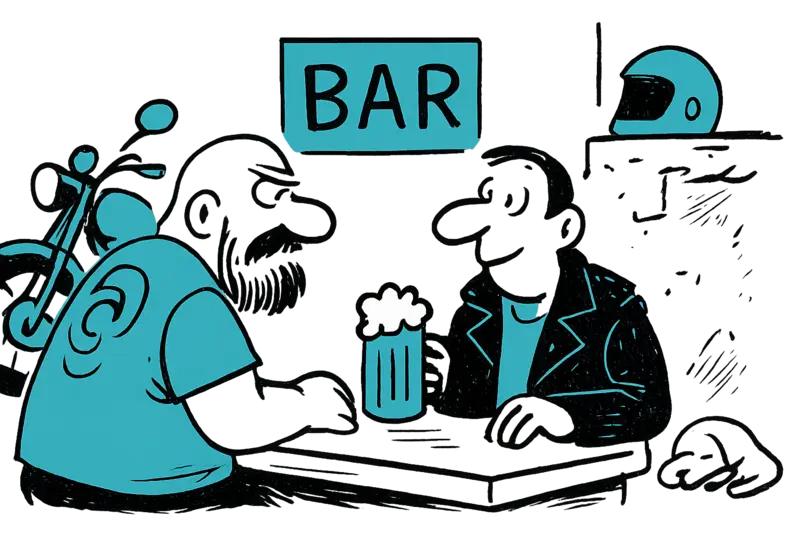
End of an Era on the Ma-15: Why the Biker Hangout at Son Gual Is More Than Just a Restaurant
"Los Últimos Mohicanos" closes unexpectedly. A meeting place for motorcyclists on the Palma–Algaida border is disappearing — blamed on staff shortages, ownership changes and a missing plan for traditional venues. Time for concrete solutions.
End of an Era on the Ma-15: Why the Biker Hangout at Son Gual Is More Than Just a Restaurant
Anyone driving the highway between Palma and Manacor these September days could see it immediately: the parked bikes, oil-flecked helmets on the wall and the sign of a venue you couldn't miss. The themed restaurant "Los Últimos Mohicanos", founded more than ten years ago by Germans and long run by Tim Waterkott, has unexpectedly closed its doors. For many on the island this is more than news — it is a loss of identity.
Key question
What does Mallorca lose when places like this disappear, and how can we prevent more meeting points from vanishing in the coming years?
The farewell gathering on Sunday was no tidy closing: squealing tires, an improvised stage, people in leather jackets jostling for one last beer. The mood was wistful but pragmatic: operators cite staff shortages in kitchen and service, alongside impending changes in ownership and a new project that will use the premises in future. For the scene around Son Gual this is a hard cut.
The short-term consequences are visible: motorcycle rides lose a fixed meeting point, local suppliers notice missing orders, and employees suddenly lose a steady income. The long-term danger is greater: when themed venues disappear without a succession plan, a piece of Mallorca's everyday culture disappears bit by bit — not only for tourists but for those who live here and meet up.
What is missing in the public discourse
When Mallorca's gastronomy is discussed, figures about beds, tourist arrivals or real estate projects often dominate. Rarely addressed are the "social spaces" — pubs, clubs, meeting places not primed for investor-driven profit maximization. These very places suffer especially from:
- Labor market problems: seasonal work, long shifts, complicated housing and commuting situations for employees.
- Ownership changes and speculation: sale of properties without provisions for existing businesses.
- Lack of support structures: no advisory or transition schemes for operators who want to sell or give up.
An everyday scene of Mallorca
Early evening on the Ma-15: the smell of fried potatoes mixes with exhaust smoke, two men argue at the bar about the best route through the Tramuntana, a dog sleeps under one of the tables. These sights belong to the island. When these places go, it's not just a dish that disappears from the menu but a piece of community — the spontaneous chat, the shared planning of a ride, the gathering after a long week on the roads.
Concrete approaches to solutions
The problem cannot be solved with a single law, but there are practical steps municipalities, associations and operators could take together:
- Transition and succession programs: grants and advisory services so operators can plan sales or handovers instead of abruptly closing the venue.
- Support for staff recruitment: subsidies for local apprenticeships, flexible working models and housing allowances for seasonal workers.
- Recognition as cultural venues: municipal lists for places with special social significance that are given priority in ownership changes.
- Cooperative business models: offers to form cooperatives so regulars or employees can take shares and preserve the venue.
A pragmatic example would be a municipal advisory service that is mandatorily involved in any major property transfer affecting hospitality businesses. This could create five to six months lead time to coordinate staff, licenses and potential buyers.
Conclusion
The closure of "Los Últimos Mohicanos" is not an isolated case but a symptom. It shows how vulnerable local meeting points are when economic pressure, staff shortages and ownership changes coincide. Anyone who stands on the Ma-15 in Mallorca and senses the silence there knows this is about more than a restaurant: it's about places that shape the island's character. If we want such meeting points to remain, administration, the industry and civil society must ensure transitions are planned and social functions protected. Otherwise all that will remain are memories of the smell of petrol and fried potatoes — and an empty lot by the road.
Frequently asked questions
When is the best time to visit Mallorca for outdoor activities?
Is swimming in Mallorca possible year-round?
What should I pack for a Mallorca trip?
What happened to Los Últimos Mohicanos on the Ma-15 near Son Gual?
What is the Los Últimos Mohicanos venue known for on Mallorca’s Ma-15?
What steps can Mallorca take to protect beloved local venues from abrupt closures?
How do closures of social spaces affect Mallorca’s communities and tourism?
What role can Mallorca's municipalities play in preserving social spaces?
Similar News

Fewer Airlines, Fewer Destinations: What Palma's Winter Flight Schedule Means for Mallorca
Analysis shows: Winter at Son Sant Joan Airport will be quieter, with significantly fewer airlines and destinations. Who...
German tourist dies in Sa Calobra – a reality check for emergencies on Mallorca's beaches
A 40-year-old tourist died at the Torrent de Pareis. The emergency call, a doctor who happened to be present, a defibril...
Deadly Tractor Accident in Bunyola: What Needs to Be Done Now
In a work accident on an estate near Bunyola, a roughly 40-year-old man lost his life. His wife and a small child were o...
Head-first dive into the shallow part of Cala Fonoll: An accident and the unresolved question of responsibility
A young tourist dove into Cala Fonoll and was seriously injured. Key question: Why are clear warning signs missing at da...

Mistaken identity with fatal consequences: Brutal assault in S'Aranjassa — what's missing in the follow-up?
At S'Aranjassa a visitor to a finca was tied up, beaten and thrown out of a van. Three men have been arrested, including...
More to explore
Discover more interesting content

Can Cap de Bou

Townhouse Lleo 72
