
Binissalem Suffocates in Waste: Who Cleans Up - and Who Pays?
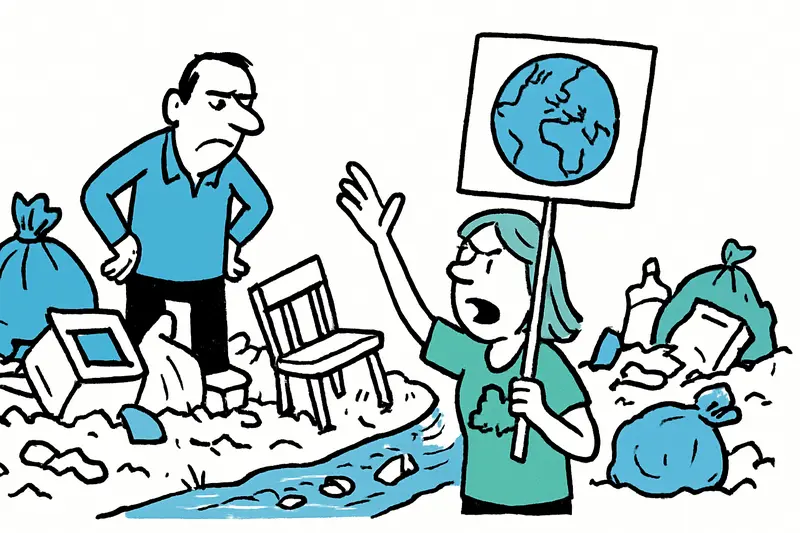
Garbage bags, construction debris and plastic bags along the Camí de Son Roig down to the Rafel Garcés stream bed: Residents and environmentalists in Binissalem are demanding concrete measures — not just clean-up actions.
Binissalem Suffocates in Waste: Who Cleans Up - and Who Pays?
At around 9:15 a.m. the morning wind blows through the entrance to the industrial area, carrying the rustle of plastic bags and the smell of damp refuse after rain. What lies here is not a random scene: bags of construction waste, broken chairs, cardboard and household goods stretch across several spots in the municipality — from the Camí de Son Roig via a junction on the Camí del Raiguer down to the stream bed of the Rafel Garcés, according to residents and a local report Binissalem Suffocating in Waste: Residents and environmental group demand action.
The central question
Who is responsible — and why is simply collecting the waste not enough? This guiding question underlies the frustration of many residents. It is true: removing rubbish is necessary. The deeper question, however, is whether collection can become a permanent pacifier as long as the causes continue unchecked.
More than just ugly sights
The problem is not merely visual. Damp, unsorted waste smells after rain, attracts rats and insects and can burden the Rafel Garcés stream bed — a sensitive element in the local water system. Residents report odors when walking their dogs and that families no longer feel comfortable on the streets. The costs for cleaning and disposal ultimately fall on the municipal budget — and thus indirectly on all taxpayers.
What the environmental group observes
The local organization has documented the deposits and points to a structural problem: short-term cleanups remove the visible load but do not change the behavior of those who dispose illegally, according to Binissalem ahogado en la basura: vecinos y grupo ambiental exigen acción. "House-to-house" collections show little sustainable success, critics say. Without clear sanctions and without alternative, attractive disposal options, the problem remains.
Aspects rarely mentioned
Public debate often revolves around assigning blame: are craftspeople, private households or itinerant disposers responsible? Less discussed is how processes in small businesses and during renovations affect the amount of bulky waste and construction debris. The role of waste haulers also matters: if delivery conditions at the landfill are unclear or expensive, the temptation to dump illegally rises. Such economic incentives often remain in the dark.
Concrete measures instead of press-release lines
So what could Binissalem do now? Here are some realistic proposals that go beyond mere cleaning:
Targeted controls: Weekend focus operations in known hotspots such as the Camí de Son Roig, supplemented by mobile cameras at entrances prone to criminal activity.
Registered bulky-waste pickups: An online or phone system where contractors and households must book appointments — with proof. This reduces wild deposits of construction waste.
Pricing incentives and fines: A combination of affordable, regulated drop-off options for small businesses and clearly communicated penalties for repeat offenders.
On-site public education: Information booths in hardware stores, targeted flyers at building sites and a local campaign that explains where things belong — practical, not preachy.
Hotspot mapping and data collection: Documenting locations with photos and timestamps to identify patterns (times of day, weekdays, proximity to construction sites).
A pilot project could test these measures in an affected area: fixed collection dates, increased presence, evaluation after three months. If numbers decline, the approach can be scaled up.
Who pays in the end?
The simple answer is: everyone. If illegal dumping becomes the norm, fees rise. In addition, quality of life suffers, tourism as an economic factor takes a hit, a dynamic highlighted by Garbage avalanche after flash flood: S'Arenal section closed — who pays the price? and trust between neighbors and the administration erodes. That is costly — not just financially.
A call to the municipality and neighbors
The mood in town calls for visible steps, not Sunday speeches. This would not be a big promise: new cleaning runs, well-thought-out collection systems for bulky waste, sanctions and — very important — a sincere information offer for tradespeople and households. If Binissalem cooperates now, it can separate the wheat from the chaff: make the few polluters visible and contain the problem.
Until then, the bags will remain by the wayside. And with each piled-up sack the question grows whether we are merely cleaning up — or really beginning to rethink.
Frequently asked questions
Why is illegal waste dumping a problem in Binissalem?
Who pays for cleaning up illegal rubbish in Mallorca towns like Binissalem?
What can be done to stop illegal dumping in Binissalem?
Does rubbish dumping near streams in Mallorca cause environmental damage?
What is the best way to dispose of bulky waste in Binissalem?
When does illegal dumping in Binissalem become a public health issue?
Which areas in Binissalem are affected by waste dumping?
Why do short-term cleanups not solve the rubbish problem in Binissalem?
Similar News
Release after bloody attack in Palma: Why the court's decision raises questions
An 18-year-old who allegedly inflicted a serious neck injury on a man at Plaza Gomila using a wristwatch wrapped around ...
Kidnappings in Inca: Three young men forced into car trunks and abused in the forest – a reality check
In Inca, three 18-year-old men were forced into car trunks by masked assailants at the Plaça des Bestiar, taken to a for...
Spreading Massification: The Brake That Still Has Much Work to Do
Marga Prohens announces limits on volume tourism. The measures sound harsh — but are they enough to save everyday life, ...
Through the Keyhole onto the Party Yacht: How Daniela Katzenberger Is Planning Her 40th on Mallorca
Daniela Katzenberger turns 40 and wants to celebrate it on the island — likely with a boat, cake and her mother. A relax...
By Boat Instead of the Road: Palma's Water Bus — a Reality Check
The 'Bus Nàutic' launches in two stages — but questions remain over interim operations, fares and environmental requirem...
More to explore
Discover more interesting content

Can Cap de Bou

Townhouse Lleo 72
