
Blockade on the Ma-10: Why a Flat-Tire Bus Paralyzes the Tramuntana
Blockade on the Ma-10: Why a Flat-Tire Bus Paralyzes the Tramuntana
Between Deià and Sóller a coach came to a standstill on the Ma-10 on Thursday midday. A tyre blowout, two buses on the narrow mountain road and long tailbacks – an incident that raises further questions about safety and how summer traffic in the Tramuntana is managed.
Blockade on the Ma-10: Why a Flat-Tire Bus Paralyzes the Tramuntana
Between Deià and Sóller a tyre blowout halts traffic — central question: How prepared are our mountains for the summer rush?
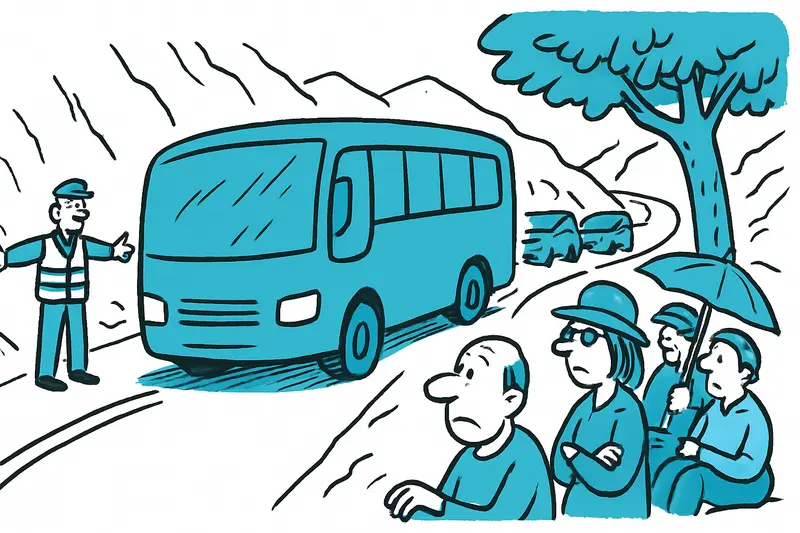
On early Thursday afternoon a coach came to a halt across the Ma-10 between Deià and Sóller. At around 1:30 p.m. a tyre burst, the vehicle blocked the narrow mountain road, and an oncoming bus made passage impossible. What at first looked like a single breakdown quickly developed into a complete closure: cars piled up, several vehicles could not reverse, and the summer heat weighed on the people waiting.
Central question: Are our roads and procedures sufficient to handle such incidents without wide-reaching consequences? This question is not theoretical today — it affects tourists, commuters, locals and the emergency services who have to operate in the mountains.
The immediate scene was typical for a hot June day in the Tramuntana: cicadas screeched, engines idled in neutral, and the smell of diesel hung between the steep slopes. Tourists got out, shielded themselves from the sun with jackets, sought shade behind walls or sat on driveways. Guardia Civil arrived in reflective vests, directed traffic and waited for tow trucks. Several recovery vehicles were ordered; only after a few hours did traffic flow return to normal.
Critical analysis: A tyre blowout is an ordinary breakdown in itself. It becomes problematic here because of three interacting factors: the narrowness of the Ma-10, the high traffic volume in summer and the presence of large coaches that leave little room. When two coaches meet at such a spot, there is simply insufficient infrastructure to allow safe passing. The result is long tailbacks, delays for emergency services and increased strain on people waiting in intense heat.
What is often missing in public discussion is the perspective of daily reality on the mountain roads: not only the number of vehicles matters, but also how and when they travel. When do large coaches prefer to run? Are there mandatory checks before every tour — for example temperature checks, tyre pressure controls and simple brake tests? And how quickly can tow and recovery services reach remote stretches?
Another blind spot: heat and health. The image of tourists waiting in blazing sun is not a harmless annoyance. Elderly people, small children and those with health issues need water, shade and information. Who ensures that basic supplies are available on site until the route is cleared?
Concrete, immediately applicable solutions: first, mandatory visibility and safety checks for coaches before departure in the summer months, with documentation by the transport operator. Second, staggered timing for large coach convoys on the Ma-10 — no simultaneous opposite movements of large vehicle groups around midday. Third, install occasional passing bays at critical bottlenecks or legalise existing lay-bys so a coach can pull out in an emergency. Fourth, fast communication channels between drivers, dispatchers and the Guardia Civil — a shared emergency number for mountain breakdowns, complemented by live status updates on local traffic information such as Ma-10 without cameras: Why does the waiting in the Tramuntana take so long?.
Practical measures for people on site: mobile drinking water stations in the summer months, partnerships with cafés in Deià and Sóller that can quickly hand out water during long closures, and clear instructions to bus companies to brief passengers on what to do in a breakdown (seek shade, do not remain on the carriageway, keep safety distances).
In the long term the discussion should also include vehicle sizes and frequencies: Are very large coaches the best choice for narrow mountain roads? Could smaller shuttle vehicles distribute visitors, with larger buses unloading at the foot of the mountains and only smaller vehicles entering the narrow lanes?
An everyday scene that prompts reflection: on a steep verge beside the Ma-10 an older local man stood with a bag of oranges, offering fruit and a shady spot under a pine tree to those waiting. Such spontaneous help is warm-hearted, but it cannot replace systematic precautions. The island needs both: community spirit and better infrastructure planning.
Conclusion: The tyre blowout was not an isolated incident but a symptom, as reports like Crash on the Ma-10: Bus collides head-on with a truck — What does this say about our roads? show. Narrow roads, full coaches and hot midday hours form the perfect mix for breakdowns with major consequences. Instead of discussing each incident as a one-off, it would be wiser to consider how to prevent repetitions — with preventive checks, clear schedules, targeted structural upgrades and simple supply measures for people who are waiting. The Tramuntana has enough charm; a heat-bottleneck on the Ma-10 does not belong to it.
Frequently asked questions
Why can a tyre blowout block traffic on Mallorca's Ma-10 between Deià and Sóller?
What practical measures could reduce mountain road closures during Mallorca's peak season?
What should travelers do if a coach blocks a narrow mountain road on Mallorca?
Are there coach safety checks required before summer departures on Mallorca?
Could Mallorca use smaller buses to handle summer traffic in the Tramuntana?
How do emergency services coordinate on Mallorca's mountain roads?
What role does heat and health play during road closures in Mallorca’s Tramuntana?
What practical amenities could help people waiting during closures on Mallorca?
Similar News
From Deposit to Arson: How a Dispute over Jet Skis in El Molinar Escalated
After a nighttime fire in El Molinar a detainee is in pretrial detention. How could a conflict between a rental company ...

Lying Instead of Standing: How Prone Paddling Is Conquering Mallorca's Waters
On your belly across the sea — prone paddling is bringing fresh energy to Mallorca's watersports. Where to start, which ...
Housing Shortage in Mallorca: Assessment, Questions, Proposals
Over 2,000 new housing units through repurposing and special rules – sounds like a success. But do they really help peop...
Garbage, Stench, Fire Risk: What Is Really Going Wrong in Son Bauló
An apartment ensemble illegally built for years near Son Bauló is falling into disrepair, largely occupied and creating ...

Legat on Mallorca: Between Football Dreams and Political Alarm
The former pro is intervening in German politics from Mallorca – loud, emotional, without much detail. What does that br...
More to explore
Discover more interesting content

Boat Tour with BBQ along Es Trenc Beach

Private transfer from Mallorca Airport (PMI) to Pollensa
