
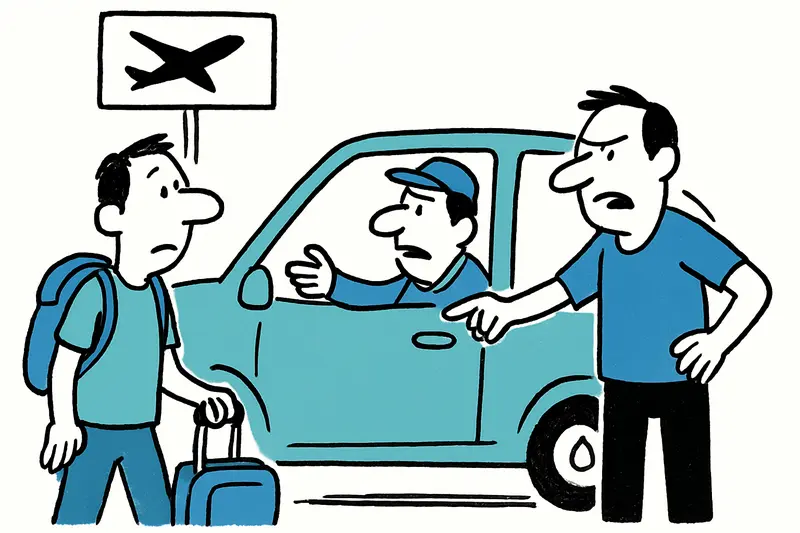
Directly from the airport to Son Banya: When a transfer becomes a trip to the drug village
Directly from the airport to Son Banya: When a transfer becomes a trip to the drug village
Shortly after landing, several German holidaymakers were picked up at the airport by a driver and taken to Son Banya — the police discovered the group during a large raid. A story that raises questions about control, responsibility and prevention.
Directly from the airport to Son Banya: When a transfer becomes a trip to the drug village
Key question: How is it possible that freshly landed holidaymakers are driven from Palma airport directly to a settlement considered a center of the drug trade — and what does this say about controls, providers and demand?
At the foot of the departure terminal it smells of sunscreen and hot asphalt, rolling suitcases clatter through the arrivals hall, taxi drivers shout prices into the crowd. It was right here on Thursday that a chain of events began that is more than a curious footnote: Several foreign holidaymakers were apparently picked up at the airport by a driver and not, as usual, taken to their hotel in El Arenal, but to Son Banya — the settlement on the outskirts of Palma that has been known for years as a hotspot of the drug trade. Shortly afterwards, the forces managed to carry out a Major raid in Son Banya: What does a morning with helicopter lights change? against alleged dealers; the planned drug purchase did not take place and the vehicle was seized. Administrative proceedings were initiated against the driver for possible violations of passenger transport regulations; follow-up coverage included Raid in Son Banya: Suspected Leader in Pretrial Detention — and What Now?.
Critical analysis: At first glance this sounds like a foolish misstep: someone gives an unusual destination, the driver follows the order. On closer inspection, however, several problem areas become apparent. First: Who controls transport services at the airport? Pickup areas are clear but not hermetic. Commercial operators, private drivers, rental cars, app-based transfers — the offer is large and controls are often fragmented. Second: What role does demand play? That Son Banya is so well known that travelers seek it out shows a market that is not only local. Third: What information is available about whether the driver knew where he was taking them, or whether he repeatedly offers such rides? So far there is no public evidence, and this uncertainty is part of the problem.
What is missing in public debate: The discussion remains too focused on headlines about raids or isolated cases. Systemic questions are missing: How well organized are controls against illegal passenger transport? How transparent are transfer bookings for investigators? What preventive information is given to tourist groups who may be looking for illegal substances? And above all: Why does the reputation of places like Son Banya spread among travelers like a kind of "sightseeing" catalog?
Everyday scene in Mallorca: Anyone who drives from the airport into town on a hot morning along Passeig Mallorca knows the picture: buses heading to Arenal, young people in flip-flops, suitcases and knots of cables from earphones. There are travelers looking for parties and contacts — and there are drivers who know routes better than official city maps. That in the middle of this rhythm chauffeurs are apparently willing to take direct rides into the drug area unfortunately fits a reality in which supply and demand quickly adapt to illegal niches.
Concrete solutions: 1) Strengthen airport regulation: clear rules for pickup zones, registration requirements for commercial pick-up services and spot checks by professional oversight or airport police. 2) Make digital booking data usable: providers and airlines could be required to provide transfer data for investigations in a structured way only on judicial order. 3) Enforce sanctions: administrative penalties against drivers must be swift and tangible to reduce the incentive for risky trips. 4) Education instead of sensationalism: travelers should receive warnings before arrival about risky destinations — via booking platforms, rental car companies and hotels. 5) Prevention and social work in Son Banya: Alongside police operations such as Major raid in Son Banya: Arrest of the alleged drug boss — and then?, long-term measures are needed to reduce supply and support residents who often become victims in this system.
There are possible objections: Strict controls could affect businesses that operate legally, and reporting obligations raise data protection questions. But a balance is possible: transparent registration, targeted checks and cooperation among all parties — airport operators, police, municipalities, tourism stakeholders — would reduce the risk that Mallorca is led into a crisis at the airport instead of into a holiday.
Pointed conclusion: The case — freshly landed holidaymakers, a German driver living on the island, the drive to Son Banya, and the seizure of the car during a police raid — is not merely a spectacular isolated incident. It reflects gaps in control, information and prevention. Those who want to protect the island not only as a headline but as a living space must adjust structural levers: better rules for transfers, finally connected data for investigations and more focus on the people on site rather than just the next raid.
Frequently asked questions
How safe are airport transfers in Mallorca and how can I avoid risky destinations?
What is Son Banya and why does it come up in Mallorca travel safety discussions?
What should I look for when booking a transfer from Palma airport to ensure it’s legitimate?
How are airport pickup zones regulated at Palma airport, and what issues exist with transfers to areas like Son Banya?
What data is useful for investigators regarding Mallorca transfers, and how could this data be accessed legally?
What concrete steps are proposed to reduce illegal passenger transport from Mallorca's airport?
What practical tips can travelers use to avoid being directed to illegal markets or risky neighborhoods in Mallorca?
How do authorities suggest balancing safety with the needs of legitimate transport providers in Mallorca?
Similar News
Arrest at the Port: Three Suspected Pickpockets Left Mallorca After Series of Thefts
The National Police stopped three men at Palma harbour who are accused of several thefts at the airport. How could the g...
Palma's Rental Bike Boom: More Bikes, More People, More City Life
Since Bicipalma was opened to non-residents, the system has noticeably grown. Students, residents and tourists bring lif...
Palma–Lyon in Winter: Two Weekly Flights Bring Fresh Momentum
From October Transavia France will connect Palma and Lyon in winter as well: Wednesdays and Saturdays, around 17,000 sea...
Budget holidays in Mallorca: What thriftier tourists really mean
Visitors are spending less: shorter stays, fewer restaurant visits, fewer excursions. A reality check for Mallorca's eco...
Mallorca gets winter link to Lyon: Transavia France flies from October
Transavia France will launch a winter direct connection Palma–Lyon from late October: twice weekly, around 17,000 seats ...
More to explore
Discover more interesting content

Boat Tour with BBQ along Es Trenc Beach

Private transfer from Mallorca Airport (PMI) to Pollensa
