
Body found near Son Banya: Who cares for those nobody misses?
Body found near Son Banya: Who cares for those nobody misses?
A lifeless body in advanced decomposition was found near the shantytown Son Banya. The homicide unit is investigating — but the question remains why deaths at the margins of society so often go unnoticed.
Body found near Son Banya: Who cares for those nobody misses?
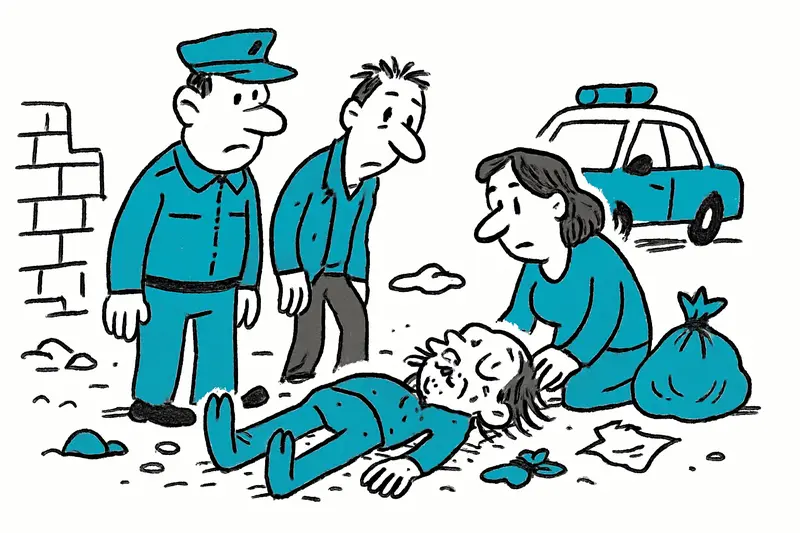
In the late afternoon, when the air over Palma was clear and biting at around seven degrees, a passerby discovered a dead person in a half-finished building near the Llucmajor road. The site is only a few metres from the well-known shantytown Son Banya. Guardia Civil and the National Police secured the scene initially; the homicide unit has taken over the investigation. The body lay among rubbish and construction debris and was already heavily decomposed. Identity and cause of death are unclear — no ID was found; an autopsy should provide answers.
Key question
Why do circumstances such as missing identity papers, social isolation and dilapidated housing repeatedly lead to people dying on Mallorca's margins before authorities or relatives can fully record their cases?
Critical analysis
The scene is oppressively familiar: a derelict construction site, waste, people living or working nearby, and emergency vehicles briefly slowing traffic on the Llucmajor road. Formal responsibilities are clear — Guardia Civil, National Police, forensic pathologists — yet responsibility for the root causes is diffuse. The system between law enforcement, social services and health care has gaps. People without ID or a fixed address fall through the cracks: no quick identification, no timely contact with relatives, little to no preventive help.
In addition, places like the shantytown and its immediate surroundings are often perceived as crisis hotspots. That makes it easier to criminalise incidents rather than view them as social-policy issues. Investigators suggested the deceased could be someone long reported missing or a person with drug problems — both symptoms of deeper care deficits; similar unnoticed deaths were reported in Santa Catalina in Body in Santa Catalina: Why the death went unnoticed for weeks.
What is missing in public discourse
Two things are lacking: first, a sober debate on how to speed up the identification and registration of vulnerable people without violating their rights. Second, concrete numbers and transparency about the frequency and causes of such deaths. Media images of police cars and tape draw attention; sustainable solutions, however, need data, staff and clear allocation of responsibilities across several agencies. Local reporting has documented comparable cases, for example 15-year-old found dead in Son Oliva: How could this happen?.
Everyday scene
Anyone walking on the edge of Son Banya hears the rumble of lorries on the country road, sees plastic bags in the wind and meets people collecting empty bottles or feeding dogs at improvised fences. By evening it grows quiet, only the occasional car howls by. In those hours, the distance between life and death is smaller than in the city centre. Residents know the faces; some greet you, others step aside. The feeling: here you can quickly become alone.
Concrete proposals
1) Mobile identification teams: interdisciplinary units of police, social workers and medical staff could regularly visit marginal areas, register people (voluntarily), offer health checks and thus prevent people without registration from dying and remaining unidentified. 2) Better data networking: a protected, cross-agency reporting system for missing persons and found deceased would avoid duplicated work and shorten identification times. 3) Local low-threshold contact points: easily accessible support — warm clothing, hygiene facilities, counselling — reduces vulnerability. 4) Faster forensic procedures: prioritised autopsies in unclear cases and a procedure for rapid notification of possible next of kin. 5) Long term: housing models and legal pathways to regulate precarious dwellings and better integrate residents.
Why these proposals are realistic
Many building blocks already exist in parts: mobile health buses, social services, forensic teams. It is not about an expensive revolution but about coordination, reallocating resources and political priority. On Mallorca this means moving away from purely repressive operations towards binding cooperation between police, the town hall, health services and NGOs. Recent reports such as Body on a finca near S'Aranjassa: How safe is the hinterland anymore? underline the urgency.
Punchy conclusion
The discovery of a body near Son Banya is more than a criminal case. It reflects how societies treat their weakest members: visible interventions alone are not enough. When people die without a name, papers or an address, it says something about our willingness to share responsibility. The investigators' first task remains to clarify the cause of death. The larger task is to ensure that next time fewer people are pushed to the margins and someone finds them earlier — alive.
Frequently asked questions
Why do unidentified bodies sometimes turn up near Son Banya in Mallorca?
What happens after a body is found in Mallorca and the identity is unknown?
Is Son Banya a dangerous area in Palma, Mallorca?
How can Mallorca improve identification of missing or vulnerable people?
What should you do if you find a dead person in Mallorca?
Why are abandoned buildings in Mallorca often linked to police investigations?
Can someone in Mallorca die and remain unidentified for days or weeks?
What are the main social problems behind cases like the one near Son Banya?
Similar News
Are the Balearic Islands the Southern Border of Europe? A Reality Check on Immigration
The Balearic Islands are again calling for EU aid after a sharp rise in arrivals by sea. Conflicting priorities between ...

"Expensive chaos" and many open questions: What clients can do when a lawyer suddenly stops responding
Several clients complain that a well-known German lawyer in Mallorca has been unreachable for months. Key question: What...
TV tip: 'The Last Problem' — Mallorca as the setting of a classic crime
A classic whodunit on Mallorca: A new miniseries set in spring 1959 brings storm, an isolated hotel and a dense web of s...
Nipping Sea Creatures: Why Bathers in Cala Major and Elsewhere Should Be Cautious
In Cala Major, bathers have reported being nipped by small fish. What is behind it, how can problems be avoided — and wh...
Forced eviction in Santa Catalina: When a 65-year-old slept in her car and showered on the beach — a question of responsibility
The story of Pilar López from Santa Catalina represents a problem affecting many Mallorcans: How can an island with a bo...
More to explore
Discover more interesting content

Can Cap de Bou

Townhouse Lleo 72
