
Body at the Llevant Market: A Death That Raises Questions About Care for the Homeless
Body at the Llevant Market: A Death That Raises Questions About Care for the Homeless
A man was found dead near the Llevant Market. Authorities describe it as a natural death; a companion had reported feeling unwell hours earlier. What does this incident say about support for people without homes in Mallorca?
Body at the Llevant Market: A Death That Raises Questions About Care for the Homeless
Leading question: How can Palma prevent people without housing from dying unnoticed?
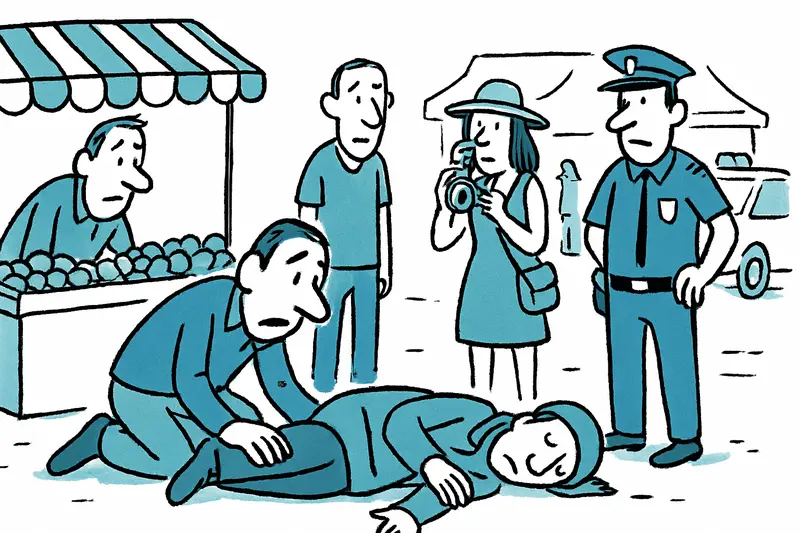
Around 4 p.m. on a Sunday afternoon a man was found dead near the Llevant Market. An acquaintance who reportedly spoke with him at noon had briefly gone away to fetch clothing and belongings. On his return the man was already lifeless. Emergency services and police patrols rushed to the scene; the emergency doctor could do nothing. A forensic physician secured the scene, and officers later stated that there were no indications of third-party involvement or visible signs of violence; the death was officially classified as a natural death.
Those are the sober facts as reported on site. But the situation is more than an isolated case: similar incidents, such as Sudden drama on Paseo Mallorca: a death in the rain – and the questions that remain, show how quickly a person can die in public and raise broader concerns.
Critical analysis
At first glance everything sounds routine: police, 061, forensic physician. On closer inspection gaps become apparent. If an acquaintance goes for help to fetch belongings, this shows trust — but also raises the question why no one else was alerted immediately. Why does a medically vulnerable, apparently homeless person not reach a care network faster? How many similar cases occur unnoticed in parks, under bridges or in side streets, as happened in Valencia find: When a person remains unnoticed for 15 years — Lessons for Mallorca?
Authorities can classify a death as “natural” if no external causes are immediately evident. That does not exclude that pre-existing conditions, dehydration, hypothermia, heat exhaustion or untreated chronic illnesses may have played a role — factors more common among people without stable housing. Public visibility often ends here: the police perspective clarifies the immediate facts, while the social causes remain in the dark.
What is missing from the public debate
There is rarely discussion about the everyday care pathways that people like this might have been able to access — or could not. Which social services were active in the market area, as debated after Playa de Palma: Death at Balneario 2 – How good is Mallorca's help for people in need?? Were there street workers, mobile medics or homeless outreach patrols in the hours before? Such questions rarely appear in official reports after a body is found, yet they are crucial when trying to prevent future cases.
There is also often no discussion about preventive health checks, barriers to accessing emergency shelters and the resources of municipal social work. Without that debate the response to individual deaths repeats the same pattern, as seen in Mourning at Ballermann: Who protects the most vulnerable at Playa de Palma?: mourning, official procedure, and then moving on.
Everyday scene from Palma
Imagine the place: market stalls, vendors, the rattling of handcarts, a garbage truck, the clatter of crates. A seller straightens fruit, a tourist photographs corners, the sun is low enough that shadows lengthen. In this soundscape a person can collapse unnoticed. The lack of attention is not innocence; it is a symptom.
Concrete solutions
1) Mobile social and health teams: regular rounds at hotspots such as markets, stations and squares with a nurse or doctor to identify acute cases early and arrange transport.
2) Better coordination: a clear action plan between the city council, health services, police and NGOs that defines short response times and responsibilities.
3) Awareness among the market community: vendors, delivery workers and residents should be informed how to report suspicious cases (emergency number 061) and how to provide first aid until help arrives.
4) Low-threshold access: more day centers offering daytime shelter, water and hot drinks; simple registration options so services can reach people without a fixed address.
5) Infrastructure measures: defibrillators at busy points, visible signs about available help and regular training for volunteers and market staff.
6) Data and transparency: recording discoveries and help requests without stigmatizing publication of personal data — to identify problems and target resources effectively.
Conclusion
The death of a person at the Llevant Market is more than an administrative event. It is a sign of gaps in the visibility of traffic and social care in our city. Palma has the actors — health services, social work, police, neighborhood — and the means to close such gaps. What is needed is less ritual around isolated cases and more sustained measures on the ground. That is how further unnoticed deaths in the everyday noise can be prevented.
Frequently asked questions
How can Mallorca prevent homeless residents from dying unnoticed?
What signs should bystanders look for near busy markets like Llevant Market in Palma?
Where can someone access daytime shelter and support in Mallorca?
What role do market workers and residents near Palma's markets play in helping vulnerable people?
What public safety measures could help prevent similar deaths in busy areas like Palma markets?
When is the best time of year to visit Mallorca for outdoor activities without extreme heat?
How can visitors report concerns about a homeless person in Mallorca?
What does the public conversation about homeless care in Mallorca miss?
Similar News
Pre-Nit de l'Art: Galerie Mensing invites to a special evening with Tom Boston
Before the big art night, Galerie Mensing opens its doors: pop art, champagne, a DJ and a hand-signed print by Tom Bosto...
Sea view and more seats: Cappuccino Grand Café reopens in Port d'Andratx
After a long renovation, the Cappuccino Grand Café on the Port d'Andratx harbor promenade has quietly reopened. Larger t...
Enric Mas wins the Vuelta – a triumph that resonates in Mallorca
Mallorcan Enric Mas has won the 82nd Vuelta — the first Spanish overall victory since 2014. Cyclists and neighbors on Ma...
Smuggling in the secured area: How a gang exploited the duty-free zone at the airport
Two further arrests at Son Sant Joan airport: the Guardia Civil stopped a group that used cheap flight tickets to access...

Brawl at Palma Airport: When Competition Turns to Violence
In the arrivals area of Son Sant Joan a dispute between transfer service drivers escalated. One man was arrested, the vi...
More to explore
Discover more interesting content

Can Cap de Bou

Townhouse Lleo 72
