
Body near the Llevant Market: What this death says about our city
Body near the Llevant Market: What this death says about our city
A man was found dead on Sunday afternoon near the Llevant Market. Police say the death appears natural. The scene raises questions about help for people without housing — and about what in Palma's everyday life often goes unnoticed.
Body near the Llevant Market: What this death says about our city
Leading question: Why do some people's lives end unnoticed in the middle of Palma — and what do we need to do differently?
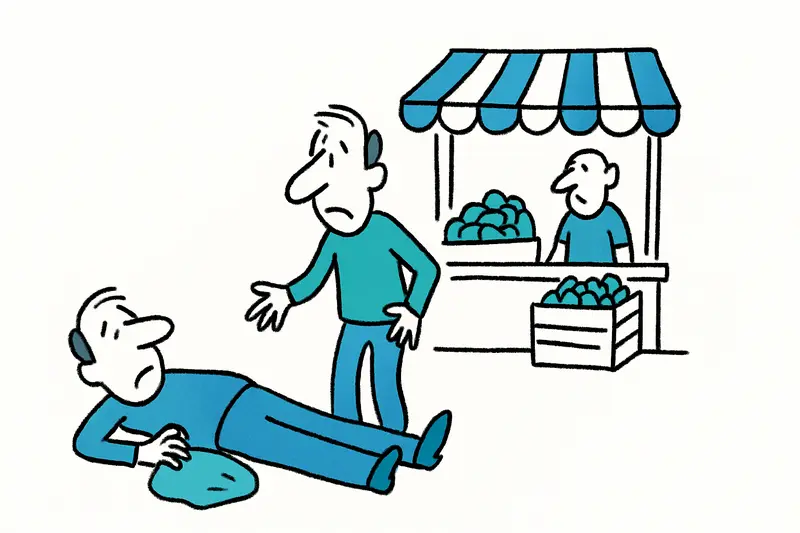
On Sunday afternoon emergency services found a dead man near the Llevant Market. According to the National Police and the emergency service 061, the deceased had apparently been lying there for several hours. An acquaintance had reported at midday that the man felt unwell; he went away briefly to fetch clothing and personal items. On his return the friend found the man lifeless at the spot. Forensic doctors secured the scene, the body was recovered, and the police ruled out signs of violence; the death is currently considered natural.
That is the sober sequence of events. But the dry facts raise a bigger question: how can a person die within sight of a busy market without medical help arriving in time? The Llevant Market is not a hidden corner — early in the morning crates of oranges are stacked, the smell of fish mixes with petrol and the loud calls of the vendors. On Sunday afternoons the customers thin out, street sweepers roll by with their machines, and the small niches between parking areas and storage zones often go unnoticed. It is precisely there that people have at times not been seen for hours.
There are several levels on which to view this event. First, the medical: when someone is clearly ill, rapid first aid and an immediate emergency call are crucial. In this case the companion left the scene, apparently to organize help — that sounds understandable, but it is risky if time is short. The question remains whether passersby, vendors or municipal workers on site are sufficiently trained in how to act in such situations. A call to 061 instead of trying to fetch things can be lifesaving.
Then the social dimension: reports describe the deceased as homeless. Mallorca, like many cities in Europe, has people without stable housing who sleep in a variety of places — under bus shelters, in stairwells, at the edges of markets, as recent coverage of a death at Playa de Palma shows. By day they mix with vendors and customers, by night they are in emergency shelters or on the street. Many suffer from chronic illnesses, addiction problems or mental health issues. When such backgrounds combine, the risk of sudden deterioration increases.
What is often missing in the public discourse is a sober inventory: how many places do the city emergency shelters actually have? How are initial medical contacts for people without papers organized? Are there regular street outreach teams that specifically check market locations in the morning? Here I miss reliable figures and a straight‑talk debate about capacity and accessibility. Without these data, discussions remain vague and solutions piecemeal.
Imagine an everyday scene: it is around 3 p.m., the heat still lingers in the alleys, a garbage truck collects waste on Passeig Mallorca, two market sellers argue about prices, a man sits slumped against a wall beside a plastic shopping bag. Some passersby glance, then move on. No one notices in time that his breathing is growing shallow. This is not a crime novel, it happens here, often quietly enough to be overlooked, as with a death in Santa Catalina that went unnoticed for weeks.
There are concrete changes that can be made without large budgets. Practical proposals: first, mandatory emergency training for market staff, street cleaners and market hall operators — simple guidance on when to call 061 immediately. Second, fixed coordination shifts for street outreach teams at known meeting points like the Llevant Market, especially in the afternoons and evenings. Third, mobile health services that regularly reach out and offer basic checks — blood pressure, blood sugar, basic care — linked to clear referral paths into the care system.
In addition: better signage with emergency numbers at market entrances, publicly accessible first responder kits (AEDs and first aid boxes) in market halls, and a low‑threshold reporting system for market users that can anonymously alert social services. Spatial coordination is also important: potential sleeping places often lie directly next to work areas; closer cooperation between social services and municipal cleaning crews can help identify and visit these spots regularly.
Politically the challenge is that "natural deaths" of people without homes are too often written off as isolated incidents, even though similar cases have raised public questions elsewhere, such as a collapse on Paseo Mallorca during heavy rain. The National Police can rule out third‑party involvement, but they cannot answer the question of prevention. That responsibility lies with health authorities, social services and local administrations.
A pointed conclusion: this death is not a mystery but a warning sign. Not every single measure will save a life, but coordinated changes — training, outreach, mobile medicine and clear communication channels — increase the chance that a person will no longer die unnoticed in a market niche. Anyone who walks past the Llevant Market in Palma in the morning knows the vendors' voices, the smell of freshly cut fruit and the small storage spots at the edge. A very Mallorcan, practical response would be to start precisely there.
Frequently asked questions
What is the best time of year to visit Mallorca for warm weather?
Is it good to swim in Mallorca year-round, and where are the safest swimming spots?
What should I pack for a Mallorca trip to stay comfortable?
Are there family-friendly activities in Mallorca suitable for a relaxed vacation?
What are Mallorca's weather patterns by season?
Are there must-see towns or landscapes to visit in Mallorca?
How can I travel around Mallorca without a car?
What kind of outdoor activities suit Mallorca's landscape?
Similar News
Celebrities, One-Point Drama and a Summer Evening in Santa Ponça: Padel Celebrates in Mallorca
Around 400 players, a radical format — and well-known faces on the courts of the Mallorca Country Club: the One Point Ch...
Who stays, who goes? A reality check on the future of Mallorcans
An emeritus island geographer sees Mallorcans on the defensive: What does this mean for everyday life, housing and the i...
Acquittal after secret photos in Cala Millor – what the court ruling leaves out
A German tourist photographed a three-year-old girl at a hotel breakfast — the judge acquitted him because no sexual int...
Man Exposes Himself in Front of Café in Palma: Why This Must Not Be Dismissed as an Isolated Case
A man was arrested in Palma after he lowered his trousers in front of a café and exposed himself to minors. What does th...
Brawl at the Airport: Who Is Responsible for the Escalation Among Transfer Drivers?
A dispute between two transfer drivers escalated on Saturday morning in the arrivals area of Son Sant Joan. One man was ...
More to explore
Discover more interesting content

Can Cap de Bou

Townhouse Lleo 72
