
He was still sitting on a chair: Body found in sawmill container in Selva
He was still sitting on a chair: Body found in sawmill container in Selva
In Selva, a man was found lifeless in a construction container on the grounds of a sawmill. The Guardia Civil is investigating and an autopsy has been scheduled. What do we know — and what questions remain unasked?
He was still sitting on a chair: Body found in sawmill container in Selva
Guardia Civil examines circumstances of death — autopsy scheduled for Wednesday
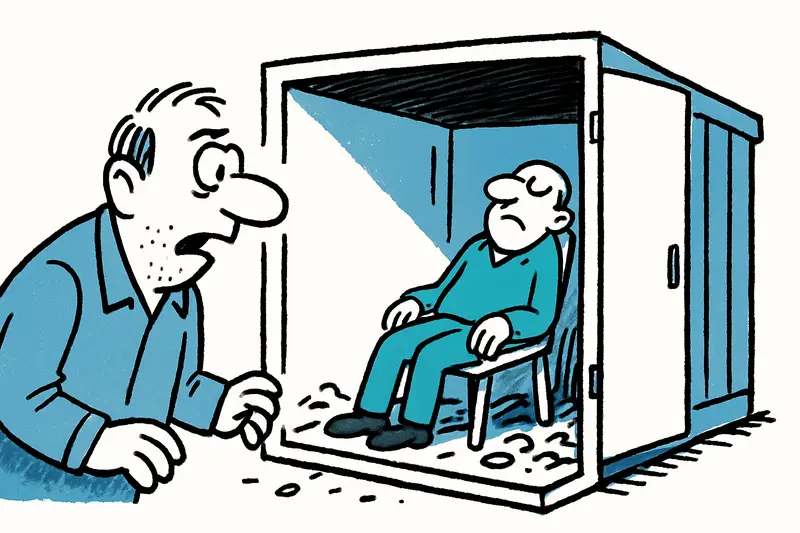
A cold morning in Selva, the smell of wet wood and the alarming discovery: on the grounds of a sawmill the site manager found the lifeless body of a man in a small construction container on Tuesday morning. The scene was immediately secured and the Guardia Civil has opened an investigation. So far it is known only that he was a former employee of the company who occasionally slept in that container. The body was found reclining on a chair; large amounts of accumulated rubbish lay in the room, and a strong smell of decomposition made the find noticeable. According to initial reports, there are no obvious signs of external violence; an autopsy is due to provide clarity on Wednesday.
Key question: Why do people who sleep on industrial premises end up in a situation where their death is only noticed late — and which questions should we now ask of the local administration, businesses and ourselves as a community?
The set of facts is sparse but meaningful: time of discovery Tuesday morning, location in the container, former employment, autopsy planned. These points answer what happened, but not why it came to this. This is where a critical examination begins: who checks whether people sleeping on commercial yards need protection, care or at least regular monitoring? Recent local incidents, such as Undiscovered Silence: Mummified Corpse in Abandoned House near Santa Margalida and a body found on a finca near S'Aranjassa, underscore the pattern of late discovery. What is the balance between employer responsibility and municipal welfare? In Mallorca's rural communities one often sees men temporarily lodging at construction sites or with tradesmen — this is not a new observation, but this discovery gives it renewed urgency.
What is missing from the public discourse is sober prevention. We are talking about a dead person, not a criminal case that already supplies all answers. There is no systematic survey yet of how many businesses tolerate sleeping spaces, why people stay there and whether employers or municipalities conduct regular checks. The perspective of social services is also hardly part of the discussion: were there prior contacts with welfare or health services? Was homelessness, addiction or illness a factor — or was it an innocent, if uncomfortable, arrangement among colleagues? Without this information public debate remains superficial.
An everyday scene from Selva helps to place the event: the church bells still ring, farmers drive small tractors along the MA-13 access roads, muted voices drift from a nearby bar. On the sawmill grounds sawdust lies in little mounds, a dog barks, and a truck engine dies down after the morning shift. Such images remind us that the site is not an anonymous industrial area but part of a living community. Neighbors will ask why no one noticed the man earlier — and will wait for the authorities to provide answers; past reports, including when a dead body was washed ashore at Es Carnatge, have likewise raised such questions.
Concrete solutions can be formulated without rushing to assign blame: first, municipalities and occupational safety authorities should take stock of which businesses regularly tolerate or provide sleeping places. This survey must be simple, locally organized and confidential. Second, binding reporting and control routines are needed: businesses that allow people to sleep on their premises should notify the municipality and enable regular health checks or cooperate with social services. This is neither excessive bureaucracy nor stigmatization — it is prevention that can save lives. Third, mobile health and social teams could make regular rounds in rural areas, similar to vaccination or counseling vans, and thus build contact with people who otherwise fall through the cracks.
For businesses themselves, transparency is the best protection: a simple registration system, a small emergency checklist (contact person, health status, last medical contacts) and an obligation to inform local authorities immediately in emergencies. This eases the burden on site managers who must keep track of operations and staff, and it protects people who for various reasons sleep there.
Regarding the investigation, two points are central: the autopsy will provide clues about cause and time of death; toxicology tests can clarify whether medication, alcohol or other substances played a role. And criminal forensic work must carefully document whether there are signs of third-party involvement — so far no such indications have emerged, but verified findings are needed to avoid speculation.
Pointed conclusion: a dead person in a container is more than a sad line in a police report. It is a place where shortcomings become visible — missing prevention, insecure living conditions and a gap between private responsibility and public protection. Selva now needs clear answers from investigators, but also reflection on simple, actionable rules for businesses and municipalities. Only then can similar cases be prevented in the future. While the inquiry continues, we as neighbors should remain attentive: a phone call, a visit, a glance through a small window can sometimes make the difference.
Frequently asked questions
What happened at the sawmill in Selva?
What do we know about the cause of death in the Selva case?
Why are deaths in rural Mallorca sometimes discovered late?
Can people legally sleep on business premises in Mallorca?
What happens after a body is found in Mallorca and the Guardia Civil takes over?
What should companies in Mallorca do if someone is staying overnight on their premises?
Is Selva in Mallorca an industrial or rural area?
Why are local communities in Mallorca asking for better social checks after cases like this?
Similar News

Bendinat as a meeting place: Padel Cup brings together nearly 120 players
Three days of padel at the Bendinat Urban Country Club: organized by El Económico and Borbalán, with around 120 particip...
Large-scale Anti-Tourism Graffiti at Cala Mendia: Protest or Vandalism?
On the morning walkers discovered an approximately 50-meter-long slogan against tourism on the wall above Cala Mendia. W...
Bomb threat before Jet2 flight in Tenerife: A reality check for security protocols
A passenger reported a bomb in luggage shortly before departure in Tenerife. Evacuation, baggage checks, delays — and ma...
Who is stripping Mallorca's coast bare? Why entire slopes are being removed for villas
On Mallorca steep slopes are again being removed to make way for luxury construction sites. Who bears the responsibility...
Robber Falls While Fleeing in Sant Agustí: Who Takes Responsibility?
During a purse-snatching in Sant Agustí, a non-commissioned officer chased the suspect; the man jumped from a bridge and...
More to explore
Discover more interesting content

Can Cap de Bou

Townhouse Lleo 72
