
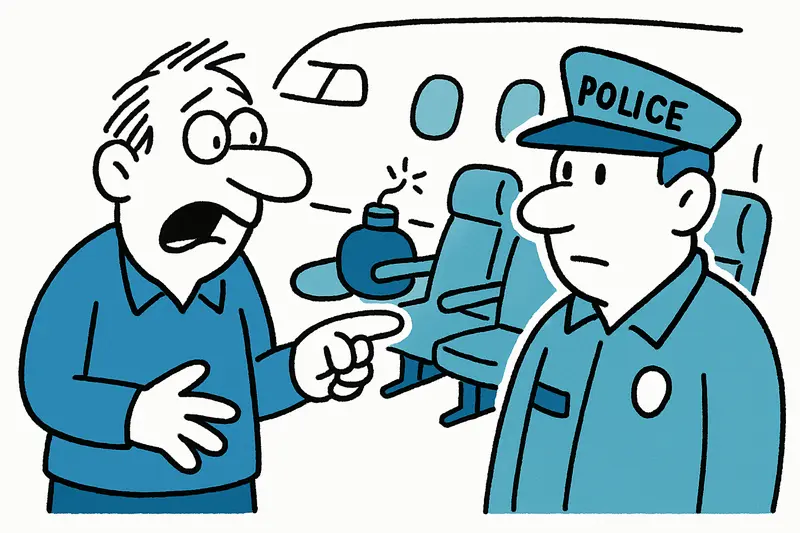
Bomb threat on flight to Barcelona: What we know — and what matters now
Bomb threat on flight to Barcelona: What we know — and what matters now
A Turkish Airlines flight from Istanbul had to circle before Barcelona and was taken to a secured area after a bomb threat. A critical review: How safe do travelers feel, which information is missing, and what improvements are possible?
Bomb threat on flight to Barcelona: What we know — and what matters now
A key question
How well are passengers and airports prepared for anonymous threats — and how transparent do authorities need to be afterwards so that travelers keep their trust?
On Thursday emergency services in Barcelona reported an incident: a passenger flight from Istanbul was parked in a secure area after a threat was made on board before landing. There were 148 passengers and seven crew members on board. According to situation reports, the aircraft circled for about 20 minutes over the Catalan coast before it could land. People on board left the plane under their own power and were guided to a secure area. Firefighters and local police increased their presence while special units inspected the aircraft.
These are the hard facts. They suffice to describe the incident — but not to properly contextualize it.
Critical analysis
Threats on board are a nightmare for crews and passengers alike. Modern airliners and airports operate under clear procedures: keep distance, put the aircraft into a security position, deploy emergency services on site. But practice raises questions. Twenty minutes in holding may not sound long at first, but for people in a confined cabin environment and facing uncertainty it feels like an eternity. How were passengers informed? Were there clear instructions, psychological support after the evacuation, and how quickly could relatives outside Spain obtain reliable information? Similar abrupt situations have caused panic before, as reported in Aborted Takeoff in Basel: Panic on Board – and What It Means for Mallorca Travelers.
At the same time, the incident shows that coordination between national units (Guardia Civil), regional forces (Mossos d'Esquadra) and the airport operator worked: the aircraft was moved to a secure position, the fire department deployed five units as a precaution, and local police units responded. But functioning procedures are not the same as seamless communication.
What is missing from the public discourse
Public reports often limit themselves to the chronology: takeoff, threat, holding, landing. Several points remain in the dark: who made the threat and how was its credibility assessed? What criteria determine whether a flight is immediately diverted, allowed to continue, or kept in a holding pattern? And practically: what rights do passengers have in such cases — entitlement to assistance, information, and possibly compensation? Weather or operational diversions can blur the public's understanding of those criteria, as in Wind forces Palma–Bilbao flight to land in Barcelona: What travelers need to know.
For many travelers connected to Mallorca, it is precisely these uncertainties that create fear: if Son Sant Joan sees similar incidents again tomorrow, how will we as relatives or holidaymakers learn about events without relying on speculation? Local episodes such as Turmoil on Palma's Runway: What to Know About the Air‑Arabia Incident feed that anxiety.
Everyday scene from Mallorca
Late in the morning at Plaça Major in Palma you can hear the leaf blowers of a municipal gardening team and the distant drone of planes crossing the bay. An older couple who regularly visit relatives in Barcelona pause over their café con leche, read the short news item on a smartphone and exchange worried looks. This is not a catastrophe image — rather a slice of everyday life in which news about flight safety suddenly feels very close.
Concrete approaches to solutions
1) Clear information duties: Airports and airlines should provide standardized, easy-to-understand notices to passengers and relatives — not just technical briefings, but accessible explanations about the procedure, rights and contact points.
2) Improved crisis communication: A single central contact per incident (for example, a coordinator at AENA at the airport) could link the different police forces, firefighters and the airline and thus simplify information flows.
3) Psychological first aid: Evacuated passengers should have access to trained personnel immediately after leaving the aircraft. Uncertainty leaves marks — not every follow-up care needs to be expensive, but it helps prevent panic and reduce secondary problems.
4) Transparency about decision-making: Authorities should explain after an operation on what basis they acted (without endangering investigative details). That builds trust and prevents rumor mills.
Conclusion — brief and to the point
The incident in Barcelona ended without injuries. That should not be downplayed. At the same time, the routine with which such news is conveyed must not obscure the fact that it concerns people who are unsettled. More transparency, better information and tangible support after such operations would not only benefit those affected but also strengthen confidence in flight operations — here in Mallorca as well as at other airports.
At the end of the day: technology, police and airports can prevent many things, but not every threat. An island community like ours — with many family and travel connections to Barcelona — has an interest in ensuring that safety procedures translate into real security and reliability for travelers.
Frequently asked questions
What happens when there is a bomb threat on a flight to Barcelona?
What should passengers do during a flight emergency like this?
How long can a flight circle before landing in an emergency?
Are passengers entitled to information and help after a security incident on a flight to Mallorca or Barcelona?
How transparent should authorities be after a bomb threat on a flight?
How are airport police and emergency services coordinated in Barcelona?
Why do security incidents on flights worry Mallorca travelers?
Can a flight be diverted or held because of a bomb threat even if nothing is found later?
Similar News
Injured captain, big plans: Germania Mallorca before the away match in Consell
The newly founded FC Germania Mallorca travels to Consell on Saturday. Captain Bastian Müller is out injured, but coach ...
Palma, Palma de Mallorca, Palma‑Mallorca: What is it really about?
The debate over the city's name is more than grammar: it concerns identity, law and branding policy. A sober reality che...
Warning to Bathers: Nipping Fish in Cala Major and Other Coves — a Reality Check
In Cala Major and several beaches around Mallorca, bathers report painful “nips”. Who are the animals, why are they gett...
Rental Car Theft in El Arenal: What This Incident Reveals About Our Gaps
A teenager steals a running rental car in El Arenal, flees on foot, climbs over walls and is caught by the Guardia Civil...
Red Rope in Palma's Library: What Helps Against Selfie Tourism — and What's Missing
Palma's city library cordoned off an area with a red rope to keep selfie tourism away from reading and working activitie...
More to explore
Discover more interesting content

Can Cap de Bou

Townhouse Lleo 72
