
Bronze Age at Ballermann? Excavations at Es Velar and Son Sunyer Yield Surprising Clues
Bronze Age at Ballermann? Excavations at Es Velar and Son Sunyer Yield Surprising Clues
Not far from the noisy promenade, archaeologists have uncovered traces from the Bronze Age. What this means for Mallorca's image — and why these sites deserve more attention.
Bronze Age at Ballermann? Excavations at Es Velar and Son Sunyer Yield Surprising Clues
A small CSIC team is working near Playa de Palma on traces of metalworking and burials — only a few minutes' walk from beach bars.
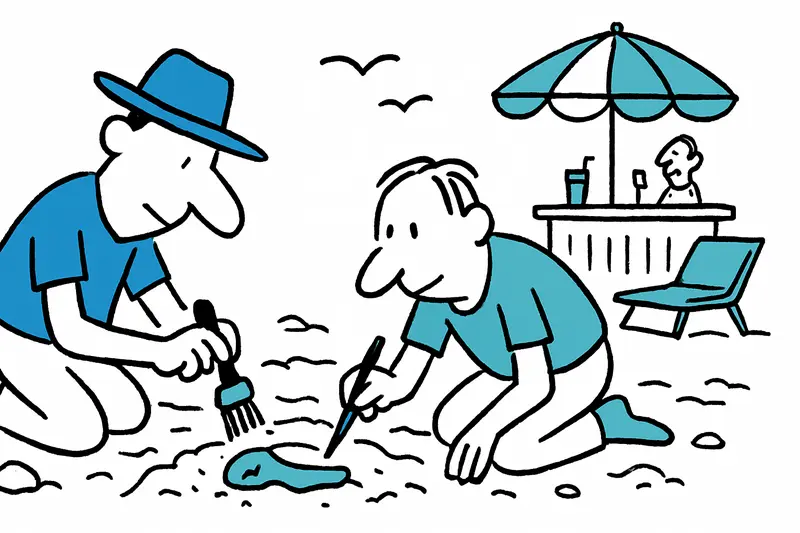
You stand on the Paseo, hear the seagulls, smell frying potatoes and the sea – and just a few hundred metres behind the promenade archaeologists are scraping and brushing the soil. In October, a research team from the Consejo Superior de Investigaciones Científicas (CSIC), coordinated by the Institute of Heritage Sciences (INCIPIT-CSIC) and led by Pau Sureda, began new fieldwork at two sites: Es Velar (Santanyí) and Son Sunyer in Es Pil·larí, very close to the well-known party stretch.
The investigations are not aimed at headlines but at layers that are thousands of years old. They are searching for evidence of metallurgical activities that archaeologists date to about 4,000 years ago, as well as features that could indicate burial rituals from around 3,500 years ago. Earlier campaigns had already exposed well-preserved layers from the late 3rd millennium BC — finds that show the island experienced complex human activity far longer than commonly assumed.
Why does this matter for Mallorca? Because such discoveries nuance the island's image: Mallorca is not only beaches, hotel promenades and summer noise. Beneath the asphalt and sand lies a long history of craftsmanship, trade connections and ritual places. Sites like Es Velar and Son Sunyer link local everyday life to a wide cultural network of the Bronze Age — and open the door to new stories that can be told here.
On the everyday level, this means very concrete opportunities: time-limited guided tours for residents, school projects, information panels along walking routes and, importantly, better coordination with coastal planning so that archaeological layers are not irretrievably destroyed. Early in the morning, when the street cafés are still closing and only a few joggers line the beach, a small visitor route could be set up connecting the site and the promenade — educational, compatible with tourism and without disturbing the normal beach economy.
Of course, excavations are also a signal to politics and planning: anyone who builds should know whether they are stepping on 3,500-year-old burials. A careful approach to such places is a basic prerequisite so that excavations do not only produce sensations but create long-term knowledge and tourist value. Possible collaborations between research institutions, municipalities and museums could help conserve finds and present them professionally.
For the visitor in Mallorca this means a small challenge and a big promise at once: you only need to look more closely. On the next walk along Playa de Palma, between sunbeds and beach bars, you can imagine that below your feet lie traces of people whose daily lives and crafts have long since faded. And instead of just searching for the next drink, you might pause briefly and think of the hands that worked metal millennia ago or of people whose final journeys ended here. That doesn't make the island quieter, but it makes it richer in stories.
Outlook: the current campaigns will continue; the scientists involved hope for further finds that will refine dating and interpretations. For Mallorca this means an opportunity to link local identity with research, without replacing the typical coastal everyday life with scientific excursions. A little more archaeology in the afternoon programme certainly won't hurt — and might give the beach a new, surprisingly ancient resonance.
Frequently asked questions
What is the best season to visit Mallorca for outdoor activities and sunny days?
Can you swim in Mallorca year-round, or are there better times for sea swimming?
What should I pack for a Mallorca trip to stay comfortable in different seasons?
What are practical ways to get around Mallorca without renting a car?
What are must-see Mallorca experiences that capture the island's character?
Are there family-friendly beaches in Mallorca with calm water and facilities?
What Mallorcan dishes should I try during a visit?
What safety and practical tips should I follow when visiting Mallorca?
Similar News

Train accident near Toledo: A Mallorcan woman dead — Who bears responsibility?
After the collision of two high-speed trains near Urda the worst fear is confirmed: a 26-year-old woman from Inca has di...

Motorworld Inn in Palma: A Critical Look at the Setting, Kitchen and Customers
A Lamborghini above the bar, schnitzel days and high wine prices: What makes Motorworld Inn special — and where the conc...

Wrong-way driver on the Ma-15: What this early head-on crash reveals about our roads
On the Palma–Manacor motorway, a seven-seat minivan driving the wrong way collided head-on with a delivery van. Two peop...
Reality, Trauma and Responsibility: Danni Büchner in a Villa on Rhodes – How Far Can Television Go?
Danni Büchner, who lives on Mallorca, is taking part in a new TV format that brings nine women together for twelve days ...
A Rescue That Kills: What the Death of a Holidaymaker on Menorca Reveals
While trying to save her granddaughter, a 69-year-old British woman lost her life on Menorca's north coast. A critical l...
More to explore
Discover more interesting content

Can Cap de Bou

Townhouse Lleo 72
