
Wrong-way driver on the Ma-15: What this early head-on crash reveals about our roads
Wrong-way driver on the Ma-15: What this early head-on crash reveals about our roads
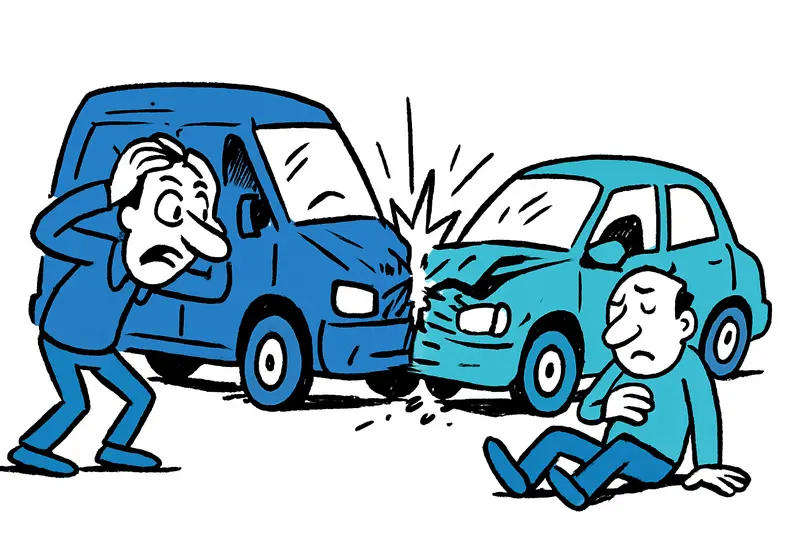
On the Palma–Manacor motorway, a seven-seat minivan driving the wrong way collided head-on with a delivery van. Two people were injured, one seriously. A reality check: why do such accidents happen in Mallorca and what should be done?
Wrong-way driver on the Ma-15: What this early head-on crash reveals about our roads
Early morning at the Xorrigo exit – two injured after a head-on collision
Around 05:00 on Friday, a serious accident occurred on the Ma-15 near the Xorrigo exit: a seven-seat minivan apparently drove in the opposite direction and collided head-on with a delivery van that was lawfully heading toward Manacor. Both vehicles came to a stop in the middle of the carriageway; two drivers required medical attention, one with a severe prognosis. Guardia Civil Traffic, emergency services (SAMU 061) and the Palma fire brigade were on the scene.
Key question: How can a wrong-way driver accident like this on the Ma-15 be prevented in the future?
Critical analysis: Wrong-way driving incidents on Mallorca do not occur in complete isolation from other issues. Human error – fatigue, disorientation in the dark, distraction or possible impairment by alcohol or medication – is often the immediate trigger. Recent cases such as Wrong-way crash near Llucmajor: motorcyclist severely injured and Wrong-way driving at Coll d'en Rabassa: Near crash raises safety concerns on the airport highway illustrate this pattern. Added to that are infrastructural factors: poorly visible access points at dusk, confusing turning lanes, inadequate lighting or the absence of physical separators. On the Ma-15, an important link between Palma and the island interior, speed, heavy truck traffic and early commuter hours can increase the risk.
What is missing from the public debate: discussion usually stops at assigning blame after an accident. We rarely talk about: a systematic review of wrong-way incidents on the island; proper assessments of lighting, guardrails and road markings at critical junctions; the role of navigation instructions that can sometimes cause confusion; and preventive checks at high-risk times (night, early morning). And: there is no plan for securing crash sites more quickly so emergency crews can work safely and traffic jams do not become a second hazard.
Everyday scene from Mallorca: Anyone familiar with the Ma-15 at these hours knows how peculiar the island sounds in the morning – petrol station pumps are still gurgling, a bus rolls toward Manacor, later a delivery van with pallets; workshop lights flicker. At a service area you hear coffee machines and the occasional honk of heavy trucks. In this environment, a few seconds of confusion at the wheel are enough to turn routine into a life-threatening situation. Similar head-on collisions have occurred on other major routes, for example Head-on Crash on the Ma-13 near Alcúdia: Could the Accident Have Been Prevented? and Crash on the Ma-10: Bus collides head-on with a truck — What does this say about our roads?.
Concrete approaches to solutions:
1) Improve infrastructure: Assessments at critical exits like Xorrigo: stronger lighting, reflective lane edges, more visible markings and, where appropriate, barriers or medians that prevent an immediate crossing into oncoming traffic.
2) Technical warning systems: Digital message boards, automatic notifications to navigation providers and sensors in particularly vulnerable stretches that send wrong-way driver alerts to control centers.
3) Preventive police presence: Targeted checks during night and early morning hours, increased traffic police presence at junctions to detect mistakes early and enforce safe distances.
4) Information campaigns: Awareness for professional drivers and commuters about the risks of fatigue, correct use of navigation devices and behavior in low visibility. Petrol stations and rest areas can also distribute informational materials.
5) Optimize emergency management: Faster coordination between rescue services, tow companies and road maintenance teams so crash sites are cleared quickly and lanes reopened.
Many of these measures require money and planning. But the equation is simple: fewer deaths, fewer serious injuries, fewer long closures of an important artery for island residents and commuters.
Concise conclusion: A single mistake in the dark was enough to endanger two lives and paralyze the Ma-15. We need an honest debate about which combination of infrastructure, technology and enforcement is necessary so that such moments of driver confusion no longer end with such high stakes. The island cannot afford the risk in the long run – neither humanly nor economically.
Preliminary note: The incident is currently being investigated by the Guardia Civil; further findings on cause and sequence are pending. Until then: stay vigilant when driving at dusk, maintain distance and when in doubt stop in time rather than risk entering the wrong lane.
Frequently asked questions
What are the main causes of wrong-way driving on Mallorca and how can I avoid them?
What infrastructure changes could reduce wrong-way incidents on the Ma-15 near Palma and Manacor?
How can technology help prevent wrong-way driving on Mallorca roads like the Ma-15?
What role do the police play in preventing wrong-way driving at night on Mallorca?
What should drivers know about Mallorca driving conditions in the early morning?
What safety steps should I take at dusk or in low visibility on Mallorca roads?
Beyond blaming drivers, what actions help reduce wrong-way driving on Mallorca?
What are the key safety takeaways from the Ma-15 crash near Xorrigo for Mallorca’s roads?
Similar News
Riot night in Palma: a reality check before Halloween
Checks, arrests, boarded shop windows: Palma faced a tense Halloween night. How can the city prevent costumes from becom...
Train accident near Toledo: A Mallorcan woman dead — Who bears responsibility?
After the collision of two high-speed trains near Urda the worst fear is confirmed: a 26-year-old woman from Inca has di...

Bronze Age at Ballermann? Excavations at Es Velar and Son Sunyer Yield Surprising Clues
Not far from the noisy promenade, archaeologists have uncovered traces from the Bronze Age. What this means for Mallorca...
Motorworld Inn in Palma: A Critical Look at the Setting, Kitchen and Customers
A Lamborghini above the bar, schnitzel days and high wine prices: What makes Motorworld Inn special — and where the conc...

Reality, Trauma and Responsibility: Danni Büchner in a Villa on Rhodes – How Far Can Television Go?
Danni Büchner, who lives on Mallorca, is taking part in a new TV format that brings nine women together for twelve days ...
More to explore
Discover more interesting content

Can Cap de Bou

Townhouse Lleo 72
