
Riot night in Palma: a reality check before Halloween
Checks, arrests, boarded shop windows: Palma faced a tense Halloween night. How can the city prevent costumes from becoming cover for violence? A critical look.
Riot night in Palma: a reality check before Halloween
How much safety is possible without smothering the city and protests?
The images from Friday afternoon — police drones over the Plaça d'Espanya, young people in dark clothing on Carrer Marquès de la Fontsanta, shop windows boarded up on Carrer Sant Miquel — show that Palma is on edge. The arrests, including minors found with bottles of hydrochloric acid and a replica firearm, are hard facts. The central question is therefore simple and urgent: How can the city prevent costumed crowds at Halloween from serving as cover for targeted acts of violence, without undermining the right to protest?
Critical analysis: The police have visibly strengthened their presence — uniformed officers, plainclothes agents, riot police with helmets, drones. That is effective in the short term to keep groups apart and eliminate immediate danger. But presence alone does not produce a lasting sense of security; it shifts risks both spatially and temporally. When crowds are dispersed, they split into side streets, onto e-scooters or into metro stations — places that are harder to monitor. Also: when minors are caught with corrosive substances, that points to a deeper problem than mere "willingness to riot" — access to such chemicals, group dynamics, and lack of supervision all play a role.
What is missing from the public debate: three things stand out. First, security authorities and shopkeepers talk about protection and damage, but hardly anyone talks about preventive work with young people in the neighborhoods. Second, questions about proportionality and documentation of police strategy remain largely open: who documents which tactics led to escalation where? Third, there is no clear plan to support affected small businesses — florists, retailers and kiosk operators who rely on street sales on All Saints' Day have no rapid assistance when windows are smashed.
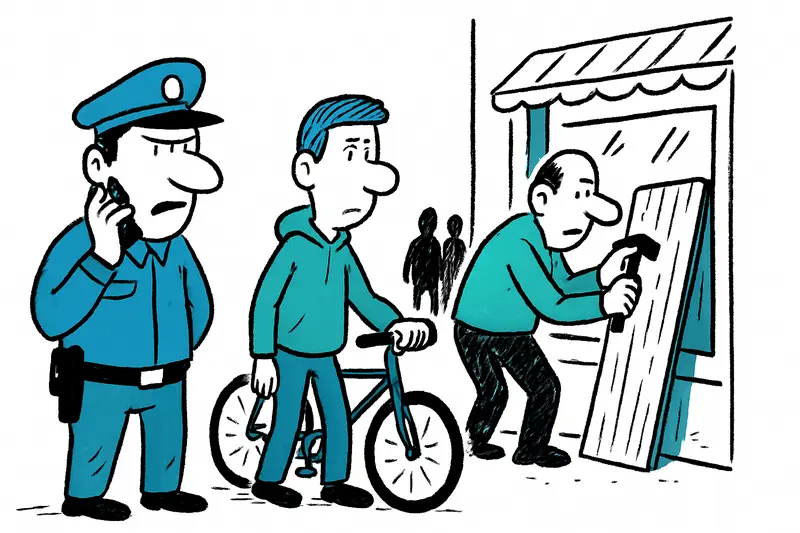
An everyday scene: It is early evening, the street lamps at Plaça d'Espanya cast warm light on young people with glowing bike lights. A shop owner on Carrer Sant Miquel hurriedly nails a board to a display window; next to him the smell of freshly baked bread comes from a small bakery. A patrolling officer speaks quietly on the phone while a string of firecrackers goes off in a side street and costumed people stand there confused. Normality and alertness sit very close together.
Concrete solutions — pragmatic and local:
1) Preventive youth work: Mobile teams in the affected neighborhoods in the days before Halloween to point out dangers, offer contact persons and provide alternatives (designated meeting points, organized events).
2) Targeted traffic and square control: Clear, temporary access restrictions to sensitive shopping streets, but with designated passage points and information in multiple languages so people do not divert into narrow side streets.
3) Protect commerce — without isolating it: An emergency compensation fund for small businesses, quick contact with insurers and a municipal hotline on crisis nights so shopkeepers are not left alone in front of a boarded window.
4) Regulation of dangerous substances: A short-term review of how easily flammable or corrosive chemicals reach young people. Sales bans or ID checks at petrol stations and hardware stores during the Halloween weekend could help.
5) De-escalation instead of escalation: Give instructions to units to prioritise low-injury measures and clear communication channels; ensure independent documentation of operations so mistakes can be analysed.
6) Citizen participation and local mediators: Representatives from neighborhoods, business owners and protest groups at the same table — not as a bureaucratic box-ticking exercise, but as a standing contact point before larger mobilisations.
Why this matters: This is not about criminalising protests. The camp activists on the Plaça d'Espanya are calling for affordable housing — an issue that affects many in Palma. But if public space becomes the scene of stone-throwing, firecrackers and possible looting, the whole city loses: shops close, residents withdraw, and trust erodes.
Punchy conclusion: Palma needs more than deployment plans with helmets and drones for the Halloween weekend — it needs a mix of prevention, clear communication and rapid aid for those with the most to lose financially. Otherwise a night meant to be a celebration will be left only with the smell of burnt paper and the rapping of nails on shop windows.
Frequently asked questions
What safety considerations should I know for Halloween weekend in Palma?
How does Plaça d'Espanya factor into Halloween safety planning in Palma?
What should shop owners on Carrer Sant Miquel know during Halloween weekend in Palma?
What is the role of controlled traffic around shopping streets in Palma during Halloween?
What are practical packing tips for a trip to Mallorca in autumn?
Is swimming still common in Mallorca late in the year?
What does policing to manage protests look like in Mallorca?
How could All Saints' Day shopping be affected by Halloween weekend in Palma?
Similar News
Train accident near Toledo: A Mallorcan woman dead — Who bears responsibility?
After the collision of two high-speed trains near Urda the worst fear is confirmed: a 26-year-old woman from Inca has di...
Bronze Age at Ballermann? Excavations at Es Velar and Son Sunyer Yield Surprising Clues
Not far from the noisy promenade, archaeologists have uncovered traces from the Bronze Age. What this means for Mallorca...
Motorworld Inn in Palma: A Critical Look at the Setting, Kitchen and Customers
A Lamborghini above the bar, schnitzel days and high wine prices: What makes Motorworld Inn special — and where the conc...
Wrong-way driver on the Ma-15: What this early head-on crash reveals about our roads
On the Palma–Manacor motorway, a seven-seat minivan driving the wrong way collided head-on with a delivery van. Two peop...
Reality, Trauma and Responsibility: Danni Büchner in a Villa on Rhodes – How Far Can Television Go?
Danni Büchner, who lives on Mallorca, is taking part in a new TV format that brings nine women together for twelve days ...
More to explore
Discover more interesting content

Can Cap de Bou

Townhouse Lleo 72
