
Motorworld Inn in Palma: A Critical Look at the Setting, Kitchen and Customers
Motorworld Inn in Palma: A Critical Look at the Setting, Kitchen and Customers
A Lamborghini above the bar, schnitzel days and high wine prices: What makes Motorworld Inn special — and where the concept in Palma should be improved.
Motorworld Inn in Palma: A Critical Look at the Setting, Kitchen and Customers
Key question: Is the Motorworld Inn on Camí Vell de Llucmajor a real gain for Palma — or does it remain a glittering themed venue for car enthusiasts with little connection to the island?
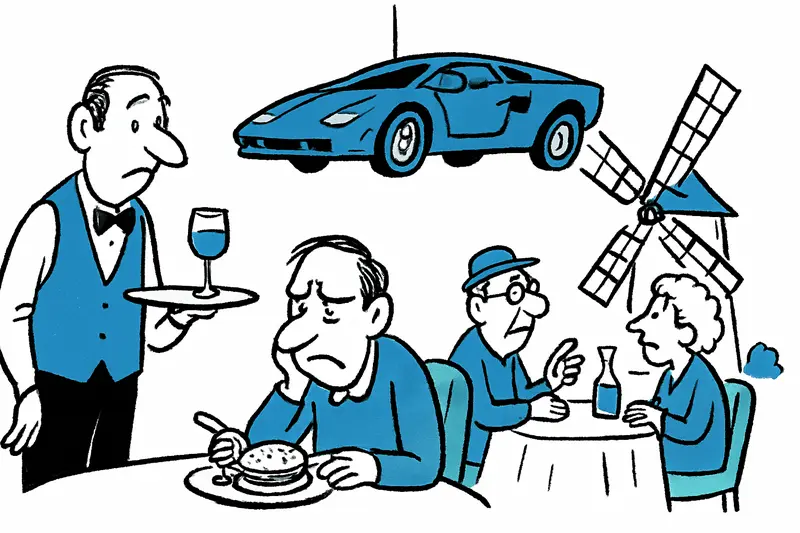
You don't sit under an inverted Lamborghini Countach every day. In the large hall of the old Coca‑Cola bottling plant, now the Motorworld complex (Motorworld Mallorca: A new mobility experience center on the island), yellow and red racing cars hang above the bar, leather armchairs circle tables, and on the terrace a classic Mallorcan windmill rises into the sky. The location just before the airport (Camí Vell de Llucmajor, 112) brings noise: airplane horns mix with the clinking of cutlery. The concept is spectacular. But spectacle alone does not answer the key question.
Analysis: The strengths are visible. The exhibition with classics like the Mercedes 300 SL Roadster gives the place identity, and Motorworld Mallorca attracts 140,000 visitors. The menu is geared toward volume and familiar dishes: tapas, pasta, pizza, burgers, spare ribs, meat from the hot stone. Small touches — a complimentary aperitif such as grissini with ham or gazpacho in small bottles, aioli, sourdough bread — add nice accents. Salads, the four-cheese pizza (€19.95) and the currywurst with fried onions (€14.95) stand out positively.
But weaknesses become apparent in combination. The kitchen shows inconsistencies: a burger ('Gran Torino', €22.95) arrived lukewarm and overcooked, although the meat, bacon and sauces were flavorful. Such mismatches feel larger in a show-driven environment because expectations are higher. The wine list, in turn, is sparse — many Mallorcan bottles are missing — and prices are significantly above retail, which irritates locals who know the island's wine scene; When Dinner Becomes a Luxury: How Mallorca's Pricing Estranges Its Restaurant Scene. It is also noticeable that many signs and notices on site are in German; this apparently addresses the large German-speaking clientele but raises questions about inclusion of the local population.
What has so far been under-discussed in public debate: how much concepts like this influence local economic flows. Were regional suppliers used for construction and gastronomy? How many jobs are permanently given to residents rather than seasonal workers? And how does the site integrate into the neighbourhood at Camí Vell de Llucmajor — a place once shaped by a bottling plant and now home to an events and retail centre? These questions concern not only taste but sustainability and social acceptance.
An everyday scene from Palma: It is a mild afternoon, the sun is low, tourists with suitcases and locals in work clothes cross paths on the pavement in front of the complex. The kitchen emits the smell of fries and fried meat, a child points enthusiastically at the hanging racing car above, and two retirees beside them chat in Mallorcan about the price of a bottle of wine. This mixture — curiosity, noise, conversations in several languages — is typical of places at the intersection of tourism, industry and residential areas.
Concrete proposals: 1) Bilingual, local-friendly communication: signs and menu texts should appear equally in Spanish/Catalan and German so residents do not feel excluded. 2) Revise the wine offering: include more Mallorcan wines in the portfolio, offer wine by the glass options and make pricing more transparent (e.g. retail price vs. restaurant price). 3) Ensure culinary consistency: adjust kitchen workflows so temperature and doneness levels are more reliable (a small service check is often enough). 4) Shop regionally: involve local producers for vegetables, cold cuts and cheese more strongly — this reduces costs, increases acceptance and gives the menu its own voice. 5) Involve the neighbourhood: regular evenings for residents or collaborations with local clubs and automobile associations could build bridges; Regulars' Tables vs. Hipster Glamour: Palma's Affordable Local Pubs in Transition.
Why this matters: A venue with this ambition can be more than advertising for car dreams. If run as a closed theme centre, it remains an attraction for short visits. If it is open to local producers, moderate prices and real encounters, it can win lasting regulars and become part of the neighbourhood.
Conclusion: The Motorworld Inn is a loud, visually striking place with real highlights — and with clear homework. Visitors experience automotive nostalgia and solid comfort-food moments; those who live or work nearby ask for real rooting. A few pragmatic changes, more regional wines and better outreach to the Mallorcan population would turn the electric showroom into a restaurant that attracts people, not just cars, even after years.
In short: Car fans will have their fun; Palma residents may expect more than decoration. If Motorworld stabilizes the kitchen and integrates the island more, Palma can truly benefit.
Frequently asked questions
What is the best time of year to visit Mallorca for warm weather and outdoor activities?
Do I need a towel or beach gear to swim at Mallorca's beaches?
What should I pack for a Mallorca trip in spring?
Are there family-friendly beaches in Mallorca?
Is it easy to get around Mallorca without a car?
What are must-do activities in Mallorca for nature lovers?
How does Mallorca's weather affect swimming and beach days?
Are there good day trips from Mallorca to nearby towns?
Similar News

Train accident near Toledo: A Mallorcan woman dead — Who bears responsibility?
After the collision of two high-speed trains near Urda the worst fear is confirmed: a 26-year-old woman from Inca has di...

Bronze Age at Ballermann? Excavations at Es Velar and Son Sunyer Yield Surprising Clues
Not far from the noisy promenade, archaeologists have uncovered traces from the Bronze Age. What this means for Mallorca...

Wrong-way driver on the Ma-15: What this early head-on crash reveals about our roads
On the Palma–Manacor motorway, a seven-seat minivan driving the wrong way collided head-on with a delivery van. Two peop...

Reality, Trauma and Responsibility: Danni Büchner in a Villa on Rhodes – How Far Can Television Go?
Danni Büchner, who lives on Mallorca, is taking part in a new TV format that brings nine women together for twelve days ...

A Rescue That Kills: What the Death of a Holidaymaker on Menorca Reveals
While trying to save her granddaughter, a 69-year-old British woman lost her life on Menorca's north coast. A critical l...
More to explore
Discover more interesting content

Can Cap de Bou

Townhouse Lleo 72
