
A Rescue That Kills: What the Death of a Holidaymaker on Menorca Reveals
A Rescue That Kills: What the Death of a Holidaymaker on Menorca Reveals
While trying to save her granddaughter, a 69-year-old British woman lost her life on Menorca's north coast. A critical look at safety gaps that are often overlooked.
A Rescue That Kills: What the Death of a Holidaymaker on Menorca Reveals
A beach day ends in tragedy — and raises questions we should ask more often
Guiding question: Why do seemingly harmless afternoons at the beach repeatedly end in fatal swimming accidents, even though weather reports, rescue services, and warning systems exist?
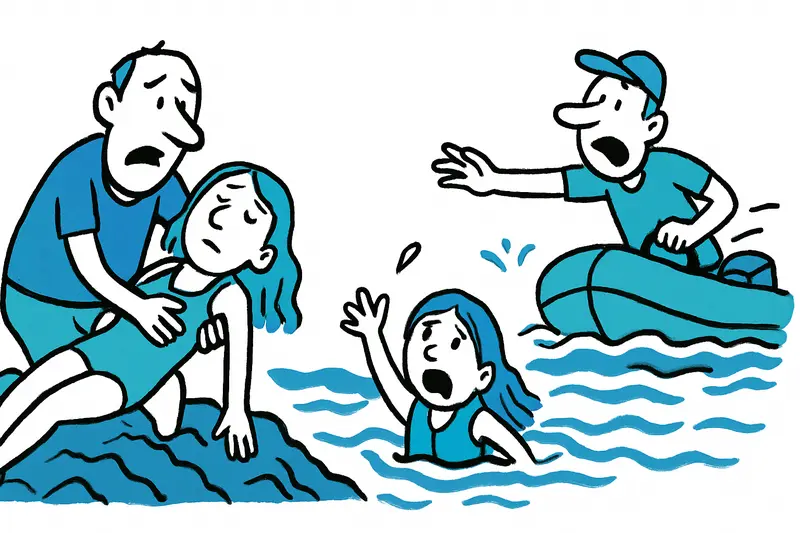
Late on Wednesday morning a family was torn apart on Menorca's north coast: an overturned inflatable boat, a ten-year-old granddaughter driven by the current toward the rocks, and a 69-year-old British woman who died in the water while trying to save the girl. Her husband pulled the woman ashore and injured himself on the sharp rocks. Rescue teams from Ciutadella arrived quickly, a Red Cross boat from Fornells was deployed, the 061 teams tended to the bereaved, and the Guardia Civil is investigating; similar incidents have been reported elsewhere, for example Tragedy at Son Bauló: 67-year-old dies after rescue attempt. The family had planned to leave the next day.
In short: safety measures exist, but they were not sufficient to prevent this situation.
Critical analysis: At first glance this sounds like a tragic isolated incident. Looking closer, several weaknesses become apparent. Children in inflatable boats near rocky coves are a known risk, as highlighted by Near-drowning in Cala Vinyes: Rescue raises questions about beach safety; the combination of a stiff north breeze with gusts around 45 km/h and proximity to ledges and cliffs quickly turns into a life-threatening situation. In many coves there are no clear prohibition or warning signs for small watercraft, and outside the high season there are few or no lifeguards on duty.
What is often missing from the public discourse is the perspective of families and the tourism infrastructure. There is talk about the capacities of rescue services, about missions and numbers, but rarely about concrete behavioral rules that tour operators or villa hosts could pass on to their guests, a point also raised after incidents such as Dead Tourist at Playa de Palma: An Accident Raises Many Questions. The responsibility of suppliers of inflatable play equipment is also seldom discussed: who explains the risks to parents on site, who provides properly sized life jackets? This question is echoed in coverage of cases like Can Picafort: Death on the Beach – Was There Enough Protection Against Water Hazards?
A small everyday scene from Mallorca to make this tangible: Cafes on Palma's Paseo de Mallorca still sit in the sunshine, a fisherman dries his nets, and the smell of the sea is in the air. You hear the complained-about motorcycles, children laughing. Families seek that same carefree feeling on Menorca's north coast — and underestimate how quickly wind and current can change the situation. A narrow path from the car park to the cove, a barrier rope at the dunes and a few scattered bathers are enough to be far from organized beaches with guards and blue flags.
Concrete solutions that could be implemented without long political debates: more and better signage at small coves — in several languages — warning against use of boats in stronger north winds. Minimum requirements for rental companies of inflatable boats and SUPs: mandatory provision of certified children's life jackets and a short safety briefing. Municipalities could have mobile flagpoles and loudspeaker announcements ready during windy seasons; hotel and villa hosts should hand out simple local safety information at check-in. Additionally: free basic courses in cardiopulmonary resuscitation (CPR) and water rescue for local volunteers and for staff at tourist accommodations.
On the rescue services side, it should be examined whether temporary, easily deployable rescue lines and access planks at particularly exposed coastal sections could make a difference — not as a replacement for lifeguards, but as immediately available help when people become stranded on rocky coves; previous coverage such as Fatal Rescue Attempt in Son Bauló: What Must Change on Our Beaches discusses similar measures. And yes: AEMET warnings and local wind forecasts must feed more directly into beach and boating rules; authorities could define clear thresholds for banning leisure boats (for example when gusts exceed 35–40 km/h).
What must reach the community immediately: inflatable devices are not risk-free toys. Parents should treat them like small boats. A simple rule: children in inflatable boats only use them within sight of an adult lifeguard or at supervised beaches. If the cove is rocky, better not at all.
Concise conclusion: This tragedy shows that people acted out of care — not stupidity. Still, help ended in death because circumstances and systems failed. We cannot prevent every wave, but we can inform, equip, and create rules that significantly reduce the risk. If we want to sit by the sea carefree again tomorrow, we must start talking about small, practical measures and not only about big statistics.
In the coming days the autopsy will provide more answers. Until then the family remains in shock — and for the coastal towns the lesson is clear: a few signs, a stock of children's life jackets and a clear wind plan may mean more than many words.
Frequently asked questions
When is the best time to visit Mallorca for warm weather and manageable crowds?
What should I pack for a Mallorca trip considering the seasons?
Are Mallorca’s beaches suitable for swimming year-round?
What are some good outdoor activities to do in Mallorca?
How can I get around Mallorca without a car?
What should I see in Palma de Mallorca?
Are there family-friendly day trips from Mallorca?
What should I know about Mallorca’s weather variations by season?
Similar News
On the Avenidas Against the ATM: Why the Accident in Palma Is More Than Just Property Damage
In central Palma a driver lost control and crashed into a shopfront housing an ATM. Minor injuries but major questions a...
Plastic, Bottles, Tools: Why Portals Vells Is No Longer Just a Postcard
The popular three-finger bay at Portals Vells reveals a different picture beneath its sparkling surface: systematic litt...
Alarm on the Coast: What to Do When the "Asian Alga" Appears off Mallorca?
The invasive Rugulopteryx is spreading across the western Mediterranean. Why early detection and local measures are now ...

Elke Sommer and Mallorca: A Small, Lasting Film Glimpse
Elke Sommer has died at the age of 85. A look at her connection to the island: filming locations, a controversial bikini...
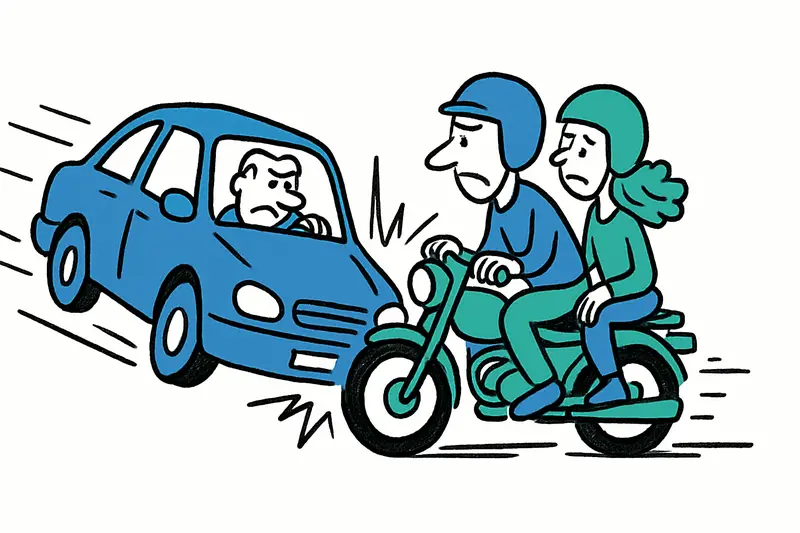
Car drifts into oncoming lane: Passenger seriously injured in collision on MA-1 near Andratx
At midday a car moved into the oncoming lane of the MA-1 at Camí de Son Vich and collided with a motorcycle. The 45-year...
More to explore
Discover more interesting content

Can Cap de Bou

Townhouse Lleo 72
