
Brutal Jewelry Robbery in Calle Cannes: What Went Wrong at Ballermann?
Brutal Jewelry Robbery in Calle Cannes: What Went Wrong at Ballermann?
An 85-year-old woman was robbed in broad daylight at Playa de Palma. A 28-year-old allegedly ripped seven gold bracelets from her wrist. Why such attacks happen and what is missing now.
Brutal Jewelry Robbery in Calle Cannes: What Went Wrong at Ballermann?
Main question
How could it happen in the middle of the morning on Calle Cannes at Playa de Palma that an elderly woman's seven gold bracelets were violently torn from her wrist — and why is the accused not in pre-trial detention despite his arrest?
What happened
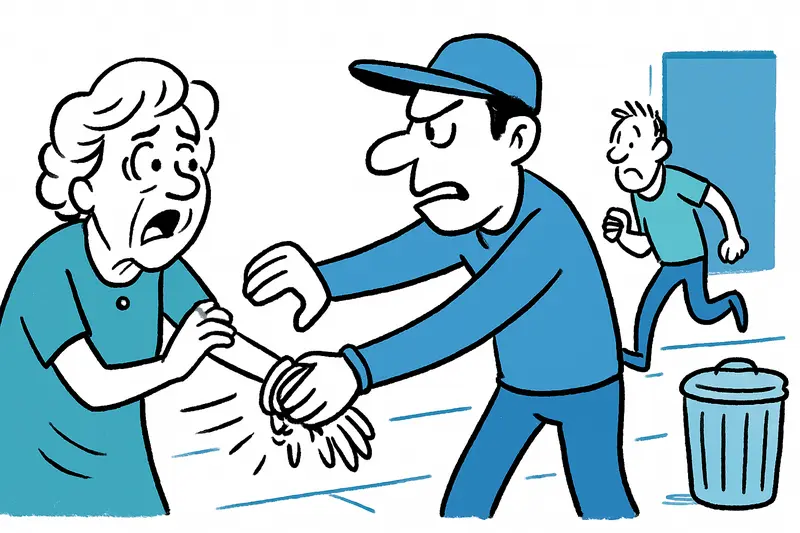
On a bright morning around 11:25 a.m., a man approached an 85-year-old woman pretending to ask for directions. He followed her for a bit, spoke to her again and, according to investigators, suddenly grabbed her. In the tugging motion the senior lost several bracelets; the presumed perpetrator tucked the jewelry into his pants and ran off. Passersby and an off-duty police officer nearby pursued him. The local police apprehended the 28-year-old suspect, seized the seven gold bracelets and returned them to the woman; the police also found an apparently forged driving license. The injured woman was treated on site and taken to Son Llatzer hospital for further examination. The accused appeared before the examining magistrate the same day; the public prosecutor requested pretrial detention, but the judge ordered his release.
Critical analysis
The case reveals several weaknesses side by side: the victim's vulnerability, the method of the crime, prevention and the response of the justice system. The trick — asking for directions, creating closeness, quick attack — is not new, but it works especially well on older people who are naturally helpful (see Robbery in Can Pastilla: Luxury watch worth €6,000).
What is missing from the public debate
Security cuts are often discussed, but rarely concretely: How do we protect particularly vulnerable people at tourist hotspots? Which information reaches older residents or long-term visitors in their language? Where are simple infrastructure measures that make such attacks less attractive? Discussions too often revolve around figures and headlines, not practical countermeasures, clear prevention education and the helplessness many relatives feel when perpetrators are quickly released.
Everyday scene from Palma
Imagine Calle Cannes on a late summer morning: rows of sunbeds, delivery vans, vendors' voices, the clatter of parasols, seagulls crying over the warm asphalt. At the corner there are garbage bins, tourists stroll by, older people seek shade on a bench. It is precisely in this mix of bustle and tightness that the opportunity for pickpockets and tricksters nests — short, loud, quick.
Concrete solution approaches
1) Targeted information: flyers in German, Spanish and English at medical practices, senior clubs, churches and hotels. Concrete examples instead of general warnings. 2) Visible presence: more foot patrols at sensitive times and places — also in plain clothes to identify perpetrators early. 3) Training for businesses: beach kiosks, landlords and supermarkets need short instructions on how to report suspicious activity and protect older customers. 4) Infrastructure: secure storage options at beach entrances and promenade areas, better routing without narrow bottlenecks at waste collection points. 5) Fast reporting and documentation channels: mobile photos of evidence, uncomplicated preservation of traces and a centrally reachable contact person for older victims. 6) Exchange between police and public prosecutor about risk factors that could justify pre-trial detention, without pre-empting judicial decisions.
Conclusion
The assault in Calle Cannes is not an isolated case in the literal sense, but a lesson in how vulnerable people become targets in busy places. Similar incidents and reports of organized thefts have been covered elsewhere, for example Organized watch robbers in the Balearics: Why Mallorca must also stay vigilant. Quick help from bystanders and police is important, but not enough. Those who live in or come to Palma should know the quiet rules: be vigilant, wary of unusual closeness, take simple precautions and inform the local police if something feels wrong. Responsibility lies with municipal authorities, businesses and the justice system alike — otherwise the street will remain a risk for older people rather than a place where they can feel safe.
Frequently asked questions
What is Mallorca's climate like, and what should I pack for a trip?
When is the sea warmest for swimming in Mallorca?
How can I get around Mallorca without a car?
What outdoor activities are best to enjoy in Mallorca?
What makes Palma's old town a good starting point for a Mallorca visit?
Is the train to Sóller worth it for a first-time visitor?
Are there family-friendly beaches near Alcúdia in Mallorca?
What should I know about hiking or viewpoints in the Serra de Tramuntana?
Similar News
Heat casualty on a bike tour in Soller: warning signs, gaps and simple solutions
A 66-year-old cyclist collapsed on the old Ma-11A at the Coll de Soller in extreme heat and died despite resuscitation. ...
Premium Sunbeds in Cala Major: Who Pays for the Beach?
Expensive VIP sunbeds at Cala Major are causing controversy: the environmental group GOB demands access to tender docume...

When the harvest comes earlier: Macià Batle celebrates — and worries about heat and water
At Finca Son Llompart the grape harvest was celebrated with sobrasada, bread and habaneras. But behind the glasses are h...

Spielberg's megayacht "Seven Seas" briefly captivates the Tramuntana
The 103-meter "Seven Seas" cruised off Cala Tuent and Sa Calobra in early September. A look at the ship, its constructio...

Throat injured at Plaza Gomila: 18-year-old in custody — what Palma's nightlife needs now
Early Saturday morning a 35-year-old man was severely injured in the neck at Plaza Gomila. An 18-year-old is in pretrial...
More to explore
Discover more interesting content

Boat Tour with BBQ along Es Trenc Beach

Private transfer from Mallorca Airport (PMI) to Pollensa
