
Naked Pillar in Bunyola: Why a Climbing Prank Is More Than an Accident
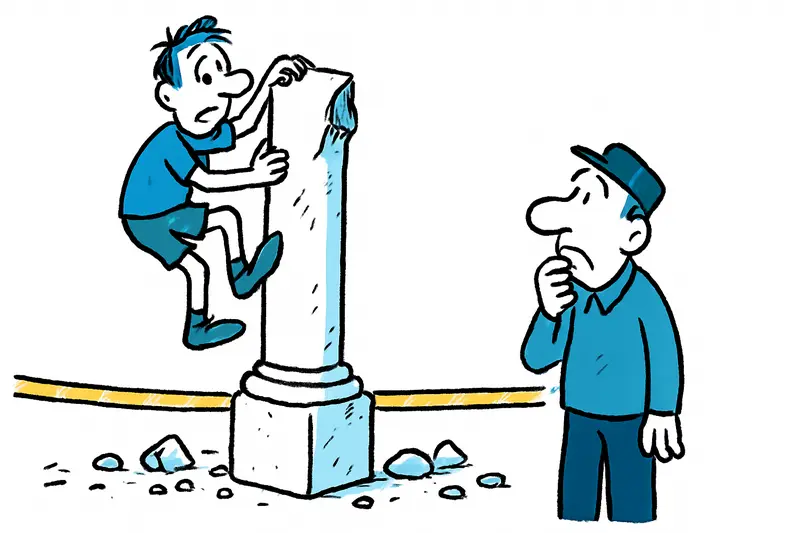
During the Sant‑Mateu verbena a 20‑year‑old fell at a protected wayside cross in Bunyola and pulled the stone cross off its base. The monument, classified as a Bien de Interés Cultural (BIC), now stands without its head. What does this say about the handling and protection of our local townscapes?
Naked Pillar in Bunyola: Why a Climbing Prank Is More Than an Accident
On the night before the feast day of Sant Mateu a young man apparently climbed the old wayside cross at Costa d’Estació in Bunyola. During the fall not only was he injured — according to emergency services he sustained a hand injury — but the stone cross was ripped from its pedestal. In the morning there were still traces of blood on the paving; the municipality secured the area and put up barrier tape. The cross is protected as a Bien de Interés Cultural (BIC); the head of the monument is now missing.
Key question
How can a small municipality protect its visible cultural treasures without destroying the festive atmosphere on the eve of the patron saint?
Critical analysis
The incident shows two sides: people's spontaneous joy in celebration and the vulnerability of old stone monuments. A protected wayside cross is not just a devotional relic but part of the village identity. Is it well secured? Were there warning signs or safe distances that would suffice on noisy festival nights? That the pillar was so easily left bare suggests that stability and access protection were insufficient, concerns that were also voiced after the Partial Collapse at the Baluard de Sant Pere in Palma – What Now?. The accident also raises questions about prevention: Were police and stewards nearby, how is night patrol organised during the verbena, and how quickly could emergency services respond?
What is missing from the public discourse
In conversations on the street one hears outrage, but rarely a cultured discussion: How will the reconstruction be financed? Who is responsible for the maintenance of BIC objects outdoors? Similar urgent questions were raised after the Collapse at Palma's City Wall: What Needs to Happen Now. And how can traditions like the verbena be preserved without monument care becoming mere damage control afterwards? The debate often stays at blaming the individual; longer-term protection concepts are hardly discussed.
Everyday scene from Mallorca
The next morning the village was half asleep. The square smelled of coffee and fried Mallorcan snacks, children tied colorful ribbons to a lamppost, older women sat on the stone bench in front of the church. Yet the empty pedestal at Costa d’Estació caught the eye: no cross, only the blunt edge and the yellow barrier tape. An older man stopped, ran his hand over the pillar and said quietly that the cross "had always been there." Such small scenes show how closely memory, everyday life and material are linked.
Concrete approaches
- Short term: A professional risk assessment by monument conservators, immediate securing of the pedestal, thorough documentation of the damage (photos, 3‑D scan) and a provisional cover to prevent further harm by curious hands. - Medium term: Commission experienced restorers for a faithful reconstruction or, if necessary, a separate heavy replica head that can be removed in the evenings. Consider financing through the municipal budget, the island's emergency funds or cultural foundations. - Prevention at festivals: clearly marked exclusion zones around vulnerable monuments, additional stewards during the verbena, targeted police presence and information signs in several languages indicating the BIC protection status. - Education and involvement: school activities and village meetings that teach young people the value of local monuments; cooperation with local craft businesses to demonstrate traditional stonemasonry techniques.
Conclusion
The stark, naked pedestal in Bunyola is more than an eyesore. It is a signal: our everyday monuments need care, sensible rules during festivals and some thought about how respect and festive spirit can be reconciled. And yes, on the level of compassion there should also be room for the young man who was injured; prevention protects not only cultural heritage but human lives as well.
Frequently asked questions
What does it mean for a site to be protected as Bien de Interés Cultural and how does that affect its upkeep in Mallorca?
How should small Mallorcan municipalities balance festival joy with protecting visible cultural treasures?
What happened to the cross at Costa d’Estació in Bunyola during a festival eve?
What immediate steps are taken to document and secure a damaged monument in Mallorca?
What long-term options exist for restoring a damaged protected monument in Mallorca?
How can festivals be made safer for vulnerable monuments in Mallorca?
How can communities involve schools and craft workers to safeguard local monuments in Mallorca?
What lessons can Mallorca towns learn from incidents to improve night-time safety around cultural sites?
Similar News
Three-ton llaut salvaged in Puerto Portals – volunteers clear microplastics from the harbor
During the weekend operation in Puerto Portals, divers pulled an approximately three-ton llaut from the harbor. Associat...
Towel on It, Chair Gone? How Hotels Can Regulate Reservations of Sun Loungers
After a deadly dispute in Greece, the question has resurfaced in Mallorca: Are hotels allowed to ban or sanction the pra...
Illetas: Police Officer and Two Lifeguards Rescue Two Female Tourists from the Sea
Late on Friday afternoon emergency responders entered the water off the coast of Illetas: a local police officer and two...
Inca: Severely injured female dog found in garbage bags in a container – who has seen anything?
In Inca, a severely injured female dog was discovered wrapped in two garbage bags inside a container on Avenida Rei Jaum...
Pre-Nit de l’Art in Palma: Champagne, Spray Can and Studio Flash in the Old Town
Red carpets, a photographers' stand and live performance: the Pre‑Nit de l’Art filled Galerie Mensing with around 400 gu...
More to explore
Discover more interesting content

Can Cap de Bou

Townhouse Lleo 72
